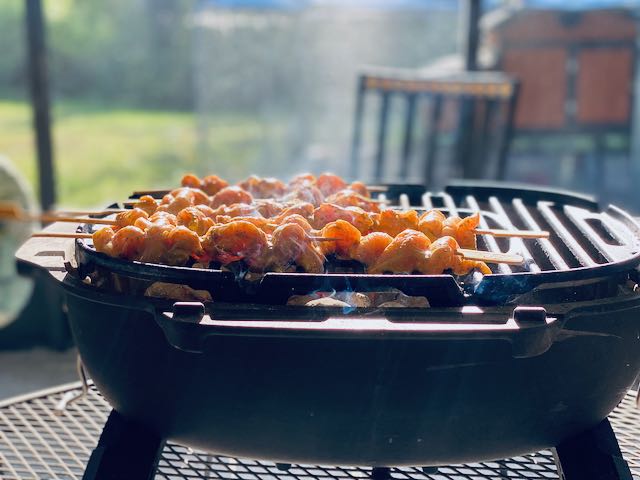
Yakitori Sauce
Chicken Fat Yakitori Sauce
Chicken skin renders its fat into water, creating the foundation for this authentic tare that develops deeper flavor than shortcuts. The slow reduction concentrates everything into a sauce that clings perfectly to grilled meat.
Real yakitori tare starts with an unlikely ingredient: chicken skin. While most home cooks reach for shortcuts or bottled sauces, Japanese yakitori masters know that the fat rendered from chicken skin creates a richness that simply can't be replicated any other way. It's this foundation that transforms simple pantry ingredients into something that tastes authentically restaurant-quality.
The process might seem unconventional — boiling chicken skin in water sounds more like soup-making than sauce-building. But as the skin renders its fat into the simmering water, you're creating the base for a tare that will cling to grilled meat with the perfect consistency. The rendered fat gives body to the sauce while the skin itself contributes subtle but essential flavor compounds that elevate the final result.
This isn't just about authenticity for its own sake. The chicken fat method produces a sauce that behaves differently than sugar-thickened alternatives — it coats evenly, glazes beautifully, and develops complex layers of flavor as it reduces. Once you taste the difference, you'll understand why yakitori chefs guard their tare recipes so carefully. The alternative version included here works in a pinch, but the traditional method is what separates good yakitori from unforgettable yakitori.
Ingredients
Main Recipe
- ½ cupwater
- 2 ozchicken skin
- ½ cupsoy sauce, double brewed
- ¼ cupsake
- ¼ cupmirin
Alt Tare
- 6 tbspsoy sauce
- 6 tbspmirin
- 6 tbspsake
- 6 tbspwater
- 4 tspbrown sugar
Instructions
- Heat water to a rolling boil in a non-reactive sauce pot. The pot material matters here — aluminum or reactive metals can affect the sauce's final flavor.
- Drop in the chicken skin and let it cook for 10-15 minutes without skimming any foam that rises. That foam contains flavor compounds you want to keep.⏱ 15 min
- Fish out the chicken skin with tongs and discard it. The water should now have a rich, fatty quality from the rendered skin.
- Stir in the soy sauce, sake, and mirin, then simmer until the mixture reduces by one third. You'll know it's ready when it coats a spoon lightly.
- Pour the sauce through a cheesecloth-lined strainer to remove any particles. Cool completely before refrigerating — it will keep for weeks.
- For the quicker alternative, combine all alt tare ingredients in a small sauce pot over medium-high heat. Whisk everything together until the brown sugar dissolves completely.
- Bring the mixture to a boil, then dial back to medium heat. Let it bubble away for 10-15 minutes until it thickens enough to coat the back of a spoon.⏱ 15 min
Tips & Tricks
- Save chicken skin from breaking down whole chickens or ask your butcher — you need just 2 ounces but the fat content makes all the difference in the final sauce texture.
- Don't skim the foam during the initial cooking phase; those proteins and fats contain flavor compounds that will integrate into the sauce as it reduces.
- Test doneness by dipping a cold spoon into the sauce — it should coat the back and hold for a few seconds before dripping off, not run off immediately.
- Double-brewed soy sauce (like Yamasa or Kikkoman's premium lines) has deeper, more complex flavor than regular soy sauce, but standard soy sauce works if that's what you have.
- The finished sauce keeps in the refrigerator for weeks and actually improves in flavor after a day or two as the elements meld together.
Frequently Asked Questions
Can I use the fat from cooking bacon instead of chicken skin?
Stick with chicken skin for authentic flavor. Bacon fat will overwhelm the delicate balance of soy, sake, and mirin that defines yakitori tare. The rendered chicken fat is much milder and lets the other ingredients shine through.
What's the difference between the main recipe and the alt tare version?
The main recipe uses rendered chicken fat as a base, creating deeper flavor and better texture. The alt version uses brown sugar for sweetness and body, making it quicker but less complex. Both work for grilling, but the chicken fat version is more authentic.
How do I know when the sauce has reduced enough?
Look for the sauce to coat a spoon and reduce by about one-third in volume. It should have a glossy appearance and flow slowly rather than pour like water. The consistency will thicken slightly more as it cools.
Can I make this sauce ahead of time?
Yes, this sauce actually benefits from being made ahead. Store it covered in the refrigerator for up to three weeks. The flavors develop and deepen over time, and you can reheat gently before using.
Why does my sauce taste too salty?
You may have reduced it too far, concentrating the soy sauce beyond the intended balance. Next time, stop the reduction earlier when it lightly coats a spoon. You can also thin overly reduced sauce with a splash of sake or mirin.