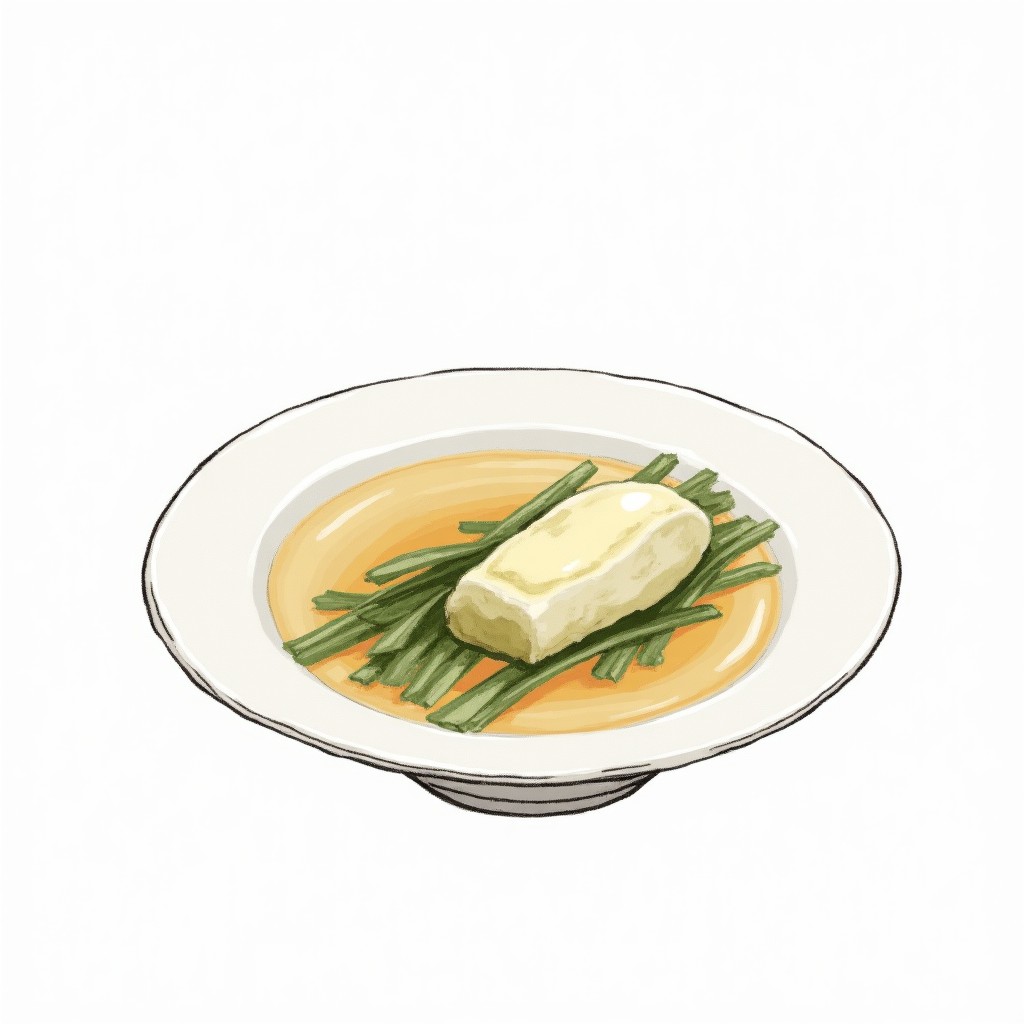
Traditional Japanese Dashi Stock
Essential Japanese Dashi — The Soul of Umami
This clear, amber stock transforms humble seaweed and fish flakes into liquid umami magic. Master this foundation and you'll unlock the secret to authentic Japanese cooking — from miso soup to ramen broth, dashi is where it all begins.
Walk into any Japanese kitchen and you'll find dashi simmering quietly on the stove, filling the air with an aroma that's both oceanic and deeply comforting. This isn't just stock — it's the fundamental building block that makes Japanese cuisine sing. Where Western cooking might reach for chicken broth, Japanese cooks turn to this crystal-clear liquid that captures the essence of the sea in a way that feels almost magical.
The genius of dashi lies in its restraint. Just two ingredients — dried kelp and shaved bonito flakes — combine through careful temperature control to create something far greater than the sum of its parts. The kombu contributes natural glutamates (the source of umami), while the bonito adds a subtle smokiness that rounds out the flavor profile. It's a lesson in how Japanese cooking achieves maximum impact through minimal intervention.
This particular method produces what's called ichiban dashi, or "first dashi" — the clearest, most delicate version that forms the backbone of miso soup, clear broths, and countless other dishes. Once you taste homemade dashi against the instant variety, you'll understand why Japanese cooks guard their dashi-making techniques so carefully. The difference isn't just in flavor — it's in the way this liquid foundation elevates everything it touches.
Nutrition
Ingredients
- 1 piecekombu seaweed, 4-inch piece (dried kelp)
- 4 cupfiltered water
- 1 cupbonito flakes (katsuobushi), loosely packed
Instructions
- Clean the kombu with a barely damp cloth to remove surface dust — resist the urge to rinse it under water, which would wash away the natural salts that give dashi its depth.
- Drop the kombu into a medium saucepan with the water and let it soak at room temperature for 30 minutes. This gentle extraction pulls out the glutamates without any harsh flavors.⏱ 30 min
- Place the pot over medium-low heat and watch for tiny bubbles to appear around the kombu's edges — this signals the water is hot enough to release the seaweed's essence without bitterness.⏱ 10 min
- Lift out the kombu just before the water reaches a full boil. Leaving it in longer would turn your delicate stock into something murky and overpowering.
- Crank up the heat and bring the kombu-infused water to a vigorous boil, then scatter in all the bonito flakes at once — they'll dance and swirl as they hit the bubbling water.
- Kill the heat immediately and let the bonito flakes steep undisturbed for 3-5 minutes. The flakes will slowly sink as they release their smoky, oceanic flavor into the stock.⏱ 5 min
- Pour everything through a fine-mesh strainer lined with cheesecloth, pressing gently on the spent flakes to extract every last drop of this liquid gold.
Tips & Tricks
- Don't skip the 30-minute kombu soak — this cold extraction pulls out the good stuff while leaving bitter compounds behind.
- Save your used kombu and bonito flakes to make niban dashi (second dashi) by simmering them again with fresh water for 10 minutes.
- Fresh dashi keeps in the fridge for 3 days, but it's best used within 24 hours when the flavor is brightest.
- If your dashi tastes fishy or bitter, you probably let the kombu boil or steeped the bonito flakes too long — gentle heat is everything here.
- Look for thick, dark green kombu with white mineral deposits on the surface — that's where the best flavor lives.
Frequently Asked Questions
Can I use instant dashi instead of making it from scratch?
You can, but the flavor won't compare to fresh dashi. Instant versions are saltier and lack the clean, oceanic depth that comes from proper extraction. If you must use instant, look for brands without MSG and use about half the recommended amount.
Where can I find kombu and bonito flakes?
Most Asian grocery stores carry both, and you can find them online or in the international aisle of well-stocked supermarkets. Kombu should feel thick and leathery, while bonito flakes should look like wood shavings and smell faintly smoky.
Can I make dashi vegetarian?
Absolutely — just skip the bonito flakes and steep the kombu a bit longer, about 45 minutes total. You can also add dried shiitake mushrooms to the kombu soak for extra umami depth.
What happens if I accidentally let the kombu boil?
Your dashi will taste bitter and cloudy. Start over if it's really harsh, but if it's just slightly bitter, you can still use it for heartier dishes where the delicate flavor isn't as crucial.