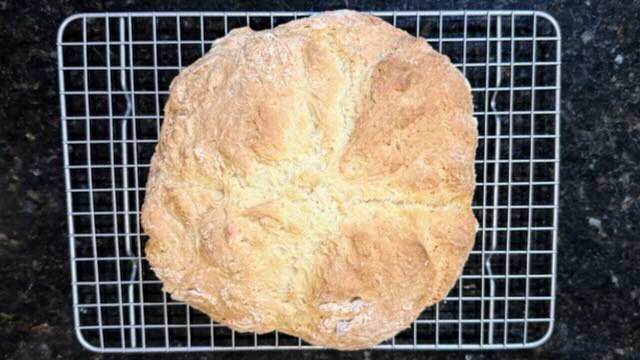
Traditional Irish Soda Bread
Authentic Irish Soda Bread — Four Ingredients, Pure Magic
This isn't just bread — it's edible Irish history baked into a crusty, tender round. The buttermilk's tang plays perfectly against the flour's earthiness, while that signature cross on top isn't just tradition, it's practical genius for even baking.
Every Irish kitchen has a story about the day the bread didn't rise. Maybe it was a rush to get something on the table, or the yeast had gone bad, or there simply wasn't time for the usual hours of kneading and waiting. That's when soda bread saves the day — no yeast, no rising time, just four humble ingredients that transform into something truly satisfying in under an hour.
This recipe strips away everything except what matters: flour for structure, salt for flavor, baking soda for lift, and buttermilk for tang and tenderness. The magic happens in the chemical reaction between the acidic buttermilk and alkaline baking soda, creating bubbles of carbon dioxide that give the bread its characteristic crumb. It's chemistry at work, but it feels like alchemy when that rough, shaggy dough emerges from the oven as a golden, crusty round.
The technique here matters more than you might think for something so simple. The secret is speed and restraint — once that buttermilk hits the flour mixture, the clock starts ticking. Work fast but gently, bringing the dough together without overworking it. The result should look rustic and slightly rough around the edges, because that's exactly what good soda bread is supposed to be.
Nutrition
Ingredients
- 4 cupall-purpose flour, unbleached preferred
- 1 tspfine sea salt
- 1 tspbaking soda, fresh for best lift
- 1¾ cupbuttermilk, cold from the fridge
Instructions
- Set your oven to 425°F and line a baking sheet with parchment paper. This high heat creates the crust that makes soda bread so distinctive.
- Combine flour, salt, and baking soda in a large bowl, whisking them together thoroughly. The baking soda needs to be evenly distributed — it's doing all the heavy lifting here since there's no yeast.
- Create a deep well in the center of your flour mixture and pour in all the buttermilk at once. The cold buttermilk will react immediately with the baking soda, so work quickly from this point forward.
- Use a fork to stir the mixture, working from the center outward until you have a shaggy, sticky dough. Stop as soon as it comes together — overworking will make your bread tough and dense.
- Dump the dough onto a well-floured surface and give it just 3-4 gentle kneads until it barely holds together. It should still look rough and rustic — that's exactly what you want.
- Pat and shape the dough into a round loaf about 8 inches across, keeping your touch light. Transfer it to your prepared baking sheet.
- Score a deep X across the entire top with a sharp knife, cutting about 1 inch deep. This classic cross helps the bread bake evenly and gives steam an escape route.
- Slide into the oven and bake for 35-40 minutes until the crust turns golden brown and gives a hollow thump when you tap the bottom. The cross should be well-defined and slightly darker.⏱ 40 min
- Transfer to a wire rack and let it rest for 15 minutes before slicing. Cutting too soon will give you gummy bread — patience pays off here.⏱ 15 min
Tips & Tricks
- If you don't have buttermilk, make your own by adding 2 tablespoons of lemon juice or white vinegar to regular milk and letting it sit for 5 minutes until it curdles.
- The dough will look too wet at first — resist the urge to add more flour as you're mixing, since it firms up once you turn it out onto the floured surface.
- That deep cross on top isn't just traditional decoration — it helps the thick loaf bake evenly by allowing heat to penetrate the center.
- Test for doneness by tapping the bottom of the loaf; it should sound hollow when fully baked.
- Soda bread is best eaten within a day or two, but it makes excellent toast even after it starts to go stale.
Frequently Asked Questions
Can I use regular milk instead of buttermilk?
Buttermilk's acidity is essential for reacting with the baking soda to create lift, so regular milk won't work the same way. You can substitute by adding 2 tablespoons of lemon juice or vinegar to 1¾ cups of regular milk and letting it sit for 5 minutes.
Why is my soda bread dense and heavy?
This usually happens from overworking the dough or using old baking soda that's lost its potency. Mix just until the dough comes together, and make sure your baking soda is fresh — it should fizz when you add a pinch to vinegar.
How should I store leftover soda bread?
Wrap it in a clean kitchen towel for the first day to keep the crust from getting too hard. After that, store it in a plastic bag at room temperature for up to 3 days, though it's best toasted once it's past day one.
Can I add raisins or other mix-ins?
Yes, but add them sparingly — about ½ cup of raisins, caraway seeds, or herbs folded in gently after the dough comes together. Too many additions will weigh down the bread and interfere with the rise.