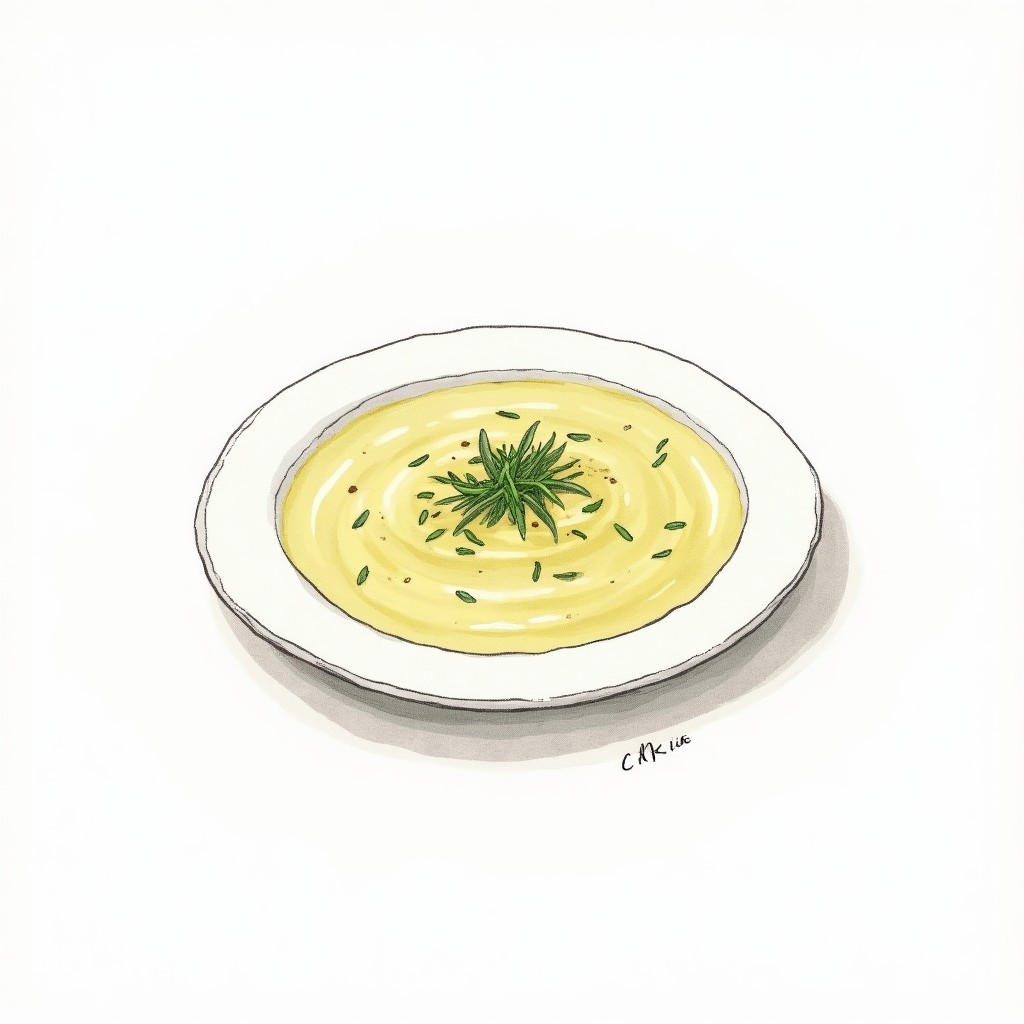
Traditional Irish Leek and Potato Soup
Smooth Irish Leek and Potato Soup — Velvet Comfort in Every Spoonful
Leeks and potatoes make magic together in this soul-warming soup that's been feeding Irish families for centuries. The key is cooking those leeks low and slow until they're silky sweet, then letting the potatoes break down just enough to thicken everything naturally.
The Irish countryside taught generations of cooks to make something extraordinary from the simplest pantry staples. Leeks and potatoes — two vegetables that could survive harsh winters and poor soil — became the foundation of a soup so satisfying it could carry a family through the hardest months.
What transforms these humble ingredients into liquid comfort is patience with the leeks. Most recipes rush this step, but Irish cooks knew better. They'd let those sliced leeks slowly surrender their bite in butter, becoming sweet and silky before the potatoes even touched the pot. This gentle coaxing creates the soup's distinctive flavor — not sharp or oniony, but mellow and rich.
The beauty lies in the soup's natural thickening. Russet potatoes break down just enough to give body without turning gluey, while leaving plenty of chunks for substance. It's a technique that predates food processors and immersion blenders, relying instead on the potato's own starch to create that velvety texture. One spoonful explains why this soup has endured for centuries — it tastes like home, no matter where home happens to be.
Nutrition
Ingredients
- 4 largelarge leeks, white and light green parts only, sliced into half-moons
- 2 lbrusset potatoes, peeled and cut into 1-inch cubes
- 4 tbspunsalted butter
- 4 cupvegetable broth, low-sodium preferred
- 1 cupwhole milk, room temperature
- 1 tspfine sea salt
- ½ tspwhite pepper, freshly ground if possible
Garnish
- 2 tbspfresh chives, finely chopped(optional)
Instructions
- Set your butter in a large, heavy-bottomed pot over medium heat and let it melt completely. You want steady, gentle heat here — no rushing.
- Slide in the sliced leeks and stir to coat with butter. Cook them patiently, stirring occasionally, until they're completely soft and translucent with no harsh bite left. This is where your soup's sweet foundation gets built.⏱ 8 min
- Add the potato cubes and pour in all the broth. Crank the heat to high and bring everything to a vigorous boil — you'll see bubbles breaking the surface consistently.
- Lower the heat to maintain a steady simmer and let the potatoes cook until they're fork-tender and starting to break apart at the edges. They should mash easily when pressed against the pot's side.⏱ 20 min
- Use an immersion blender to puree about half the soup, working in short pulses. You want some chunks of potato and leek for texture — don't make it perfectly smooth.
- Pour in the milk gradually while stirring, then season with salt and white pepper. Taste and adjust — you might need more salt than you think.
- Warm the soup through over medium-low heat just until it's steaming hot. Don't let it boil once the milk is in, or it might curdle on you.⏱ 3 min
- Ladle into warm bowls and scatter chives over the top if you're using them. Serve immediately while it's at its silkiest.
Tips & Tricks
- Clean leeks thoroughly by slicing them first, then soaking in cold water for 5 minutes to let the grit settle to the bottom.
- Don't skip the butter-leek cooking step — it takes 12-15 minutes but creates the soup's sweet foundation that broth alone can't provide.
- Pulse your immersion blender in short bursts and check texture frequently; over-blending turns the potatoes gluey instead of creamy.
- Add milk gradually while stirring to prevent curdling, and never let the soup boil once the dairy goes in.
- The soup thickens as it cools, so thin with extra broth when reheating leftovers.
Frequently Asked Questions
Can I use other types of potatoes instead of russet?
Yukon Gold works well and creates a slightly creamier texture, but avoid waxy potatoes like red or fingerlings — they won't break down enough to thicken the soup naturally.
What can I substitute for whole milk?
Heavy cream makes it richer, half-and-half works perfectly, or use unsweetened oat milk for dairy-free. Avoid low-fat milk as it can curdle more easily when heated.
How do I store and reheat this soup?
Refrigerate up to 4 days or freeze up to 3 months. When reheating, warm gently over low heat and thin with extra broth if needed — the potatoes continue thickening as the soup sits.
Why does my soup taste bland?
This soup needs more salt than you think — taste after adding milk and season generously. The white pepper adds warmth without specks, but black pepper works fine if that's what you have.