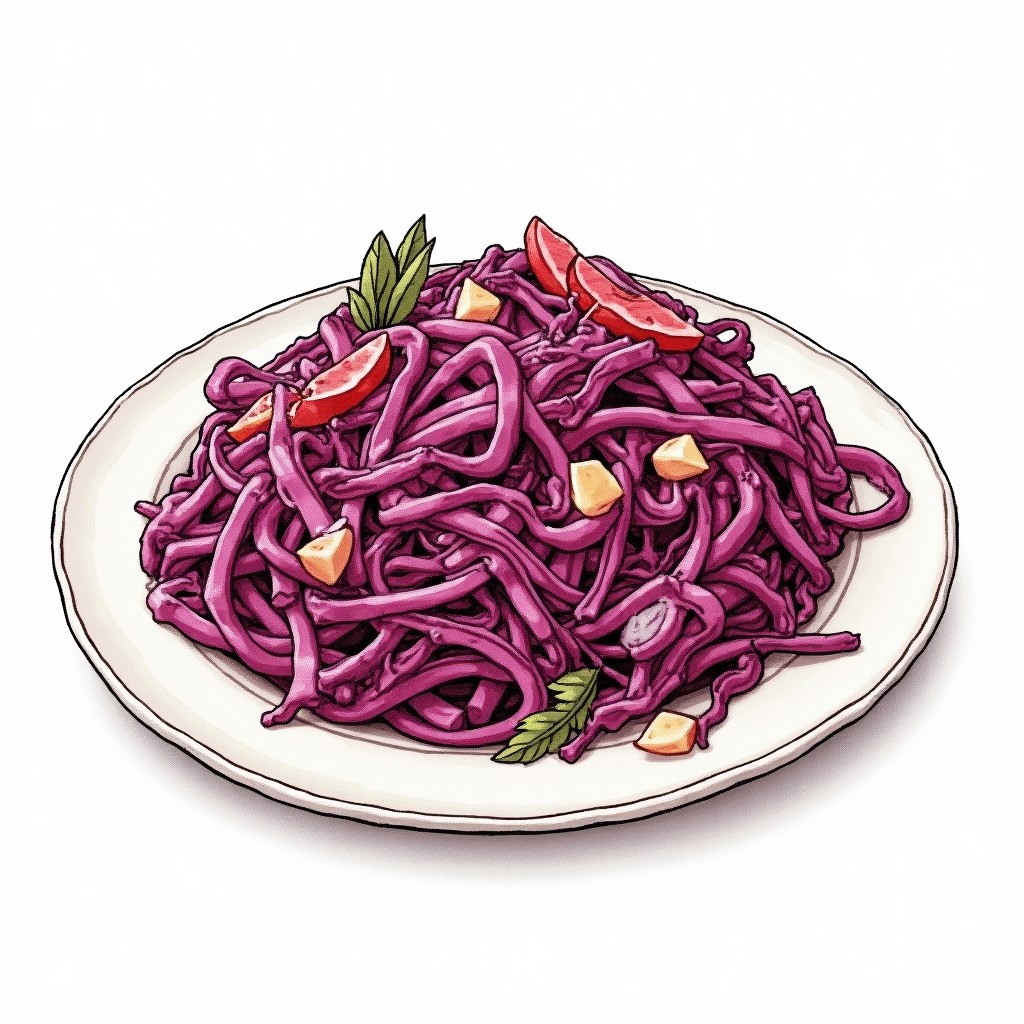
Traditional German Red Cabbage (Rotkohl)
Slow-Braised German Rotkohl — Sweet and Tangy Red Cabbage That Turns Ordinary Dinners Special
This deeply purple cabbage dish transforms from crisp and raw to silky and complex through hours of gentle braising. Apple pieces melt into the mix while wine and vinegar create the perfect sweet-sour balance that makes German rotkohl irresistible alongside roasts, sausages, or honestly, just about anything.
Red cabbage turns the most amazing deep purple color when it meets acid — a little kitchen magic that German cooks have been working with for centuries. This rotkohl recipe captures that transformation perfectly, slowly coaxing tough cabbage leaves into something silky and complex through patient braising. The process is almost meditative: butter, onions, then handfuls of shredded cabbage that seem impossible to fit in the pot until heat works its magic.
What makes German rotkohl special isn't just the color change — it's the careful balance of sweet and sour that develops over the long, slow cook. Apples break down into the mix, adding natural sweetness that plays against the bright tang of vinegar and wine. Bay leaves and cloves provide warmth without overwhelming the cabbage's earthy base. The result tastes like comfort itself, rich and jammy with just enough acidity to cut through heavy winter meals.
This isn't a side dish that gets forgotten on the table. Rotkohl has presence — it turns simple roasted pork or grilled sausages into something that feels special and intentional. The recipe scales beautifully and actually improves after a day in the refrigerator, making it perfect for holiday meal prep or weekend cooking sessions when you want your house to smell like someone's been cooking with love all day.
Nutrition
Ingredients
- 2 lbred cabbage, cored and sliced into thin ribbons
- 2 mediumtart apples (Granny Smith work perfectly), peeled and diced
- 1 largeyellow onion, sliced into thin half-moons
- 3 tbspunsalted butter
- ¼ cupred wine vinegar
- ½ cupdry red wine (save the good stuff for drinking)
- 2 tbspbrown sugar, packed
- 2 whole bay leaves
- 4 whole cloves
- 1 tspkosher salt
- ½ tspfreshly ground black pepper
- 1 cupbeef or vegetable broth (low-sodium preferred)
Instructions
- Melt the butter in your heaviest Dutch oven over medium heat until it stops foaming. The wide bottom gives you room to work, and the thick walls will prevent any scorching during the long braise ahead.
- Drop in the sliced onion and let it cook until the pieces turn translucent and start to soften around the edges. You want them pliable but not browned — they'll add sweetness without competing with the cabbage's natural flavors.⏱ 5 min
- Add all that sliced cabbage and toss it around with tongs until every ribbon gets coated in the buttery onion mixture. Cover the pot and let the cabbage wilt down considerably — it'll shrink to about half its volume as the cell walls break down and release moisture.⏱ 10 min
- Scatter in the diced apples, then pour in the vinegar, wine, and brown sugar. Tuck the bay leaves and cloves throughout the mixture, then season with salt and pepper. Give everything a good stir to distribute the seasonings evenly.
- Pour the broth over everything and bring the whole pot to a rolling boil. The liquid should barely cover the cabbage mixture — if it looks dry, add a splash more broth.
- Drop the heat to low and cover the pot with the lid slightly askew to allow some steam to escape. Let it bubble gently for about an hour and a half, until the cabbage becomes completely tender and the liquid reduces to a syrupy glaze.⏱ 1 hr 30 min
- Check on the pot every 30 minutes or so, giving it a gentle stir and adding more broth by the quarter-cup if the mixture looks like it's getting too dry. The goal is moist, jammy cabbage — not a scorched bottom.
- Fish out the bay leaves and whole cloves before serving — nobody wants to bite into those. Taste and adjust the balance with more salt, pepper, or a splash of vinegar if it needs more brightness. The flavor should be sweet, tangy, and deeply satisfying.
Tips & Tricks
- Use a sharp knife or mandoline to slice the cabbage as thinly as possible — thick pieces won't break down properly during braising and you'll end up with tough, chewy bits.
- Don't skip the step of wilting the cabbage first; it needs to release its moisture gradually or the braising liquid will be too watery and the flavors won't concentrate.
- Taste the mixture about 15 minutes before you think it's done — you might need to add more vinegar if the sweetness is overpowering, or a pinch more sugar if it's too tart.
- The cabbage is ready when you can easily crush a piece against the side of the pot with your spoon and the liquid has reduced to a glossy, syrup-like consistency.
- Make this a day ahead if you can — the flavors meld beautifully overnight and reheating actually improves the texture.
Frequently Asked Questions
Can I use green cabbage instead of red?
You can, but you'll lose the gorgeous color transformation and some of the traditional flavor. Red cabbage has a slightly earthier, more complex taste that works better with the sweet-sour balance. If you do substitute green, add an extra tablespoon of vinegar to compensate.
What can I substitute for the red wine?
Extra broth or apple juice both work well, though you'll want to add another tablespoon of vinegar to maintain the proper acidity. Grape juice is another good option that keeps the color vibrant.
How long does this keep in the refrigerator?
Rotkohl keeps beautifully for up to a week refrigerated and actually tastes better after the first day. Reheat gently on the stovetop with a splash of broth if it seems dry. It also freezes well for up to three months.
Why is my cabbage still tough after braising?
Either the pieces were cut too thick or the heat was too high. Thick cabbage won't break down properly, and high heat can make it seize up instead of becoming tender. Keep the simmer gentle and slice everything as thin as possible.
Can I make this in a slow cooker?
Yes, but sauté the onions and wilt the cabbage in a skillet first, then transfer everything to your slow cooker. Cook on low for 4-5 hours, checking occasionally and adding broth if it gets too dry.