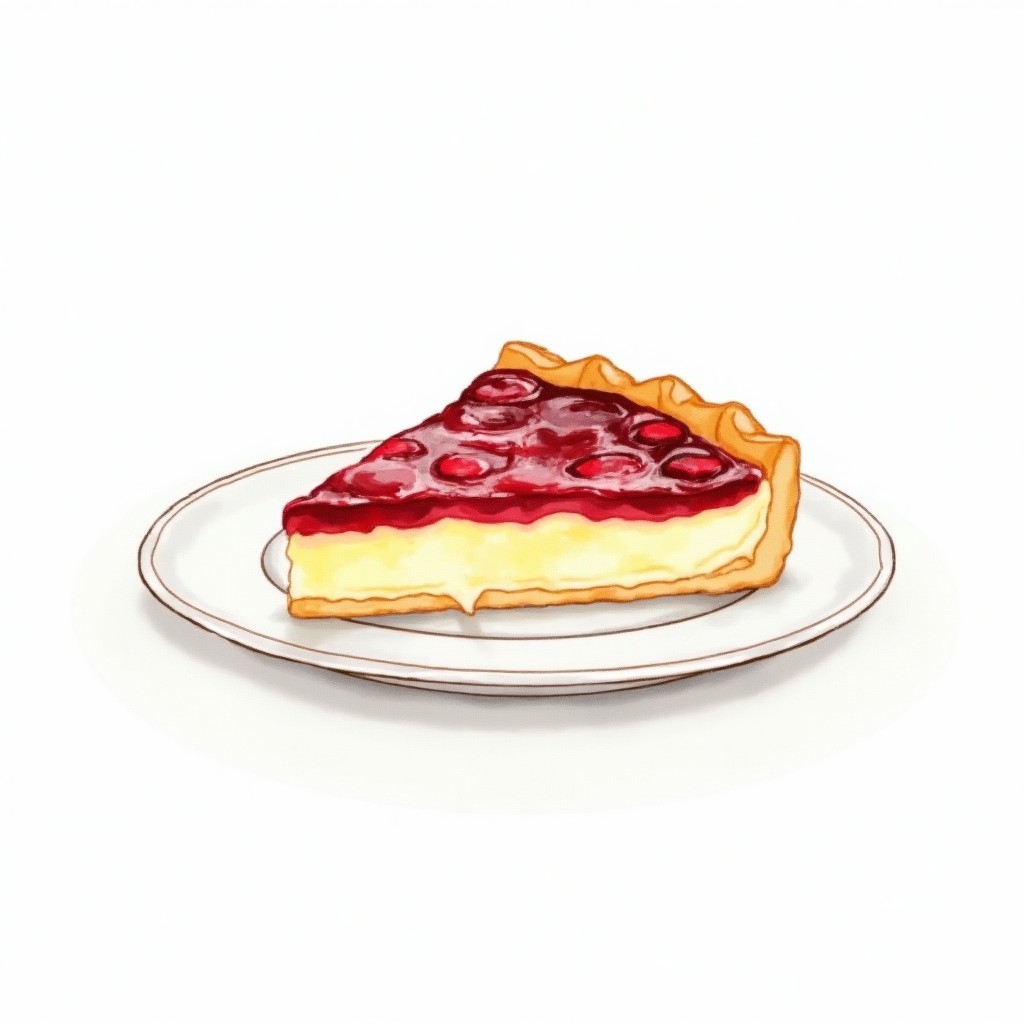
Traditional Bakewell Tart
Classic Bakewell Tart — Raspberry Jam and Almond Cream in Perfect Harmony
This Derbyshire classic layers tart raspberry jam under a cloud of almond frangipane, all cradled in buttery pastry. The contrast between sweet-sharp jam and rich almond cream makes every bite sing. Don't skip the cooling time — patience here rewards you with clean slices that show off those beautiful layers.
Bakewell tart exists because of a happy accident in 1860s Derbyshire, when a cook at the White Horse Inn supposedly misunderstood instructions and spread jam under the almond mixture instead of mixing it through. What could have been a disaster became one of England's most beloved desserts, though the people of Bakewell still debate whether it should properly be called a 'pudding' instead.
The genius lies in the layering — sharp raspberry jam cutting through rich, sweet frangipane while buttery pastry holds everything together. Each component needs the others; the jam prevents the almond cream from being cloying, while the frangipane transforms simple jam into something luxurious. Getting the balance right means using just enough jam to provide that tart counterpoint without overwhelming the delicate almond flavor.
This isn't a quick assembly job. The pastry needs proper blind baking to stay crisp under its moist toppings, and the frangipane requires patient creaming to achieve its characteristic light texture. But the real test of patience comes after baking — those clean, showstopping slices only happen when you let the tart cool completely, allowing the almond cream to set into perfect, sliceable layers.
Nutrition
Ingredients
Pastry
- 1½ cupall-purpose flour, for pastry
- ½ cupunsalted butter, cold and cubed
- 2 tbspgranulated sugar
- 1 largelarge egg yolk
- 2 tbspcold water
Filling
- ½ cupgood-quality raspberry jam
- ½ cupunsalted butter, softened to room temperature
- ½ cupcaster sugar (or superfine sugar)
- 2 largelarge eggs, room temperature
- ½ cupground almonds (almond flour)
- ¼ cupall-purpose flour
- ½ tsppure almond extract
Topping
- ¼ cupflaked almonds for topping
Instructions
- Using your fingertips, rub the flour, cold butter cubes, and sugar together until the mixture resembles fine breadcrumbs with no visible butter pieces. This creates the foundation for a crisp, tender pastry — work quickly to keep the butter cold.
- Make a well in the center and add the egg yolk and cold water. Use a knife to cut through the mixture, then bring it together with your hands into a smooth dough. Wrap tightly in plastic and chill for at least 30 minutes — this rest prevents shrinkage during baking.⏱ 30 min
- Position your oven rack in the lower third and preheat to 375°F. This placement ensures the pastry bottom cooks through while preventing the top from browning too quickly.
- Roll the chilled pastry on a floured surface into a 12-inch circle, then carefully transfer to a 9-inch tart pan. Press into the corners without stretching, then trim the excess, leaving about ½ inch overhang. Fold this under and crimp decoratively along the edge.
- Line the pastry with parchment paper and fill with baking beans or pie weights. Blind bake for 15 minutes — the weights prevent puffing and ensure an even base for your filling.⏱ 15 min
- Carefully remove the parchment and weights, then return to the oven for another 5 minutes until the base looks set and lightly golden. This second bake eliminates any soggy bottom issues.⏱ 5 min
- While the pastry is still warm, spread the raspberry jam evenly across the base using the back of a spoon. The residual heat helps the jam settle into any small cracks in the pastry.
- Reduce oven temperature to 350°F. In a bowl, cream the softened butter and caster sugar with an electric mixer until pale and fluffy, about 3 minutes. This aeration is crucial for a light frangipane texture.
- Beat in the eggs one at a time, mixing well after each addition, then gently fold in the ground almonds, flour, and almond extract just until combined. Don't overmix once the flour goes in — you want tender, not tough frangipane.
- Spoon the frangipane over the jam layer and spread evenly with an offset spatula, then scatter the flaked almonds on top. The frangipane will puff slightly as it bakes, creating that classic domed appearance.
- Bake for 30 minutes until the frangipane is golden brown and springs back lightly when touched. A skewer inserted in the center should come out with just a few moist crumbs — it will continue cooking from residual heat.⏱ 30 min
- Cool completely in the pan for at least 1 hour before attempting to slice. The frangipane needs this time to set properly — rushing this step leads to messy, uneven slices that don't showcase your beautiful layers.⏱ 1 hr
Tips & Tricks
- Keep your jam layer thin — about 1/8 inch thick is plenty, as too much will make the frangipane slide around and create uneven layers.
- Room temperature eggs incorporate better into the frangipane mixture, preventing the butter from seizing up and creating a lumpy texture.
- If your frangipane mixture curdles when adding eggs, a tablespoon of the measured flour will usually bring it back together.
- The flaked almonds on top will brown faster than the frangipane underneath, so tent with foil if they're getting too dark while the center is still pale.
- Day-old tart actually tastes better than fresh — the flavors meld overnight and the texture becomes more cohesive.
Frequently Asked Questions
Can I use a different jam flavor?
Absolutely — strawberry, apricot, or blackcurrant all work beautifully. Just choose something with good tartness to balance the sweet almond cream. Avoid overly sweet jams as they'll make the whole tart cloying.
How do I know when the frangipane is fully baked?
The surface should be golden brown and spring back lightly when touched, and a skewer inserted in the thickest part should come out with just a few moist crumbs. It will continue cooking from residual heat even after you remove it.
Can I make this ahead of time?
Yes, this tart keeps beautifully for 2-3 days covered at room temperature, and many people prefer the texture after it's had time to settle. You can also freeze the unbaked tart shell for up to 3 months.
What if I don't have ground almonds?
Pulse whole blanched almonds in a food processor until finely ground, but stop before they become almond butter. Alternatively, almond flour works as a direct substitute, though it creates a slightly more tender texture.
Why did my pastry shrink during blind baking?
This usually happens when the dough wasn't chilled long enough or was stretched when placing it in the pan. Always rest pastry for at least 30 minutes and gently press it into corners without pulling.