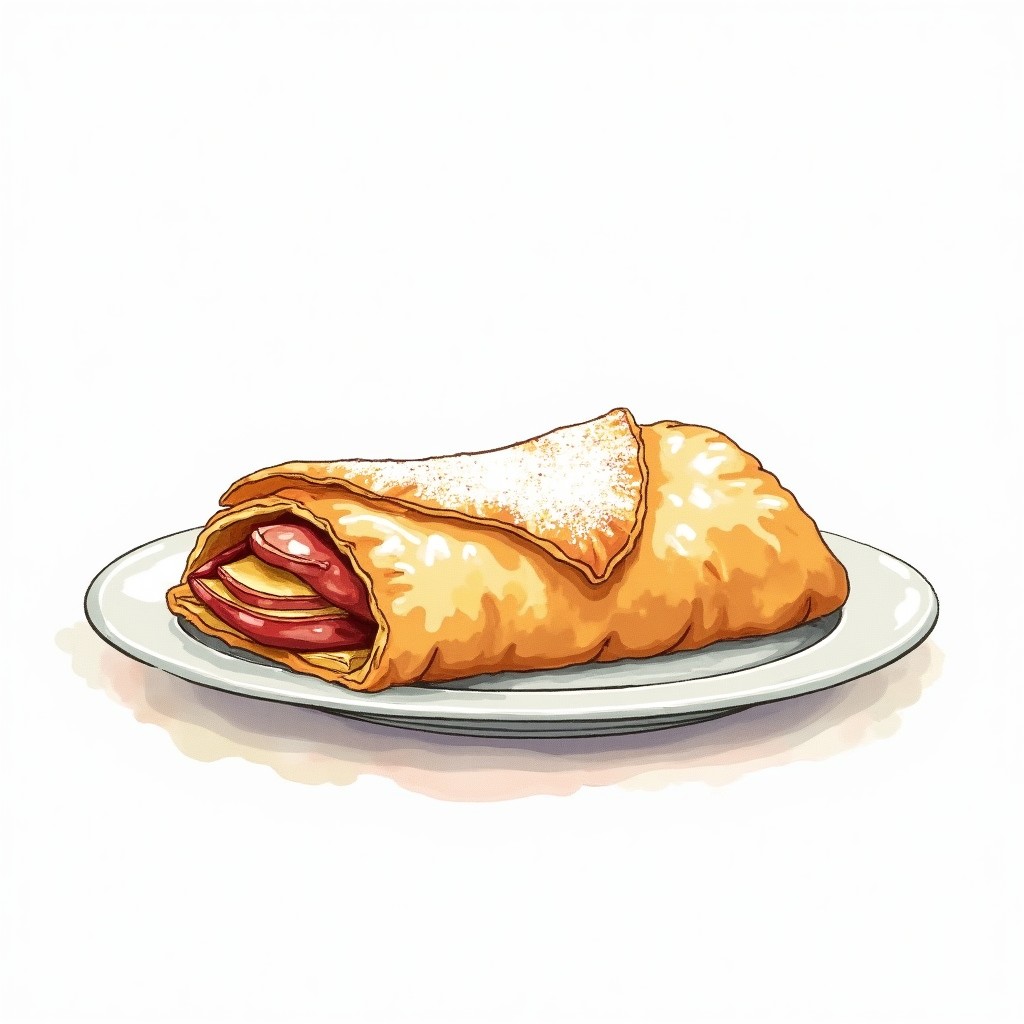
Traditional Apple Strudel with Phyllo Pastry
Classic Apple Strudel — Paper-Thin Phyllo Wrapped Around Spiced Orchard Gold
Working with phyllo takes a steady hand, but the payoff is extraordinary — crisp, buttery layers that shatter at first bite to reveal tender apples perfumed with cinnamon and studded with plump raisins. The breadcrumbs aren't just filler; they soak up the apple juices and create the perfect texture contrast.
Austrian bakers stretch their strudel dough so thin you could read through it — a technique that takes years to perfect. But here's the thing about phyllo strudel: it gives you 90% of that ethereal texture with far less drama, and honestly, most people can't tell the difference once it hits the table.
The magic happens in layers. Each sheet of phyllo gets brushed with butter before the next goes on, building up delicate leaves that puff and separate in the oven's heat. When you cut into the finished strudel, those layers shatter into golden shards that contrast beautifully with the soft, spiced apple filling inside. The breadcrumbs aren't just filler — they're insurance against a soggy bottom, soaking up all those lovely apple juices while adding their own subtle nuttiness.
This recipe comes from watching my Austrian neighbor work through dozens of strudels during apple season. She taught me that the filling should never be too wet (hence the breadcrumbs) and that you want your apples sliced thin enough to cook through but thick enough to still have some bite. The raisins plump up in the oven, adding little bursts of concentrated sweetness that play off the cinnamon and nutmeg.
What makes homemade strudel special isn't just the taste — though it beats any bakery version — it's that moment when you pull it from the oven and hear the phyllo crackling as it cools. That's when you know you've got something worth the effort.
Nutrition
Ingredients
- 8 sheetsphyllo pastry sheets, fully thawed
- 6 tbspunsalted butter, melted and kept warm
- powdered sugar for dusting(optional)
Filling
- 6 mediumtart baking apples (Granny Smith or Honeycrisp), peeled and thinly sliced
- ½ cupgranulated sugar
- ⅓ cupgolden raisins or regular raisins
- ⅓ cupfine dry breadcrumbs (panko works too)
- 1 tspground cinnamon
- ¼ tspfreshly grated nutmeg
- 2 tbspfresh lemon juice
Instructions
- Set your oven to 375°F and position the rack in the center. This temperature gives you the perfect balance of crispy phyllo without burning the delicate layers.
- Combine the sliced apples with lemon juice first — this prevents browning and adds brightness. Then add the sugar, cinnamon, and nutmeg, tossing until every slice is coated. The lemon juice also helps draw out just enough moisture from the apples.
- Fold in the raisins and breadcrumbs until evenly distributed. The breadcrumbs will absorb the apple juices as the strudel bakes, preventing a soggy bottom while adding subtle texture to each bite.
- Unroll the phyllo sheets onto a clean, dry kitchen towel and cover with a slightly damp towel to prevent drying out. Working quickly but gently, brush each sheet with melted butter using a pastry brush. Stack them as you go, buttering each layer — this creates the signature flaky texture.
- Spoon the apple mixture along one long edge of your phyllo stack, leaving about 2 inches of border on all sides. Don't overfill or the juices will leak out during rolling. Distribute it evenly so every slice will have filling.
- Using the towel as your guide, lift the edge and roll the strudel tightly away from you, tucking in the short ends as you go. The towel gives you control without tearing the delicate phyllo. Roll firmly but don't squeeze — you want it snug, not compressed.
- Carefully transfer the strudel seam-side down to a parchment-lined baking sheet. If it tears slightly, don't worry — the butter will help seal it during baking. Position it diagonally if needed to fit your pan.
- Brush the entire surface with the remaining melted butter, making sure to get into any creases. This final butter coating ensures every bit of phyllo turns golden and crispy in the oven.
- Bake until the strudel is deep golden brown and sounds hollow when tapped gently. The phyllo should be crisp and the filling should be bubbling at the seams. If it's browning too quickly, tent loosely with foil.⏱ 35 min
- Let the strudel rest for 10 minutes before slicing — this allows the juices to settle and makes cleaner cuts. Dust with powdered sugar just before serving for that classic bakery finish.⏱ 10 min
Tips & Tricks
- Keep unused phyllo covered with a damp towel at all times — it dries out in minutes and becomes impossible to work with once brittle.
- Don't skip the breadcrumbs in the filling; they absorb excess apple juice and prevent the bottom phyllo from getting soggy.
- If your phyllo tears while rolling, brush the tear with melted butter and keep going — the butter acts like glue and the tear won't show in the final result.
- Use a mix of apple varieties if you have them; tart Granny Smiths balance well with sweeter Honeycrisps or Galas.
- Make diagonal cuts with a sharp serrated knife to showcase the spiral of filling inside — sawing gently prevents the phyllo from shattering.
Frequently Asked Questions
Can I make this ahead of time?
Assemble the strudel up to 4 hours ahead and keep it covered in the refrigerator, but don't brush with the final butter coating until right before baking. The phyllo stays crispier this way.
What if I can't find fine breadcrumbs?
Pulse regular breadcrumbs in a food processor until fine, or use panko and crush them with your hands. Avoid seasoned breadcrumbs — you want the apple flavors to shine.
How do I know when it's done baking?
The phyllo should be deep golden brown and sound hollow when you tap it gently with your knuckle. You should also see some filling bubbling at the seams.
Can I freeze leftover strudel?
Yes, wrap cooled slices tightly in plastic wrap and freeze for up to 3 months. Reheat in a 350°F oven for 10-12 minutes to restore crispness — don't use the microwave.
My phyllo keeps tearing — what am I doing wrong?
The phyllo is probably too dry. Make sure it's properly thawed and keep unused sheets under a damp towel. Work quickly but gently, and remember that small tears can be patched with butter.