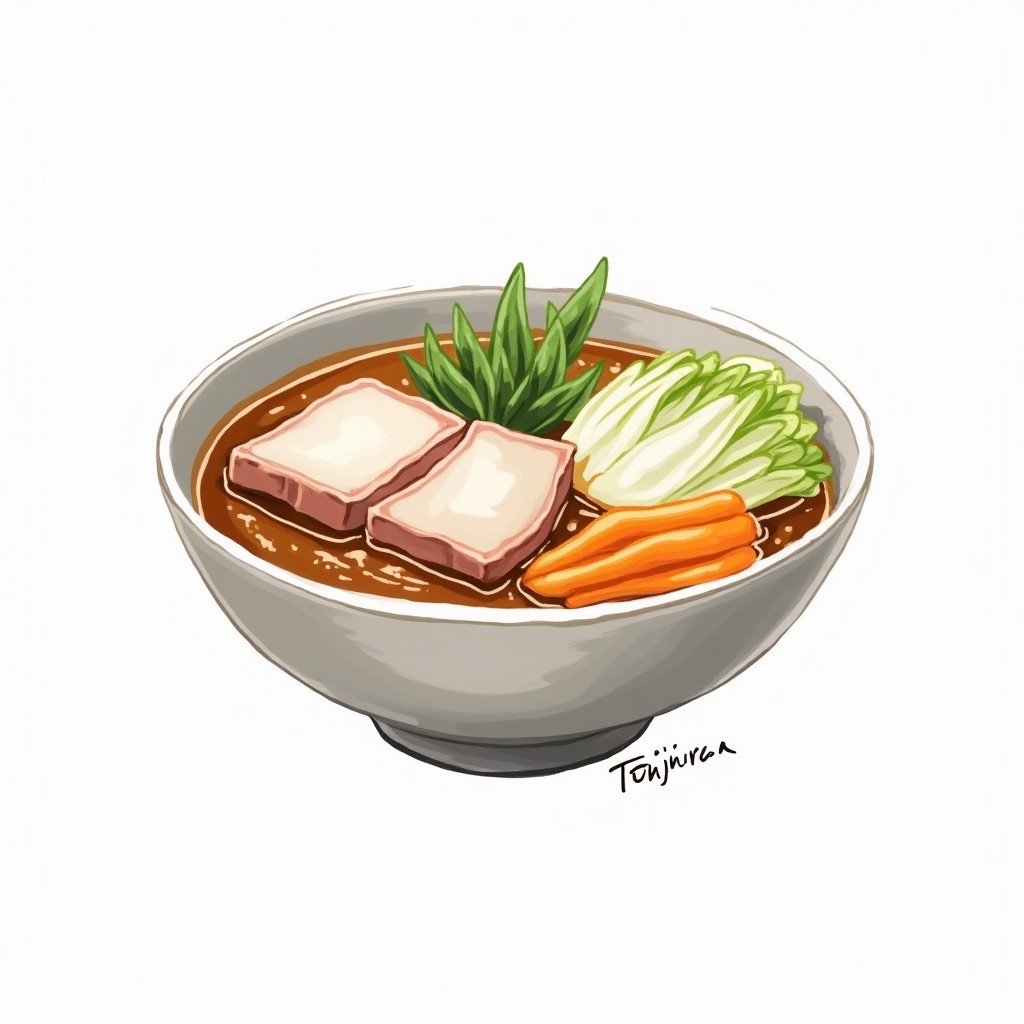
Tonjiru (Pork and Vegetable Miso Soup)
Tonjiru - Hearty Pork and Root Vegetable Miso Soup
This rustic Japanese soup transforms humble root vegetables and pork belly into something deeply satisfying. The vegetables simmer until tender in dashi, absorbing layers of flavor before the miso gets stirred in off the heat — a technique that preserves its delicate complexity.
Walking through Japanese neighborhoods on cold evenings, you'll catch whiffs of tonjiru drifting from kitchen windows — earthy, porky, and deeply comforting. This isn't the refined miso soup served at sushi counters, but rather its heartier country cousin, loaded with whatever root vegetables the season provides.
The dish emerged from Japan's farming communities, where cooks needed to stretch modest amounts of pork belly into a meal that could sustain families through long winter days. Burdock root, taro, and daikon form the backbone, each contributing its own texture and mineral notes to the rich broth. The vegetables simmer slowly in dashi until they're tender enough to break apart with chopsticks, absorbing the pork's rendered fat along the way.
What separates good tonjiru from great tonjiru lies in the final moments. The miso gets dissolved off the heat, preserving its complex fermented flavors that would turn harsh under prolonged boiling. Fresh ginger blooms in the residual warmth, while hand-torn tofu creates cragged surfaces that catch every drop of the intensely flavored broth. It's rustic cooking at its most satisfying — humble ingredients transformed through patience and technique into something that warms you from the inside out.
Ingredients
Main Ingredients
- 9⅝ ozpork belly, sliced and cut into 1-inch pieces
- 8 ozcabbage, cut into bite-sized pieces
- 3½ ozgobo (burdock root)
- 8 oztaro (satoimo)
- 1 onion, halved lengthwise and thinly sliced
- 8⅔ ozdaikon radish, peeled and thinly sliced
- 4⅓ ozcarrot, peeled and thinly sliced
- ½ blockkonnyaku (konjac), rinsed
- 1 Tokyo negi (long green onion), sliced diagonally
- 1 pieceaburaage (deep-fried tofu pouch)
- 1 tspfresh ginger, grated with juice
Soup
- 1 tbsptoasted sesame oil
- 6 cupdashi (Japanese soup stock)
- 6 tbspmiso
- 7 ozmedium-firm tofu, torn into small pieces
Garnish
- 1 green onion, thinly sliced
- shichimi togarashi (Japanese seven spice)(optional)
Instructions
- Warm the sesame oil in a large pot over medium heat until it shimmers and flows easily when you tilt the pan.
- Drop in the pork belly pieces and stir-fry until they lose their raw pink color, about 3-4 minutes. The meat will release some fat, which adds richness to the soup.
- Add the sliced onion and stir-fry until it starts to soften and become fragrant. Don't worry about browning — you want it just tender.
- Toss in the daikon and carrot slices, stirring everything together until the vegetables are well-coated with the rendered fat and oil.
- Add the gobo and taro, mixing them in with the other vegetables. These heartier roots need the longest cooking time.
- Nestle in the konjac, aburaage, and green onion, then pour in the dashi. The liquid should just cover all the ingredients — add a bit more if needed.
- Bring everything to a full boil over medium-high heat, then immediately reduce to a gentle simmer. Use a ladle or spoon to skim off any foam and excess fat that rises to the surface.
- Cover the pot and let it simmer until you can easily pierce the root vegetables with a fork — they should be tender but not mushy.⏱ 15 min
- Remove the pot from heat completely. Place the miso in a fine-mesh strainer and lower it into the soup, using a spoon to work it through the mesh until fully dissolved. This method prevents lumps and preserves the miso's flavor.
- Stir in the grated ginger along with any juice you captured. The residual heat will bloom its aroma without making it harsh.
- Gently fold in the torn tofu pieces. Tearing rather than cutting creates irregular edges that hold onto the soup better than clean cuts.
- Return to medium-low heat just until the soup is heated through — avoid boiling, which can make the miso taste harsh and the tofu tough.
- Ladle into bowls and top with sliced green onions. Pass the shichimi togarashi at the table for those who want a bit of heat.
Tips & Tricks
- Cut your root vegetables into similar-sized pieces so they finish cooking at the same time — thick daikon slices need as much time as chunky taro pieces.
- Don't skip skimming the foam during the initial boil; it removes impurities that would make your finished soup cloudy and less clean-tasting.
- Dissolving miso through a fine-mesh strainer prevents those stubborn lumps that never quite disappear, giving you silky, even flavor throughout.
- Hand-tear the tofu instead of cutting it — the irregular surfaces hold onto the soup better than neat knife cuts.
- If you can't find fresh ginger, powdered won't work here; the dish relies on that bright, aromatic bite that only fresh ginger provides.
Frequently Asked Questions
Can I substitute the pork belly with another cut of meat?
Pork shoulder works well and will give you similar richness, though it takes a few extra minutes to become tender. Avoid lean cuts like pork loin — the rendered fat from fattier cuts is essential for the soup's body and flavor.
What can I use if I can't find gobo or taro?
Turnips make a good substitute for taro, while parsnips can stand in for gobo. You'll lose some of the earthy complexity, but the soup will still be delicious. Just maintain the same total amount of root vegetables.
How long will this keep in the refrigerator?
Tonjiru keeps for up to 4 days refrigerated and actually tastes better the next day as the flavors meld. Reheat gently without boiling to preserve the miso's delicate flavor — high heat makes it taste harsh and salty.
Can I make this soup ahead of time?
Yes, but stop before adding the miso and tofu. Refrigerate the vegetable and pork base, then reheat and finish with the miso and tofu just before serving. This prevents the miso from developing off-flavors during storage.
Is there a vegetarian version of this soup?
Replace the pork with extra-firm tofu or mushrooms, and use kombu dashi instead of regular dashi. Add a tablespoon of tahini or sesame paste with the vegetables for richness that mimics the pork fat.