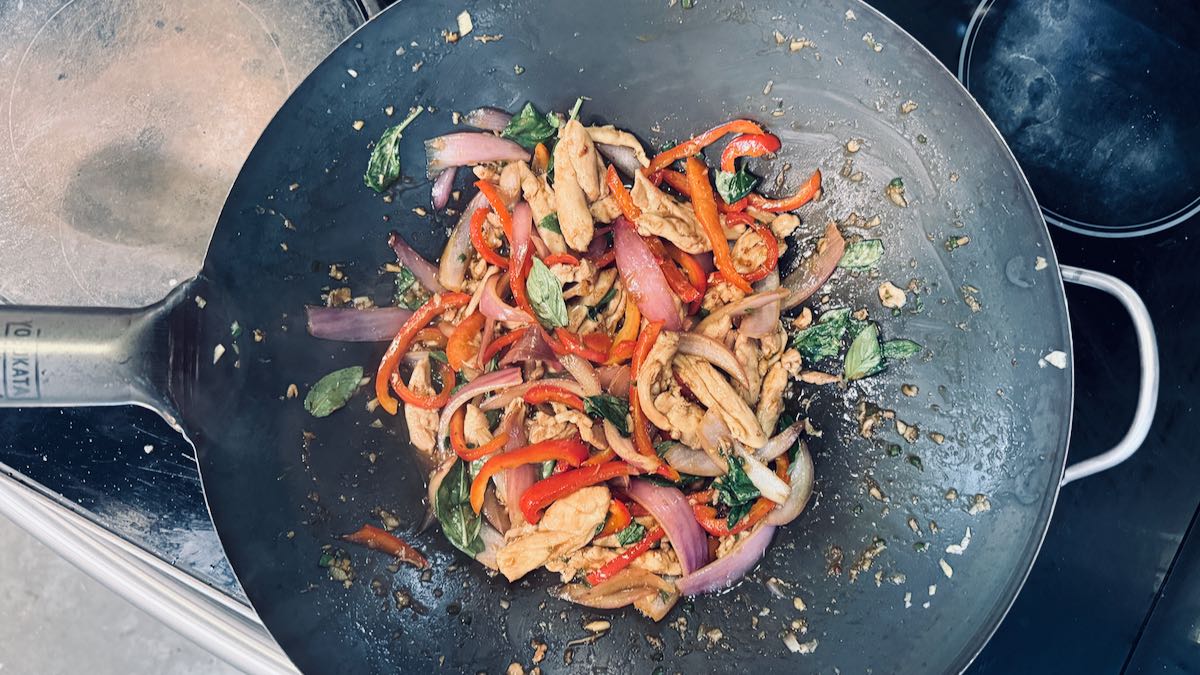
Thai Basil Chicken (Pad Kra Pao)
Fiery Thai Basil Chicken — Authentic Pad Kra Pao
Holy basil meets ground chicken in this legendary Thai stir-fry that balances sweet, salty, and seriously spicy in every bite. The magic happens when fresh basil leaves hit the hot pan and release their peppery aroma — that's when you know you've nailed it.
The first time you smell fresh basil leaves hitting a screaming-hot wok, you understand why pad kra pao is Thailand's most beloved comfort food. This isn't just stir-fried chicken — it's a masterclass in balancing heat, sweetness, and that distinctive peppery bite that only Thai basil can deliver.
Authentic pad kra pao relies on holy basil (bai kra pao), which has a more intense, almost clove-like flavor than the sweet basil most of us know. But don't let that stop you — regular Thai basil or even Italian basil will give you something delicious, just with a different personality. The real secret lies in the technique: blazing heat, quick moves, and adding the basil at the very end so it wilts without losing its punch.
What sets this dish apart from other Thai stir-fries is its beautiful simplicity. No long ingredient lists or complex prep — just chicken, vegetables, a balanced sauce, and those crucial basil leaves. The magic happens in the final moments when everything comes together in the hot pan, creating those caramelized edges on the chicken while keeping the vegetables crisp and the basil bright.
Ingredients
For the Stir-Fry
- 1 lbboneless chicken thighs or breast, sliced thin against the grain
- 1 tbspvegetable or canola oil, for high-heat cooking
- 1 large yellow onion, cut into thick wedges
- 1 red or orange bell pepper, chunked into bite-sized pieces
- 3 clovegarlic cloves, finely minced
- 1 Thai bird's eye chili, seeded and minced (or more to taste)
- 1 cupfresh Thai basil leaves (or sweet basil as substitute), stems removed
- 1 tbspfresh ginger, peeled and minced(optional)
For the Sauce
- 2 tbspoyster sauce, for umami depth
- 1½ tbsplight soy sauce
- 1 tbspfish sauce, for authentic Thai flavor
- 1 tbspwater or chicken stock
- 1 tspbrown sugar, to balance the salt
Instructions
- Stir together all sauce ingredients in a small bowl until the brown sugar completely dissolves. This balanced sweet-salty-funky mixture will coat everything at the end, so taste and adjust now if needed.
- Get your wok or large skillet screaming hot over medium-high heat, then add the oil. Immediately toss in garlic, ginger, and Thai chilies, stirring constantly for 30 seconds until they release their fragrance but don't burn.⏱ 30 sec
- Add the sliced chicken and spread it out in a single layer. Let it sear undisturbed for about 2 minutes, then stir-fry until golden and cooked through, about 4-5 minutes total. The pieces should have some caramelized edges.⏱ 5 min
- Toss in the onion wedges and bell pepper chunks. Keep everything moving in the pan for 2-3 minutes until the vegetables are tender-crisp — they should still have some bite to contrast the tender chicken.⏱ 3 min
- Pour the prepared sauce over everything and toss vigorously for 1-2 minutes. The sauce should bubble up, reduce slightly, and glaze all the ingredients with a glossy sheen.⏱ 2 min
- Kill the heat immediately and fold in the fresh basil leaves. They'll wilt from the residual heat and release that distinctive peppery aroma that makes this dish sing.
- Serve immediately over steamed jasmine rice. This dish loses its magic if it sits around, so get it to the table while the basil is still bright and the sauce is still glossy.
Tips & Tricks
- Thai chilies pack serious heat — start with half if you're not sure about your spice tolerance, and remove the seeds for less fire.
- Don't dump all the basil in at once; add it gradually while tossing so every leaf gets coated with the hot sauce.
- If your chicken releases too much liquid while cooking, turn up the heat and let it evaporate before adding vegetables.
- Cut your chicken into uniform pieces about 1/2-inch thick so everything cooks evenly in the short stir-fry time.
- Have everything prepped and ready before you start cooking — this dish moves fast once you hit the heat.
Frequently Asked Questions
Can I use ground chicken instead of sliced?
Absolutely — ground chicken is actually more traditional for pad kra pao. Break it up as it cooks and let some pieces get crispy before adding the vegetables.
What if I can't find Thai basil?
Sweet Italian basil works fine, though it's milder and sweeter than Thai basil. You could also try mixing regular basil with a few mint leaves to get closer to that peppery bite.
How do I know if my pan is hot enough?
When you add the oil, it should shimmer immediately and the garlic should sizzle the moment it hits the pan. If things aren't sizzling actively, turn up the heat.
Can I make this ahead of time?
This dish is best served immediately — the basil loses its bright flavor and the vegetables get soggy if it sits. Prep everything ahead, but cook it fresh when you're ready to eat.