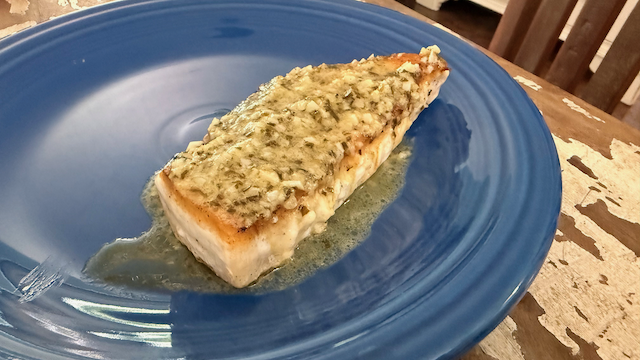
Swordfish with Lemon Garlic Butter
Swordfish Steaks with Golden Lemon-Herb Butter — Perfectly Seared and Oven-Finished
Thick swordfish steaks get a beautiful golden crust on the stovetop, then finish cooking gently in the oven while an aromatic lemon-garlic butter comes together. The meaty fish stays tender inside, and that bright, herby butter transforms every bite into something special.
Swordfish steaks demand respect in the kitchen — their meaty texture and clean flavor can shine brilliantly or fall flat depending on how you treat them. Unlike delicate fish that cook through quickly, these thick cuts need a two-stage approach: high heat for that coveted golden crust, then gentle oven heat to finish cooking without turning tough.
The magic happens in that final flourish of lemon-herb butter. While the fish rests, those pan drippings mingle with garlic, fresh herbs, and bright citrus to create a sauce that's both elegant and deeply satisfying. It's the kind of finishing touch that transforms a simple piece of fish into something you'd order at a waterfront restaurant.
This technique works because swordfish has enough structure to handle the initial sear without falling apart, yet benefits from the controlled heat of the oven to cook evenly throughout. The compound butter isn't just a garnish — it's an integral part of the dish that brings everything together with richness and brightness.
Ingredients
Lemon Garlic Mixture
- 2 tbspbutter, softened to room temperature
- 1 tbspfresh chives, finely chopped
- 2 tbspgarlic cloves, minced fine
- ¼ tspkosher salt
- ⅛ tspfreshly ground black pepper
- 1 tbspfresh lemon juice, from 1/2 lemon
- 1 tbsplemon zest, finely grated
Fish
- 2 tbspolive oil, for searing
- 2 swordfish steaks, 1-inch thick and skin removed
- kosher salt, for seasoning
- freshly ground black pepper, for seasoning
Instructions
- Get your oven preheating to 400°F with the rack positioned in the center. Meanwhile, mash together all the lemon garlic mixture ingredients in a small bowl until well combined — this compound butter will be your finishing touch.
- Thoroughly dry the swordfish steaks with paper towels, pressing firmly to remove all surface moisture. Season both sides generously with salt and pepper, pressing the seasoning into the flesh.
- Heat the olive oil in a large oven-safe skillet over medium-high heat until it shimmers. Carefully lay the swordfish steaks in the pan and let them sear undisturbed for 3 minutes — resist the urge to peek or move them around.⏱ 3 min
- Flip the steaks to reveal that golden-brown crust, then immediately turn off the burner and slide the entire skillet into the preheated oven.
- Roast for 5-6 minutes until the fish feels firm but still gives slightly when pressed, and the center is just opaque. Swordfish can go from perfect to overcooked quickly, so check at 5 minutes.⏱ 6 min
- During the final minute of roasting, warm the lemon-garlic butter mixture in a small saucepan over medium-high heat, stirring constantly until it melts into a fragrant, bubbly sauce. Remove from heat immediately.⏱ 1 min
- Spoon the warm lemon-garlic butter over the finished swordfish steaks, making sure to capture any flavorful pan juices. Serve immediately while the butter is still sizzling.
Tips & Tricks
- Choose steaks that are at least 1 inch thick; thinner cuts will overcook before developing a proper crust.
- Let the swordfish sit at room temperature for 10-15 minutes before cooking to ensure even heating throughout.
- Don't move the fish during the initial sear — it needs those full 3 minutes of contact to develop the golden crust.
- Test doneness by pressing the center gently; it should feel firm but still have a slight give, like pressing the flesh between your thumb and forefinger.
- Make the compound butter ahead and keep it refrigerated — it'll last up to a week and works beautifully on other grilled fish too.
Frequently Asked Questions
Can I use frozen swordfish steaks for this recipe?
Yes, but thaw them completely in the refrigerator overnight and pat them extra dry before seasoning. Frozen fish releases more moisture during cooking, so you'll need to be more thorough with the drying step.
What can I substitute if I don't have an oven-safe skillet?
Sear the steaks in your regular skillet, then transfer them to a baking dish and continue in the oven. You'll miss out on some of the pan drippings for the butter sauce, but the fish will still cook perfectly.
How do I know if my swordfish is overcooked?
Overcooked swordfish becomes dense and dry with a chalky texture. The flesh should be opaque throughout but still moist and flaky when you cut into it.
Can I make this with other thick fish steaks?
Absolutely — this method works great with tuna, mahi-mahi, or halibut steaks. Adjust the oven time slightly based on thickness, but the technique remains the same.