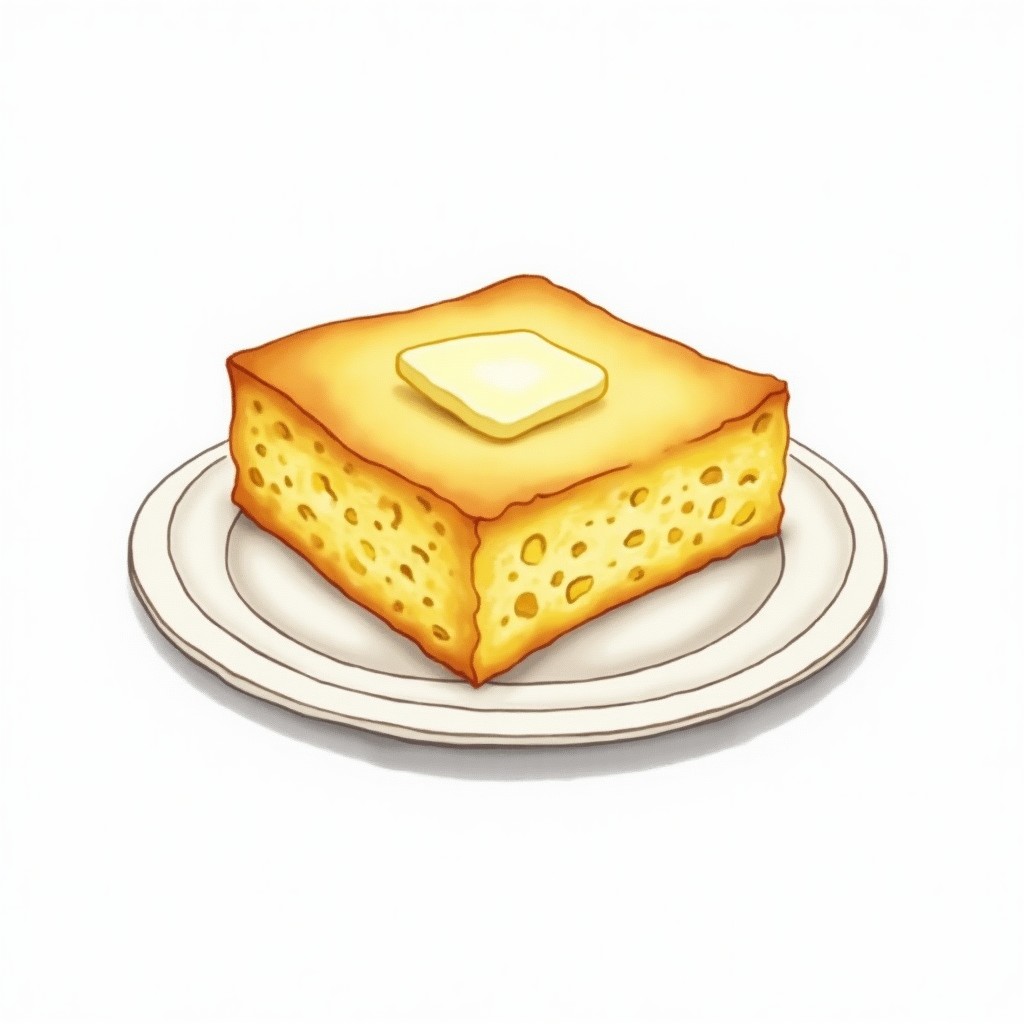
Southern Cornbread
Cast Iron Skillet Cornbread with Golden Buttermilk Crumb
The sizzle tells you everything—when that batter hits the hot cast iron, you know you're about to create cornbread perfection. This recipe delivers the coveted contrast every Southern cook dreams of: a mahogany crust that crackles under your knife and an interior so tender it practically melts on your tongue.
Cast iron cornbread isn't just about the recipe — it's about the ritual. The moment you hear that batter hit the scorching metal, you're participating in a tradition that spans generations of Southern kitchens. That distinctive sizzle signals the beginning of something special: a chemical reaction between hot fat and cornmeal that creates the most coveted texture contrast in American baking.
What makes this version exceptional is the balance between structure and tenderness. The buttermilk provides both tang and acidity, which reacts with the baking powder for extra lift while keeping the crumb impossibly soft. Meanwhile, the cast iron does what it does best — it holds fierce, even heat that creates a mahogany crust you simply can't achieve in a regular baking pan.
This isn't the cake-like cornbread you might find at chain restaurants. It's the real deal: substantial enough to soak up pot liquor, sweet enough to pair with honey, and sturdy enough to crumble into a glass of cold buttermilk — though you might want to eat it straight from the skillet while it's still warm. The edges will be your reward for patience, offering that perfect balance of crispy exterior and tender crumb that makes cast iron cornbread a cornerstone of comfort food.
Nutrition
Ingredients
- 1 cupfine yellow cornmeal, stone-ground preferred
- 1 cupall-purpose flour
- 1 tbspgranulated sugar
- 1 tspfine sea salt
- 1 tbspbaking powder, double-acting
- 1 cupcultured buttermilk, well-shaken
- 2 largelarge eggs, room temperature and beaten
- ¼ cupneutral vegetable oil
- 2 tbspunsalted butter
Instructions
- Crank your oven to 425°F—this high heat is crucial for developing that signature crust. Position a rack in the center for even browning.
- Drop the butter into your 10-inch cast iron skillet and slide it into the heating oven. Let it melt completely and begin to foam, which tells you the skillet is properly heated and ready to create that distinctive sizzle.⏱ 3 min
- In a large mixing bowl, whisk together the cornmeal, flour, sugar, salt, and baking powder until evenly distributed. Make sure no lumps of baking powder remain—they'll create uneven rising.
- In a separate bowl, whisk the buttermilk, beaten eggs, and oil until smooth. The buttermilk's tang will balance the slight sweetness while tenderizing the crumb.
- Create a well in your dry ingredients and pour in the buttermilk mixture. Using a wooden spoon or spatula, fold together with gentle strokes until just barely combined—lumps are your friend here, as overmixing leads to tough cornbread.
- Carefully remove the blazing hot skillet from the oven using oven mitts. Tilt and swirl to coat the sides with the melted butter, creating a golden barrier that will become your crust.
- Pour the batter directly into the center of the hot skillet—listen for that satisfying sizzle as the batter meets the buttered iron. This immediate contact is what creates the coveted crispy bottom.
- Slide into the oven and bake until the top turns a beautiful golden brown and a toothpick inserted in the center emerges with just a few moist crumbs clinging to it. The edges should pull slightly away from the sides.⏱ 25 min
- Exercise patience and let the cornbread rest in its skillet—this resting time allows the interior to finish cooking gently while the crust sets to perfection. Cutting too early will result in a gummy center.⏱ 10 min
Tips & Tricks
- Your skillet needs to be smoking hot when the batter goes in — if you don't hear that immediate sizzle, put it back in the oven for a few more minutes.
- Don't skip the step of coating the skillet sides with melted butter; this creates the golden crust that extends up the edges, not just on the bottom.
- Resist the urge to stir the batter until completely smooth — those lumps are crucial for tender cornbread, and overmixing develops too much gluten.
- Test doneness by looking for edges that pull slightly away from the pan sides, not just relying on the toothpick test.
- Let the cornbread rest in the hot skillet for at least 10 minutes before cutting — this prevents a gummy center and allows the crust to fully set.
Frequently Asked Questions
Can I make this without a cast iron skillet?
You can use a 9-inch round cake pan or 8x8 square pan, but preheat it with butter just like the cast iron version. You won't get quite the same crispy crust, but it will still be delicious cornbread.
What if I don't have buttermilk?
Add 1 tablespoon of white vinegar or lemon juice to regular milk and let it sit for 5 minutes until it curdles. This creates the same tangy flavor and acidity that buttermilk provides.
How do I store leftover cornbread?
Wrap cooled cornbread in plastic wrap or store in an airtight container at room temperature for up to 3 days. For longer storage, freeze wrapped pieces for up to 3 months.
Why did my cornbread turn out dry?
Overbaking is the usual culprit — cornbread continues cooking in the hot skillet even after you remove it from the oven. Pull it out when a toothpick has just a few moist crumbs, not when it's completely clean.
Can I double this recipe?
Yes, but use two 10-inch skillets rather than one larger pan. The batter layer needs to stay relatively thin for proper cooking and that signature crispy bottom.