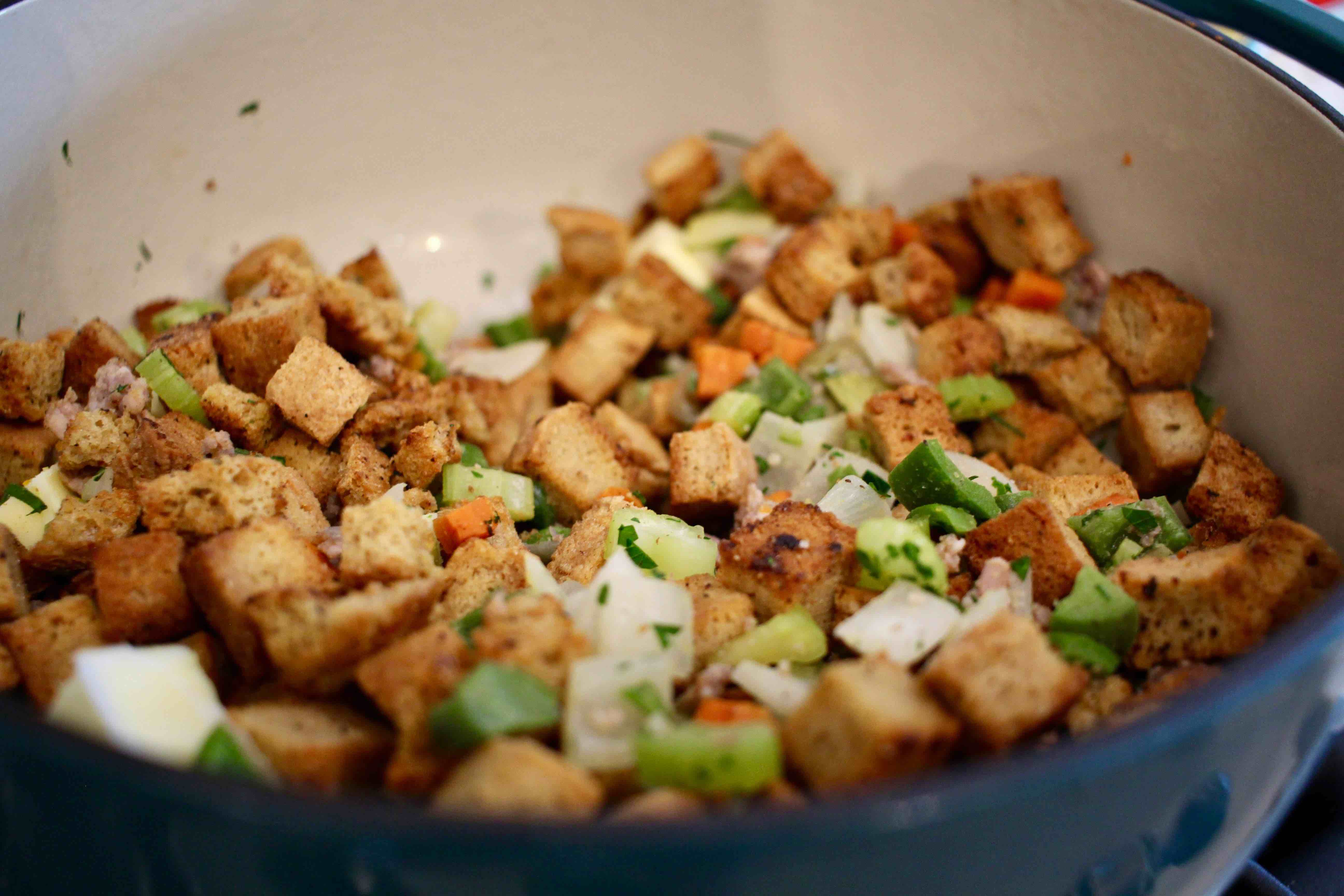
Simple Bread Dressing
Traditional Bread Dressing with Fresh Herbs
The key to exceptional dressing lies in properly dried bread that soaks up the savory broth without turning mushy. Fresh herbs brighten every bite while the slow bake creates crispy edges with a tender, custard-like center. This is the kind of side dish that makes people ask for seconds and the recipe.
Every family seems to have fierce opinions about what makes proper dressing. Some insist on cornbread, others swear by oysters, and a few rebels throw in sausage or cranberries. But the truth is, the foundation of any great dressing comes down to mastering just two things: getting your bread perfectly dried and building a flavorful base that won't turn to mush.
This version stays true to the classic approach that's been filling holiday tables for generations. The bread gets a slow, gentle drying in the oven — not toasted, just thoroughly dehydrated so it can absorb all that savory broth without falling apart. Fresh herbs do the heavy lifting for flavor, while a generous amount of butter-sautéed onions and celery creates the aromatic backbone that makes this side dish memorable.
What sets this dressing apart is the technique of adding the broth in stages and letting everything rest. The first addition gets absorbed into the bread while it cools, creating the structure. The second addition, mixed with beaten eggs, transforms the whole thing into something that's part stuffing, part custard. The result is exactly what dressing should be: crispy and golden on top, tender and cohesive underneath, with every bite delivering that perfect balance of herbs, vegetables, and rich, satisfying comfort.
Ingredients
- ¾ cupunsalted butter
- unsalted butter for greasing the dish
- 1 lbday-old white bread (sandwich or French bread works well), torn into 1-inch pieces
- 2½ cupyellow onions, chopped medium-fine
- 1½ cupcelery stalks, sliced 1/4-inch thick
- ½ cupfresh flat-leaf parsley, finely chopped
- 2 tbspfresh sage leaves, chopped fine
- 1 tbspfresh rosemary needles, minced
- 1 tbspfresh thyme leaves, stripped from stems
- 2 tspkosher salt
- 1 tspfreshly ground black pepper
- 2½ cuplow-sodium chicken broth, warmed slightly
- 2 largelarge eggs, room temperature
Instructions
- Heat your oven to 250°F and butter a 13x9x2-inch baking dish generously. Spread the torn bread pieces across a rimmed baking sheet in a single layer — overlapping pieces won't dry evenly. Bake for about 1 hour, stirring every 20 minutes, until the bread feels completely dry and sounds hollow when tapped. Let cool completely before transferring to a large mixing bowl.⏱ 1 hr
- Melt the 3/4 cup butter in a large skillet over medium-high heat until it stops foaming. Add the onions and celery, stirring frequently until they soften and develop golden edges — this takes about 10 minutes. The vegetables should smell sweet and aromatic. Scrape everything into the bowl with the dried bread, then add all the fresh herbs, salt, pepper, and 1 1/4 cups of the broth. Toss gently with your hands until evenly distributed, then let cool to room temperature.⏱ 10 min
- Bump the oven temperature up to 350°F. Whisk the eggs with the remaining 1 1/4 cups broth until smooth, then pour over the bread mixture. Fold everything together until the liquid is absorbed and the mixture holds together when squeezed — it should look moist but not soggy. Pack into your prepared baking dish, cover tightly with foil, and bake until an instant-read thermometer inserted in the center reads 160°F, about 35 to 40 minutes.⏱ 40 min
- Remove the foil and continue baking until the top turns golden brown and feels firm when gently pressed, another 35 to 45 minutes. The edges should be crispy while the center stays tender. Let rest for 10 minutes before serving — this helps it set up and makes serving cleaner.⏱ 45 min
Tips & Tricks
- Day-old bread works best, but if yours is fresh, tear it up and let it sit uncovered on the counter for a few hours before the oven drying step.
- Don't skip the cooling step after adding the first batch of broth — it prevents the eggs from scrambling when you add them later.
- Test doneness with an instant-read thermometer; the center should hit 160°F to ensure the eggs are properly set.
- For make-ahead convenience, assemble everything up to the final baking step, then cover and refrigerate for up to a day before cooking.
- Leftovers reheat beautifully in a 350°F oven until warmed through — about 20 minutes covered, then 5 minutes uncovered to re-crisp the top.
Frequently Asked Questions
Can I use a different type of bread?
White sandwich bread or a sturdy white bakery loaf works best because it has the right texture to absorb liquid without falling apart. Whole wheat tends to get too dense, and artisan breads with large holes don't give you the even texture you want.
What if I don't have all the fresh herbs?
You can substitute dried herbs using a 3-to-1 ratio (so 2 teaspoons dried sage instead of 2 tablespoons fresh), but add them when you sauté the vegetables so they bloom in the fat. The flavor won't be quite as bright, but it'll still be delicious.
Can I make this vegetarian?
Absolutely — just swap the chicken broth for vegetable broth and add an extra teaspoon of salt to compensate for the milder flavor. You might also want to increase the herbs slightly for more complexity.
Why is my dressing soggy?
Usually this means the bread wasn't dried enough initially, or you added too much liquid. The bread should feel completely dry before you start, and the final mixture should hold together when squeezed but not be wet or sloppy.