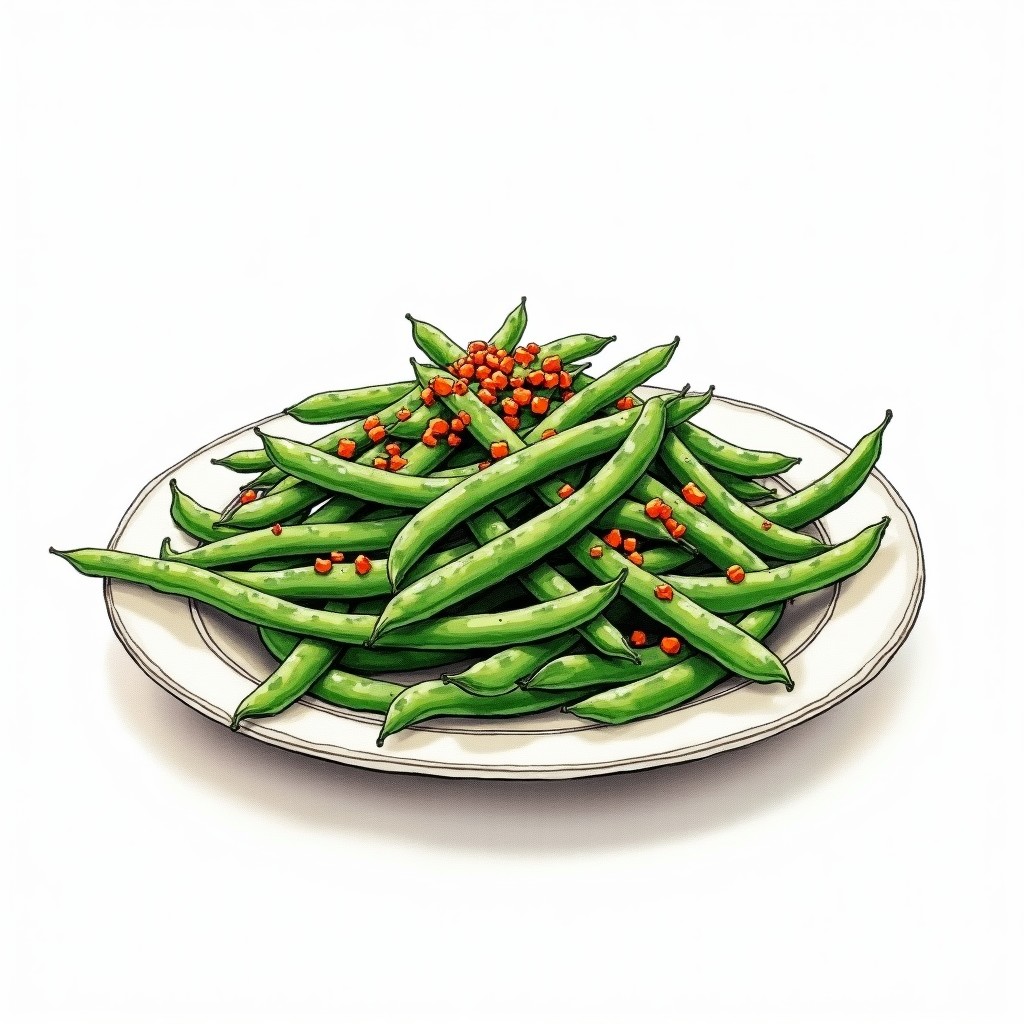
Sichuan Green Beans
Sichuan Dry-Fried Green Beans with Garlic and Chili
This classic Sichuan technique transforms humble green beans into a restaurant-worthy side dish with incredible depth of flavor. The high-heat stir-frying creates perfectly tender beans with slightly charred edges, while the aromatic blend of garlic, chili paste, and soy sauce delivers that signature numbing heat. Master this technique and you'll have a go-to vegetable dish that pairs beautifully with any Asian meal.
Green beans have earned their reputation as a boring vegetable, but that's only because most people never learned how to cook them properly. The secret lies in subjecting them to intense heat that would seem violent to Western cooking sensibilities—temperatures so high that the beans blister and char before they have a chance to turn mushy.
This dry-frying technique, called "gan bian" in Mandarin, relies on the Maillard reaction to develop complex flavors that steaming or boiling can never achieve. The beans emerge with a completely different personality: concentrated, slightly smoky, with tender flesh inside those appealingly wrinkled skins. It's the difference between a wilted house plant and something you'd eagerly order again at your favorite Sichuan restaurant.
The beauty of this preparation extends beyond the beans themselves. The aromatics—garlic, chili paste, and green onions—bloom in the residual heat of the wok, creating a fragrant base that clings to every surface. When the sauce hits the hot metal, it reduces almost instantly into a glossy coating that amplifies rather than masks the vegetables' natural character.
Ingredients
- 1 lbfresh green beans, ends trimmed and snapped into 2-inch pieces
- 2 tbspcanola oil or other neutral high-heat oil
- 2 tspchili garlic paste (such as sambal oelek or Lee Kum Kee)
- 2 green onions, white parts only, thinly sliced on the diagonal
- 1 tbspfresh garlic, thinly sliced lengthwise
- 2 tbspsoy sauce, preferably light or regular
- 1 tbsprice vinegar or Chinese black vinegar
- 1 tspgranulated sugar
- ¼ cupwater
- ½ tspcrushed red pepper flakes
- toasted sesame seeds for garnish(optional)
Instructions
- Heat your wok or large skillet over medium-high heat until it's smoking hot, then add the canola oil. The oil should shimmer and move freely around the pan — this high heat is essential for achieving the characteristic 'wok hei' or breath of the wok that makes restaurant stir-fries so special.
- Add the green beans to the hot oil and stir-fry vigorously for 3-5 minutes, tossing them constantly with your wok spatula or wooden spoon. You'll know they're ready when the beans start to blister and wrinkle slightly, developing those beautiful charred spots that add so much flavor and texture to the dish.⏱ 5 min
- Create a well in the center of the beans and add the sliced garlic, green onion whites, and chili-garlic paste. Let them sizzle for just a moment to release their aromatic oils, then quickly stir everything together to coat the beans evenly with the fragrant paste.
- Continue stir-frying the garlic mixture for 30 seconds to 1 minute, just until the garlic becomes fragrant and golden but not brown — burnt garlic will turn bitter and overpower the dish. Keep everything moving in the pan to prevent sticking.⏱ 1 min
- Pour in the soy sauce, rice vinegar, sugar, water, and red pepper flakes all at once. The liquid will create a dramatic sizzle and steam — this is exactly what you want. The steam will help finish cooking the beans while the sauce components meld together.
- Continue cooking for 1-2 minutes, stirring constantly, until most of the liquid has evaporated and the beans are glazed with a glossy, concentrated sauce. The beans should be tender but still have a slight bite, and the sauce should coat them beautifully without being watery.⏱ 2 min
- Transfer to your serving plate immediately while still hot, and sprinkle with toasted sesame seeds if using. The contrast of the nutty sesame against the spicy, savory beans is the perfect finishing touch to this classic Sichuan dish.
Tips & Tricks
- Don't overcrowd the pan—cook in two batches if needed, as too many beans will lower the oil temperature and steam rather than fry.
- The beans are perfectly done when they look wrinkled and slightly deflated, with dark blistered spots covering about a third of their surface.
- If your beans seem tough after dry-frying, add an extra tablespoon of water and cover briefly to steam them tender.
- Fresh green beans work best, but frozen beans can work if you thaw and thoroughly dry them first—any excess water will cause dangerous oil splattering.
- Save time by mixing the soy sauce, vinegar, sugar, and water together in a small bowl before you start cooking—once the beans are in the pan, everything moves quickly.
Frequently Asked Questions
Can I use a regular skillet instead of a wok?
Absolutely—use your largest skillet and heat it until it's smoking hot. Cast iron works particularly well because it retains heat better than thin pans, giving you that intense searing power you need.
What can I substitute for chili garlic paste?
Sriracha mixed with a minced garlic clove works well, or use sambal oelek plus fresh garlic. Even a pinch of red pepper flakes with extra fresh garlic will give you the heat and flavor base you need.
How do I know when the oil is hot enough?
Drop a single green bean into the oil—it should sizzle aggressively and bubble around the edges immediately. If it sits quietly, wait another minute before adding the rest.
Can I make this ahead of time?
These beans are best served immediately while they're still hot and crisp. Reheated beans lose their texture and become soggy, though they'll still taste good for leftovers the next day.