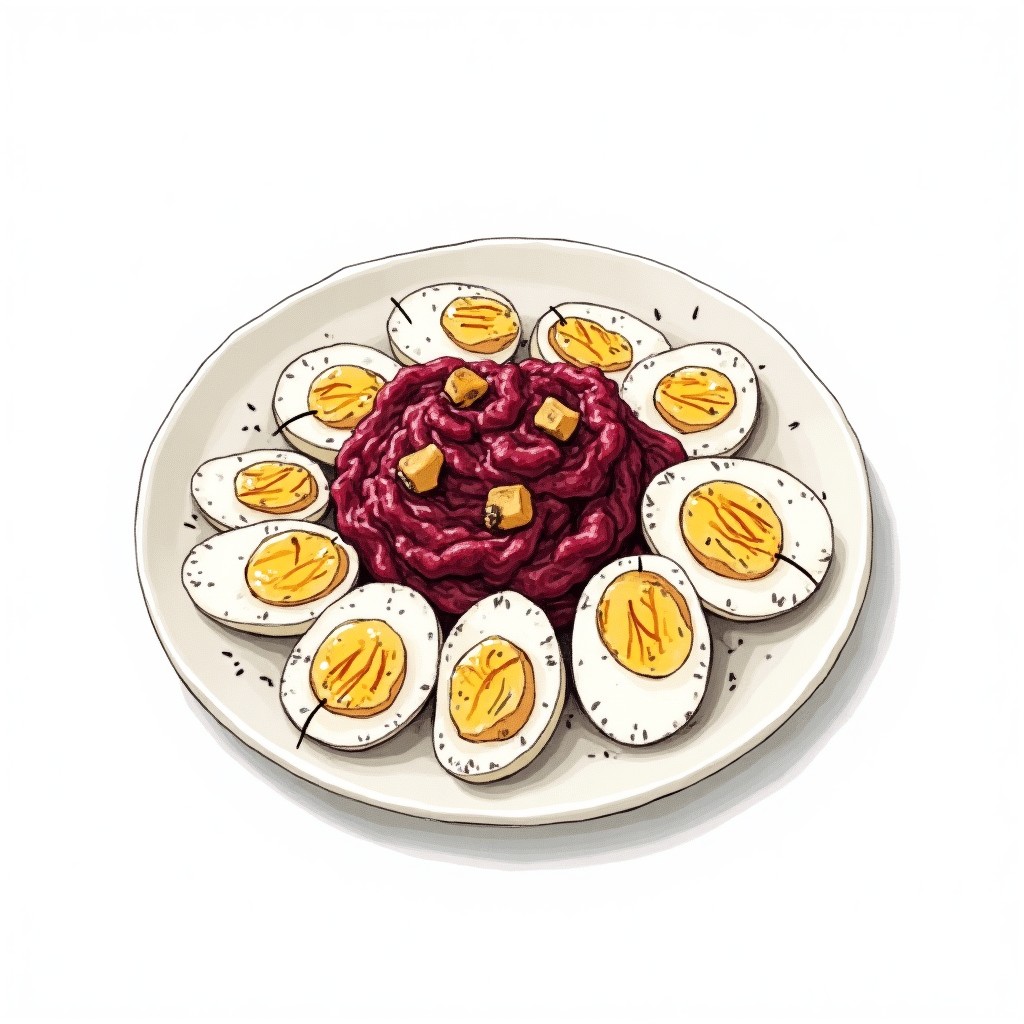
Pickled Eggs Beet Style
Ruby-Red Pickled Eggs with Sweet Beet Brine
Hard-boiled eggs soak up gorgeous crimson color and bright, tangy flavor from a sweetened beet juice brine. The result is striking to look at and surprisingly addictive — perfect for snacking or adding a pop of color to salads and charcuterie boards.
Pink eggs might sound like something from Dr. Seuss, but they're actually a brilliant transformation that happens when beet juice meets vinegar. The beet liquid doesn't just tint the whites a stunning magenta — it infuses them with an earthy sweetness that balances beautifully against the tangy pickling brine.
This technique has roots in Pennsylvania Dutch country, where resourceful cooks discovered that leftover beet juice was too flavorful and colorful to waste. They started soaking hard-boiled eggs in it, creating a striking accompaniment that could dress up any meal. The eggs develop their deepest color after about three days, but they're delicious after just one night in the brine.
What makes these eggs particularly appealing is their versatility. They're conversation starters on a cheese board, protein-packed snacks that keep well in the fridge, and vibrant additions to grain bowls or salads. The sweet-tart flavor is surprisingly complex — not quite a pickle, not quite a hard-boiled egg, but something entirely its own.
Ingredients
- 1 cansmall whole or sliced beets, canned in water (not pickled)
- 1 cupdistilled white vinegar
- ⅓ cupgranulated sugar
- 1 tbspkosher salt
- 6 large hard-boiled eggs, peeled and cooled
- 1 small shallot, thinly sliced(optional)
- 2 fresh dill sprigs(optional)
- 1 tspwhole black peppercorns(optional)
- ¼ tspwhole cloves(optional)
- flaky salt, for serving(optional)
Instructions
- Set a fine-mesh strainer over a measuring cup and drain the beets, capturing every drop of that ruby-red liquid gold. If you're short of a full cup, top it off with water. Pour the beet liquid into a small saucepan and whisk in the vinegar, sugar, and salt. Bring the mixture to a rolling boil over high heat — you'll see it bubble vigorously.
- Lower the heat to medium and let the brine simmer gently, stirring now and then until the sugar crystals completely disappear and the salt dissolves, about 1-2 minutes. Remove from heat and let it cool for 30 minutes — hot brine will cook your eggs, and we want them tender, not rubbery.⏱ 2 min
- Grab a large glass jar (at least 36 ounces) and start layering like you're building something beautiful. Nestle the peeled eggs among the drained beets, then tuck in your aromatics if using — sliced shallot for bite, dill sprigs for herbaceous notes, peppercorns for subtle heat, and cloves for warm spice. Pour the cooled pickling liquid over everything until it's completely submerged. Seal tightly with the lid.
- Refrigerate for at least 24 hours, though the color and flavor will deepen beautifully over the full week. Give the jar a gentle swirl once or twice during the first day to help the color distribute evenly around all the eggs. Once you start eating them, the drained eggs and beets will keep for another week in the fridge.⏱ 24 hrs
Tips & Tricks
- Save the drained beets — they'll be lightly pickled after soaking with the eggs and make a great addition to salads or grain bowls.
- If your beet can doesn't yield a full cup of liquid, add water rather than extra vinegar to reach the right volume — too much acid will make the brine harsh.
- The eggs will continue deepening in color for up to a week, turning from pale pink to deep magenta as they cure.
- Use the largest jar you have that still fits in your fridge — the eggs need to be completely submerged in brine to pickle evenly.
- For perfectly smooth peeling, use eggs that are at least a week old and start them in already-boiling water.
Frequently Asked Questions
How long do these pickled eggs keep?
The eggs will stay good for up to two weeks in the refrigerator once they start pickling. They're at their peak flavor and color between days 3-7.
Can I use fresh beets instead of canned?
Yes, but you'll need to cook them first. Roast or boil 3-4 medium beets until tender, then strain the cooking liquid and proceed with the recipe.
Why didn't my eggs turn as pink as expected?
Color development depends on the beet variety and how long the eggs cure. Some canned beets produce lighter juice than others, and the eggs need at least 48 hours to develop deep color.
Can I reuse the brine for another batch?
It's not recommended for food safety reasons. The brine loses acidity as it pickles the eggs, making it less effective for preserving a second batch.