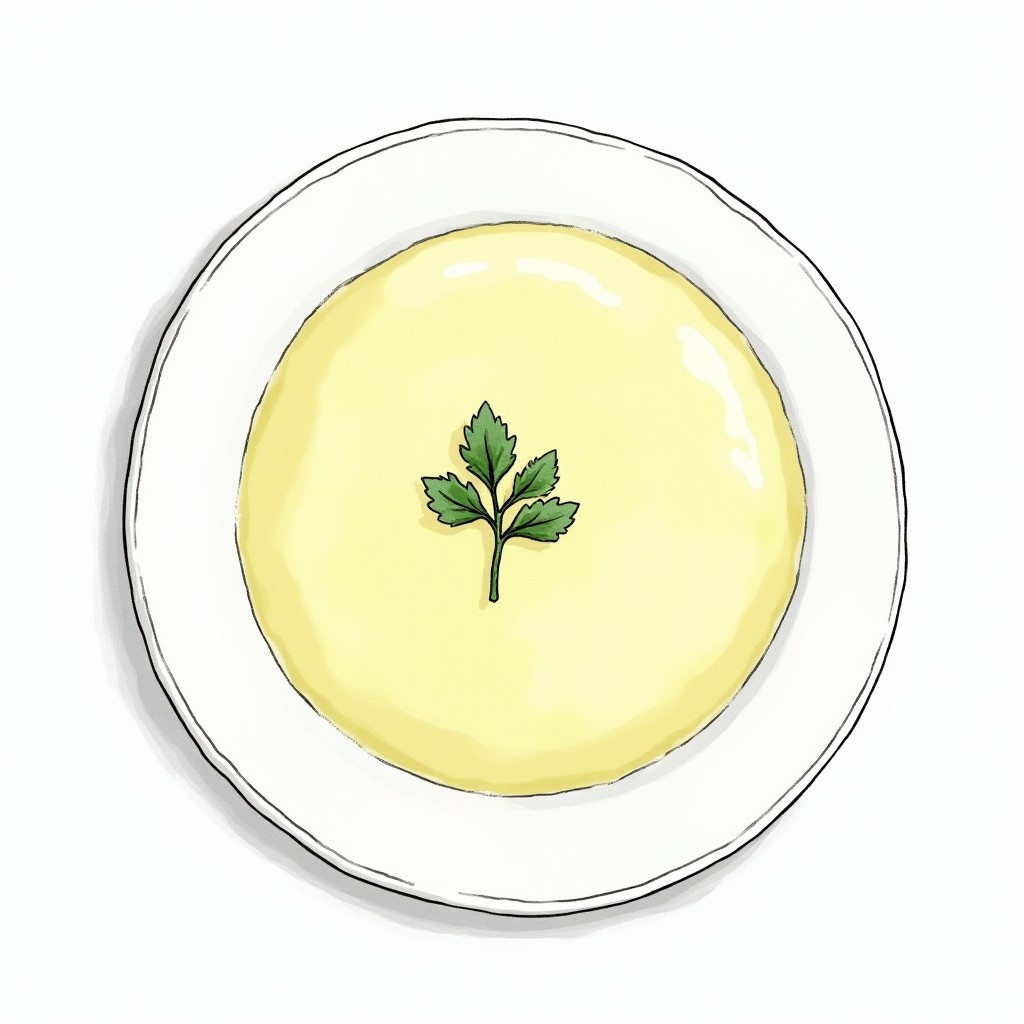
Parsley Sauce
Traditional English Parsley Sauce
This bright green sauce brings fresh herb flavor to everything from fish to vegetables. Built on a proper white sauce foundation, it stays silky smooth while the parsley adds both color and a clean, grassy note that cuts through rich dishes beautifully.
Few sauces have stayed as unchanged — and as essential — as traditional English parsley sauce. While culinary trends come and go, this pale green classic has been gracing British tables for over two centuries, turning simple boiled fish and vegetables into something worth celebrating.
What makes parsley sauce so enduring isn't complexity but restraint. It's essentially a white sauce with fresh herbs stirred through, letting the parsley's clean, slightly peppery flavor shine without competing flavors muddying the mix. The technique is straightforward roux-based sauce making, but the timing matters more than you might expect — add the parsley too early and it turns muddy, too late and it doesn't distribute properly.
This is the sauce that transforms plain boiled ham into a proper Sunday dinner, that makes steamed cauliflower something people actually want to eat, and that proves sometimes the simplest preparations are the most satisfying. It's comfort food in the truest sense — familiar, reliable, and exactly what it promises to be.
Ingredients
- 2 tbspunsalted butter
- 2 tbspall-purpose flour
- 1½ tspEnglish mustard powder(optional)
- 1 cupwhole milk, room temperature preferred
- 1 handfulfresh flat-leaf parsley, finely chopped
- fine sea salt
- freshly ground black pepper
Instructions
- Melt the butter in a medium saucepan over medium heat, swirling the pan until it's completely liquid and just starting to foam.
- Whisk in the flour and mustard powder if using, creating a thick paste called a roux. Keep stirring constantly for 2-3 minutes to cook out the raw flour taste — you want it golden but not brown.⏱ 3 min
- Pour in the milk gradually while whisking continuously to prevent lumps from forming. Once all the milk is incorporated, bring the mixture to a gentle boil, then reduce the heat and let it simmer for 5 minutes, whisking frequently, until it coats the back of a spoon.⏱ 5 min
- Remove from heat and fold in the chopped parsley, which will turn the sauce a lovely pale green. Taste and adjust with salt and pepper as needed.
- Serve immediately for the best texture, or keep warm over low heat. If you need to hold it longer than 15 minutes, press a piece of buttered parchment directly onto the surface to prevent a skin from forming.
Tips & Tricks
- Keep your roux moving constantly during those first few minutes — if it sits still, it'll develop lumps that are nearly impossible to whisk out later.
- Add the milk slowly at first, just a splash while whisking vigorously, then you can pour more freely once it's smooth and incorporated.
- Chop the parsley finely but don't mince it to death — you want small pieces that distribute evenly but still have some texture.
- The sauce should coat the back of a wooden spoon but still pour easily; if it's too thick, whisk in a tablespoon of milk at a time until it's right.
- If the sauce breaks or curdles, remove it from heat immediately and whisk in a tablespoon of cold milk — this usually brings it back together.
Frequently Asked Questions
Can I make this sauce ahead of time?
It's best served fresh, but you can make it up to 2 hours ahead and keep it warm in a double boiler, whisking occasionally. Reheat gently over low heat, thinning with a little milk if needed since it thickens as it sits.
What can I use instead of English mustard?
Dijon mustard works well — use about 1 teaspoon instead of the powder. You can also skip the mustard entirely; it adds depth but isn't essential to the sauce's character.
Can I use dried parsley instead of fresh?
Fresh parsley is really what makes this sauce special, giving it that bright color and clean taste. Dried parsley will work in a pinch but use only about 1 tablespoon, and the sauce will be more muted in both flavor and appearance.
Why is my sauce lumpy even though I whisked constantly?
Usually this happens when the milk is too cold or added too quickly to hot roux. Try straining the sauce through a fine-mesh sieve, or blend it briefly with an immersion blender to smooth it out.