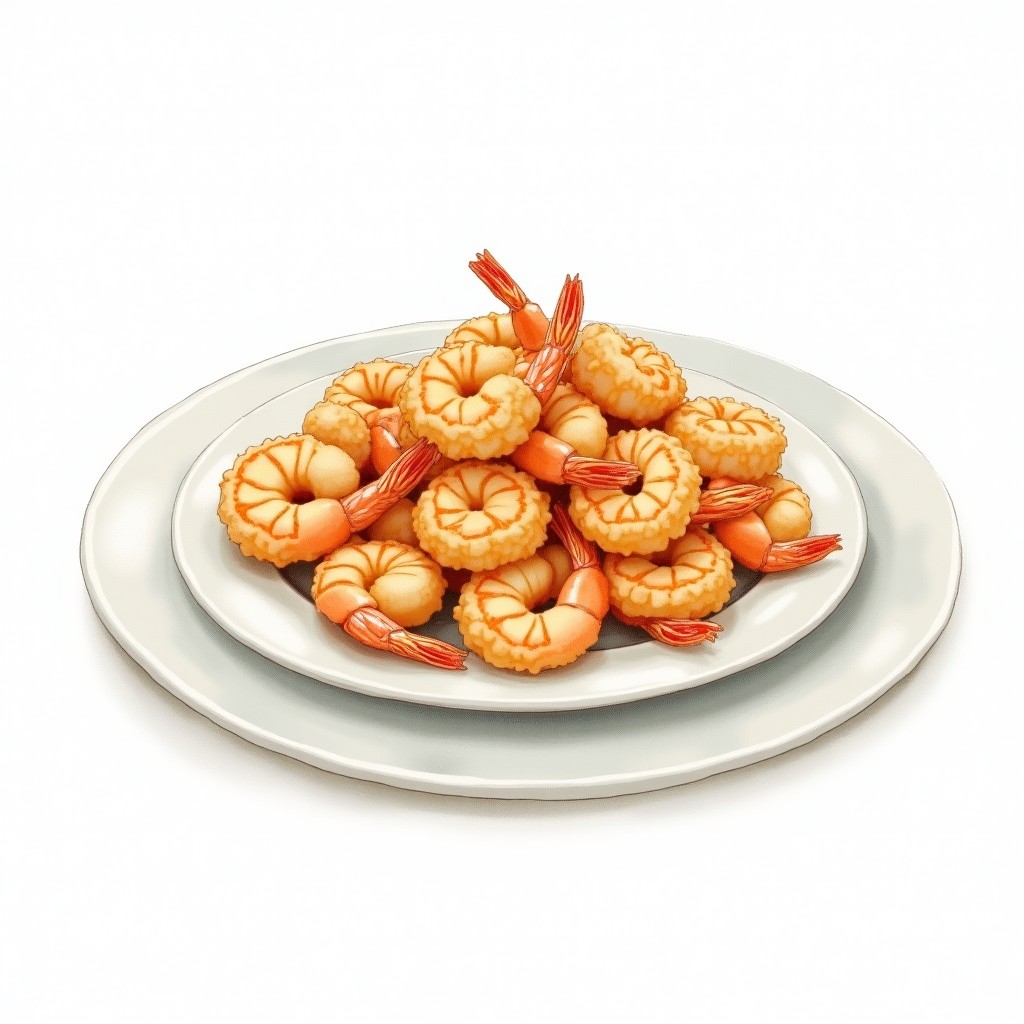
Panko Shrimp
Panko-Crusted Shrimp with Perfect Golden Coating
The key to restaurant-quality shrimp lies in the double coating — wet batter followed by panko creates layers that puff and crisp beautifully in hot oil. Each shrimp emerges with a crunchy shell that gives way to tender, sweet meat inside.
Panko transforms ordinary breaded shrimp into something extraordinary, but only when you understand the science behind the coating. Those coarse Japanese breadcrumbs aren't just bigger than regular breadcrumbs — they're engineered differently, with sharp edges that catch oil and create maximum surface area for browning.
The real secret lies in the double-coating method that Japanese restaurants have perfected over decades. First comes a wet batter that acts like glue, creating a foundation for the panko to grip. Then comes the panko itself, pressed firmly into every curve and crevice of the shrimp. When this hits 350°F oil, the batter puffs slightly while the panko crisps into a shell that's both substantial and light.
Most home cooks skip the scoring step, but those shallow cuts along the shrimp's belly serve a crucial purpose. Without them, the shrimp curls into a tight spiral as the proteins contract in the heat, making for awkward eating and uneven cooking. A few strategic slices keep everything straight and elegant.
The timing matters as much as the technique here. Panko browns fast once it hits proper temperature, so you want everything ready before the first shrimp goes in. But done right, you'll have shrimp that snap when you bite them, giving way to tender meat that's been protected by its golden armor.
Ingredients
Shrimp
- 1 lblarge shrimp, tails on, shelled and deveined
- ½ tspsalt
- ¼ tspfreshly ground black pepper
Batter
- 2 large eggs
- ½ cupall-purpose flour
- ¼ cupcold water
- ½ tspkosher salt
- ½ tspblack pepper
- 1 tspgarlic powder
- 2 cuppanko breadcrumbs
Instructions
- Pat the shrimp completely dry, then make shallow horizontal cuts along the underside of each one — this prevents curling and gives you straighter shrimp. Season both sides with salt and pepper, pressing gently so the seasoning sticks.
- Whisk together eggs, flour, water, salt, pepper, and garlic powder until you have a smooth batter that's just slightly thinner than pancake batter. Pour the panko into a wide, shallow dish for easy dredging.
- Working with one shrimp at a time, dip it completely in the wet batter, letting any excess drip back into the bowl. The coating should cling evenly without being too thick.
- Press the battered shrimp firmly into the panko, turning to coat all sides completely. Set each finished shrimp on a clean plate or tray — they can sit for a few minutes while your oil heats up.
- Heat your frying oil to exactly 350°F and carefully add the shrimp in batches to avoid overcrowding. Fry for 2-3 minutes until the panko turns deep golden brown, then transfer to a paper towel-lined plate and serve immediately while still crackling hot.⏱ 3 min
Tips & Tricks
- Make sure your shrimp are completely dry before seasoning — even a little moisture will prevent the salt and pepper from sticking properly.
- The batter should coat the back of a spoon without being gluey; add a tablespoon more water if it seems too thick.
- Press the panko coating firmly with your palms, not just your fingertips — you want maximum adhesion before frying.
- Don't overcrowd the oil; frying too many shrimp at once drops the temperature and leads to greasy, soggy coating.
- Leftover coated shrimp can be frozen on a tray, then stored in bags for up to a month — fry straight from frozen, adding 1-2 minutes to the cooking time.
Frequently Asked Questions
Can I use regular breadcrumbs instead of panko?
Regular breadcrumbs won't give you the same crispy texture — they're too fine and dense. If you can't find panko, pulse some day-old white bread in a food processor until you get coarse, irregular crumbs.
What oil temperature is best for frying these?
Stick to 350°F — any hotter and the panko burns before the shrimp cooks through, any cooler and you get greasy coating instead of crispy.
How do I know when the shrimp are done?
The panko should be deep golden brown, and the shrimp will feel firm when gently pressed. Overcooked shrimp turn rubbery, so err on the side of slightly less time rather than more.
Can I bake these instead of frying?
Baking at 425°F for 8-10 minutes gives decent results, but you won't get the same crackling crispness that hot oil provides. Spray the coated shrimp with cooking oil before baking for better browning.
Why did my coating fall off during frying?
Either the shrimp weren't dry enough before coating, the oil wasn't hot enough, or you didn't press the panko firmly into the batter. The coating needs to set immediately when it hits the oil.