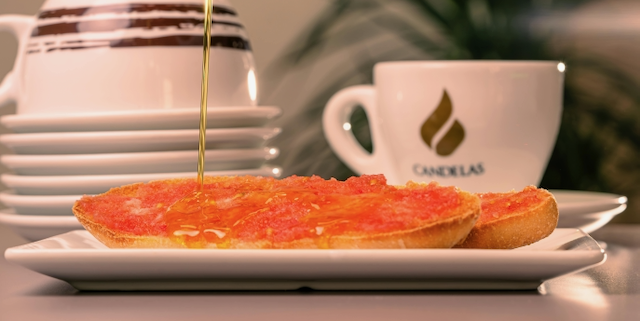
Pan con Tomate
Catalonian Pan con Tomate with Garlicky Tomato Pulp
Few dishes capture summer's essence like this Catalonian classic — charred bread becomes the canvas for sweet tomato pulp and fruity olive oil. The technique is deceptively simple, but timing and ripe tomatoes make all the difference.
Catalonia gave the world this perfect summer equation: ripe tomato plus good bread plus heat equals pure magic. Pan con tomate isn't trying to be fancy — it's the kind of food that emerges when people have been eating well in the same place for centuries, refining technique until every gesture matters.
The secret lives in the grating. While most cultures slice or dice their tomatoes, Catalans discovered that grating releases more juice and creates the ideal texture for absorbing into bread. That rough, charred surface becomes a sponge for tomato pulp, garlic oils, and fruity olive oil. The bread doesn't just hold toppings — it transforms into something entirely new.
Timing is everything here. The bread needs to stay warm so the garlic releases properly, and the tomato pulp should hit the bread while it's still at peak freshness. This is food that exists in the moment, meant to be devoured as soon as it's assembled. Try to make it ahead and you'll understand why Catalans have never bothered — some pleasures can't be rushed or stored.
Nutrition
Ingredients
- 4 slicerustic country bread, sliced 1/2-inch thick
- 2 clovegarlic cloves, peeled and left whole
- 2 largelarge ripe tomatoes, peak season preferred
- 3 tbspextra virgin olive oil, your best bottle
- flaky sea salt
Instructions
- Get your grill pan screaming hot over high heat, or position your oven rack 4 inches from the broiler and preheat. You want aggressive heat that'll char the bread quickly without drying it out.
- Char the bread slices until they're golden with dark grill marks and smell toasty, flipping once halfway through. The surface should have some give but feel sturdy enough to handle aggressive rubbing.⏱ 2 min
- Grab the garlic cloves and rub them forcefully across the rough, charred surface of each warm bread slice. The heat will release the garlic's oils, and the bread's texture will grate it naturally — you'll smell it working.
- Slice each tomato in half through its equator and grate the cut side against the large holes of a box grater, letting the pulp fall into a bowl. Stop when you reach the skin — discard those tough outer shells.
- Spoon the fresh tomato pulp generously over each garlic-rubbed slice, spreading it to the edges. Don't be stingy — the bread should look saturated with bright red juice.
- Finish each slice with a generous drizzle of your best olive oil and a bold sprinkle of flaky salt. The oil should pool slightly and glisten on the surface.
- Serve immediately while the bread still holds its warmth and the tomato tastes like summer. This doesn't wait well — the magic is in that first bite when everything comes together.
Tips & Tricks
- Choose tomatoes that give slightly when pressed — they should smell sweet and feel heavy for their size, with the skin starting to wrinkle just a bit.
- Save the tomato grating liquid that collects in your bowl; it's packed with flavor and perfect for drizzling over the finished toasts.
- If your bread is too smooth to grate the garlic effectively, give it a few extra seconds on the heat to develop more texture.
- Use your best olive oil here — since it's uncooked, every note will come through clearly in the finished dish.
- Make this in small batches rather than trying to prep everything ahead; the bread loses its magic as it cools.
Frequently Asked Questions
What type of bread works best for this recipe?
Look for a sturdy country-style bread with some texture — sourdough, ciabatta, or any rustic loaf with a good crust. Avoid soft sandwich bread, which will fall apart under the aggressive rubbing.
Can I use a regular toaster instead of grilling the bread?
A toaster won't give you the charred, rough surface you need for proper garlic grating. Use a cast iron skillet over high heat if you don't have a grill pan or broiler.
What should I do if my tomatoes aren't quite ripe enough?
Wait if you can — this dish really needs peak-season tomatoes to shine. If you must use what you have, add a tiny pinch of sugar to the grated pulp to help balance the acidity.
How far ahead can I grate the tomatoes?
Grate them right before serving for the best texture and flavor. The pulp starts losing its fresh brightness after about 30 minutes, and the liquid will separate.