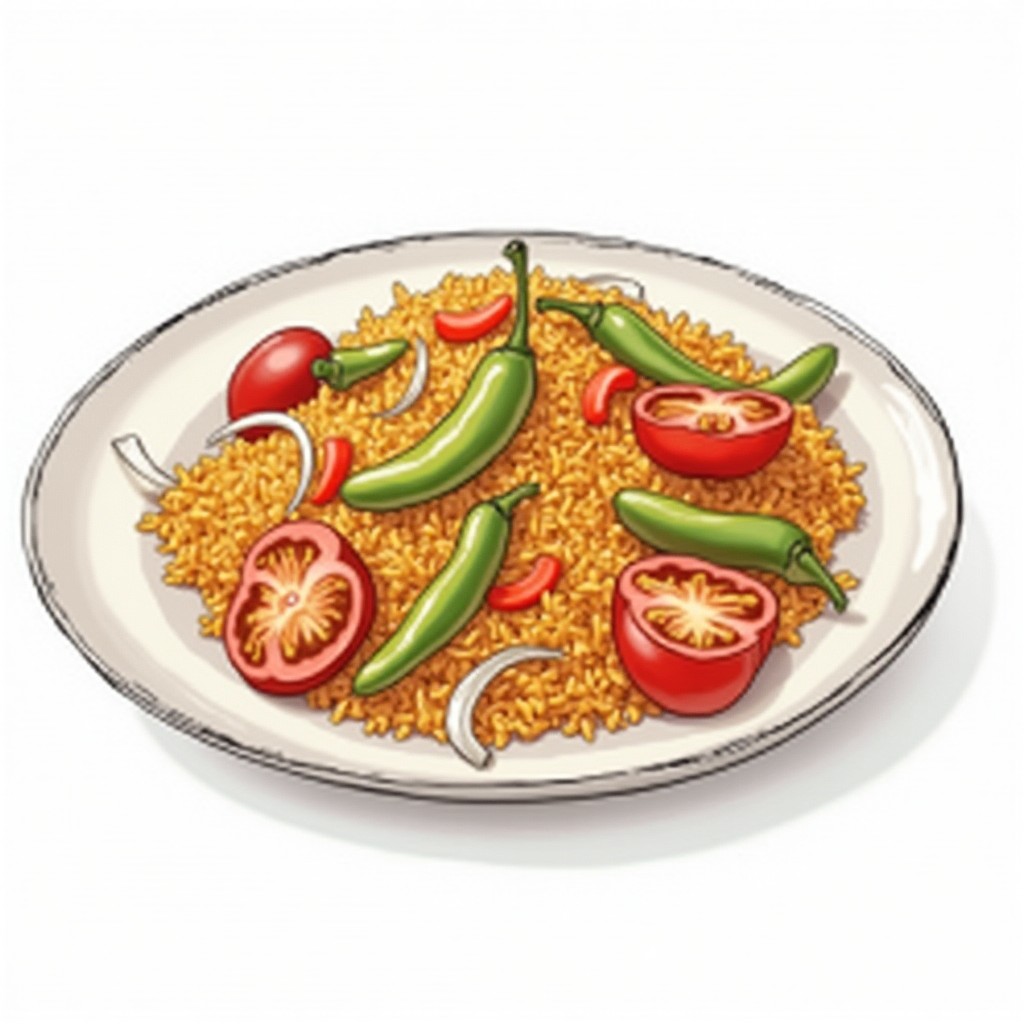
Nigerian Jollof Rice
West African Jollof Rice with Smoky Tomato Depth
This isn't just rice — it's a celebration in a pot. Each grain absorbs the rich, slow-cooked tomato base while gentle steam and careful timing create the coveted bottom crust that makes this dish legendary across West Africa.
The sound of sizzling tomato paste hitting hot oil is music to any West African cook's ears. It signals the beginning of jollof rice — a dish that has sparked friendly rivalries between nations and united families around countless dinner tables. Every country has its version, from Nigeria's party rice to Ghana's smoky interpretation, but they all share one truth: the magic happens in that thick, concentrated tomato base that coats each grain like liquid gold.
This recipe builds flavor in layers, starting with a silky pepper blend that forms the foundation. The key is patience during the reduction — that moment when the oil begins to separate around the edges tells you the tomatoes have given up their water and concentrated their essence. From there, the rice becomes a canvas, absorbing every drop of that complex, aromatic sauce as it steams to perfection.
The coveted bottom layer — what Nigerians call the 'party rice' crust — forms naturally when you resist the urge to stir. It's not burnt; it's concentrated flavor, the reward for proper heat control and timing. When you hear that gentle crackling toward the end of cooking, you know you've achieved what makes jollof rice more than just seasoned rice — you've created a dish worth celebrating.
Nutrition
Ingredients
- 3 red bell peppers, whole
- 3 plum tomatoes, whole and ripe
- 1 mediummedium onion, roughly chopped for blending
- 2 scotch bonnet or habanero peppers, whole(optional)
- ¼ cupwater
- ½ cupvegetable oil or palm oil
- 1 mediummedium onion, sliced into half-moons
- 4 tbsptomato paste, concentrated
- 4 clovegarlic cloves, minced fine
- 1 tbspfresh ginger, grated
- 2 bay leaves, whole
- 1 tbspdried thyme
- 1 tbspcurry powder
- 1 tspsalt, to taste(optional)
- white pepper or black pepper, freshly ground(optional)
- 1 tbspchicken bouillon powder or granules
- 4 cuplong grain rice (jasmine or basmati work well), rinsed until water runs clear
- 3½ cupchicken stock, preferably homemade
- 1 largelarge tomato, sliced into rounds
- 1 mediummedium onion, sliced into rings
- 2 tbspbutter, for richness(optional)
Instructions
- Combine the bell peppers, plum tomatoes, chopped onion, and scotch bonnets in a blender with the water. Blend until completely smooth — no chunks should remain. This pepper-tomato base is your flavor foundation, so take the time to get it silky.
- Warm the oil in your largest heavy-bottomed pot over medium heat. Add the sliced onions and cook, stirring occasionally, until they're golden and completely soft. Don't rush this — proper caramelization takes time and builds the dish's sweetness.⏱ 3 min
- Stir in the tomato paste and let it fry for about a minute until it darkens slightly. Add the minced garlic, grated ginger, and bay leaves, cooking until fragrant. This blooming process awakens the aromatics and prevents any raw garlic bite in the finished dish.⏱ 7 min
- Pour in your blended pepper mixture and let it cook down, stirring frequently to prevent sticking. The sauce is ready when it's reduced by about half and has a thick, paste-like consistency. You'll see the oil beginning to separate around the edges — that's your cue.⏱ 12 min 30 sec
- Season the base with thyme, curry powder, bouillon, salt, and pepper. Stir everything together and cook for another few minutes to let the spices bloom in the concentrated sauce. Taste and adjust the seasoning — this is your last chance before the rice goes in.⏱ 3 min 30 sec
- Add the drained rice and stir thoroughly to coat every grain with the tomato base. Pour in the chicken stock, give it one final stir, then cover and crank the heat to high. Once you hear it bubbling vigorously, you're building the steam that will cook the rice evenly.⏱ 4 min
- Immediately reduce the heat to its lowest setting and let the rice steam undisturbed. Resist the urge to peek — the steam is doing its work. After 30 minutes, the rice should be tender and the liquid absorbed, with that prized crispy layer forming on the bottom.⏱ 30 min
- Dot the surface with butter if using, then arrange the tomato slices and onion rings on top. Give everything just one gentle stir to incorporate, then immediately turn off the heat and cover tightly. The residual steam will finish the vegetables while keeping them vibrant.
Tips & Tricks
- Use a heavy-bottomed pot to prevent hot spots that can burn your rice before the bottom develops that prized crust.
- Rinse your rice until the water runs clear — starchy water will make your jollof gummy instead of fluffy.
- Don't skip the tomato paste frying step; those extra minutes of browning add serious depth to your flavor base.
- Listen for the gentle crackling sound in the last 10 minutes of cooking — that's your cue that the bottom is crisping perfectly.
- Let the finished rice rest off heat for 5 minutes before serving; this sets the bottom crust and makes serving cleaner.
Frequently Asked Questions
Can I make this vegetarian?
Absolutely — swap the chicken stock for vegetable stock and use vegetable bouillon instead of chicken bouillon. The tomato base provides plenty of umami, so you won't miss the meat flavor.
What if I can't find scotch bonnet peppers?
Habanero works perfectly as a substitute, or use 1-2 jalapeños if you prefer less heat. The peppers add fruity depth beyond just spice, so don't skip them entirely.
Why is my jollof rice mushy?
Too much liquid or not rinsing the rice properly are the usual culprits. Use exactly 3.5 cups stock for 4 cups rice, and always rinse until the water runs clear to remove excess starch.
Can I prepare this ahead for a party?
Jollof actually improves overnight as the flavors meld. Reheat gently in a 300°F oven with a splash of stock, or use the stovetop with low heat and a tight lid to steam it back to life.