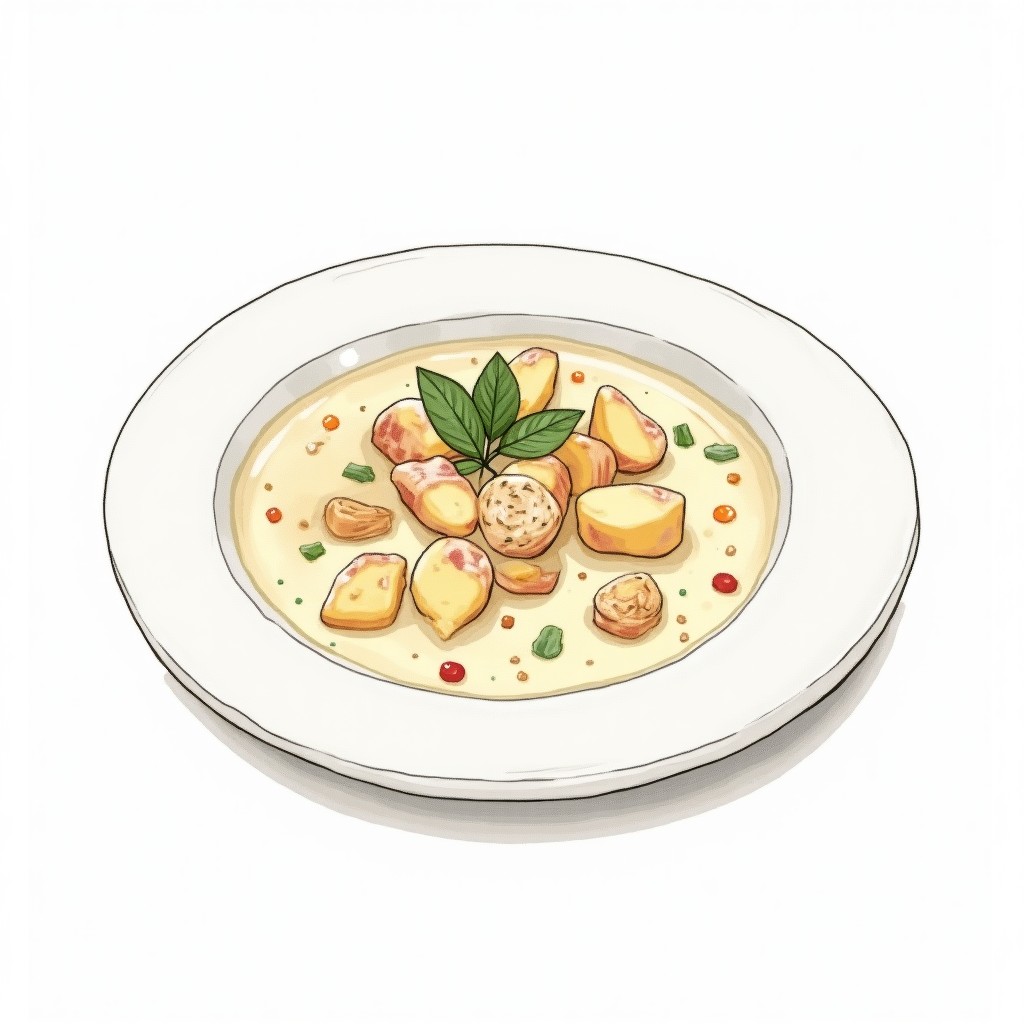
New England Clam Chowder
Classic New England Clam Chowder
Proper chowder isn't rushed — the bacon renders slowly, the vegetables build a foundation, and everything simmers until the potatoes break down just enough to thicken the broth naturally. This version respects the tradition while giving you all the techniques to nail it at home.
New England clam chowder divides people into two camps: those who've had the real thing, and those who think they have. The difference lies in restraint — authentic chowder doesn't hide behind excessive cream or flour, and it certainly doesn't parade around with tomatoes or vegetables that have no business being there. It's a study in balance, where sweet clams, smoky bacon, and tender potatoes come together in a broth that's rich but not heavy.
The technique matters more than most people realize. That slow bacon render isn't just for flavor — it's creating the fat that will carry all the other tastes through the soup. The flour needs those two minutes of cooking to lose its raw edge, and the potatoes must break down just enough to naturally thicken the liquid without turning it gluey. Rush any of these steps, and you'll end up with something that might taste fine but won't have that distinctive chowder character that makes you understand why people have been making it this way for generations.
What makes this version work is timing. The clams go in at the very end, just long enough to warm through without becoming chewy. Everything else builds slowly, layer by layer, until you have something that tastes like it came from a weathered shack overlooking the Atlantic rather than your kitchen.
Nutrition
Ingredients
- 6 slicethick-cut bacon, diced
- 1 mediummedium yellow onion, diced
- 2 stalkcelery stalks, diced
- 3 tbspall-purpose flour
- 2 cupbottled clam juice
- 2 cupwhole milk
- 1 cupheavy cream
- 1½ lbYukon Gold potatoes, peeled and diced into 1/2-inch cubes
- 2 cancanned chopped clams with their juice
- 2 bay leavesbay leaves
- 1 tspfresh thyme leaves
- salt and freshly ground black pepper
Garnish
- 2 tbspfresh flat-leaf parsley, finely chopped(optional)
Instructions
- Place the diced bacon in a large, heavy pot and cook over medium heat, stirring occasionally, until the pieces are golden and crispy, 6-8 minutes. The fat should render out completely — this is your flavor base.⏱ 8 min
- Transfer the crispy bacon to a paper towel-lined plate and measure out exactly 3 tablespoons of the rendered fat back into the pot. Discard any excess — too much will make your chowder greasy.
- Add the diced onion and celery to the hot bacon fat and cook, stirring frequently, until they're soft and fragrant but not browned, about 5 minutes. You want them completely tender since they won't cook much more.⏱ 5 min
- Sprinkle the flour evenly over the vegetables and stir constantly for 2 minutes. This cooks out the raw flour taste and creates the thickening base for your chowder — don't skip this step.⏱ 2 min
- Slowly pour in the clam juice while whisking constantly to prevent lumps, then gradually whisk in the milk and cream. The mixture should be smooth and creamy with no flour streaks visible.
- Add the diced potatoes, bay leaves, and thyme, then bring the mixture to a gentle simmer over medium-high heat. Once it's bubbling, reduce the heat to maintain a steady, gentle simmer.
- Let the chowder simmer uncovered, stirring occasionally, until the potatoes are completely tender and some pieces start to break apart, 15-20 minutes. These broken potato bits will naturally thicken your chowder.⏱ 20 min
- Stir in the canned clams with all their juice and the reserved crispy bacon. Simmer for just 3 minutes — any longer and the clams will turn rubbery.⏱ 3 min
- Fish out and discard the bay leaves, then taste and season generously with salt and pepper. The chowder should coat a spoon but still pour easily.
- Ladle into bowls and top with a sprinkle of fresh parsley if using. Serve immediately with oyster crackers or crusty bread for the full New England experience.
Tips & Tricks
- Save a few pieces of the crispiest bacon to sprinkle on top just before serving — the textural contrast makes each spoonful more interesting.
- If your chowder gets too thick while simmering, thin it with a splash more clam juice rather than milk to keep the seafood flavor strong.
- Yukon Gold potatoes are ideal because they hold their shape while still breaking down enough to thicken the base — russets will turn to mush, while red potatoes won't break down at all.
- Don't drain the clam juice from the canned clams — it's concentrated clam flavor that would be wasteful to discard.
- Make sure your simmer is gentle throughout cooking; a hard boil will cause the dairy to curdle and ruin the smooth texture.
Frequently Asked Questions
Can I use fresh clams instead of canned?
Absolutely — steam 2-3 pounds of littlenecks until they open, then chop the meat and strain the cooking liquid to use in place of the bottled clam juice. Fresh clams are more tender, so add them in the last 2 minutes.
How do I store leftover chowder?
Chowder keeps in the fridge for 3 days, but reheat it gently over low heat while stirring frequently to prevent the dairy from separating. It doesn't freeze well due to the cream and potatoes.
My chowder turned out too thin — how can I fix it?
Simmer it uncovered for 10-15 more minutes to reduce the liquid, or mash a few more potato pieces against the side of the pot to release their starch. Avoid adding more flour at this stage.
Can I make this dairy-free?
Replace the milk and cream with unsweetened coconut milk or a combination of seafood stock and cashew cream. The texture won't be quite as rich, but it'll still be delicious.