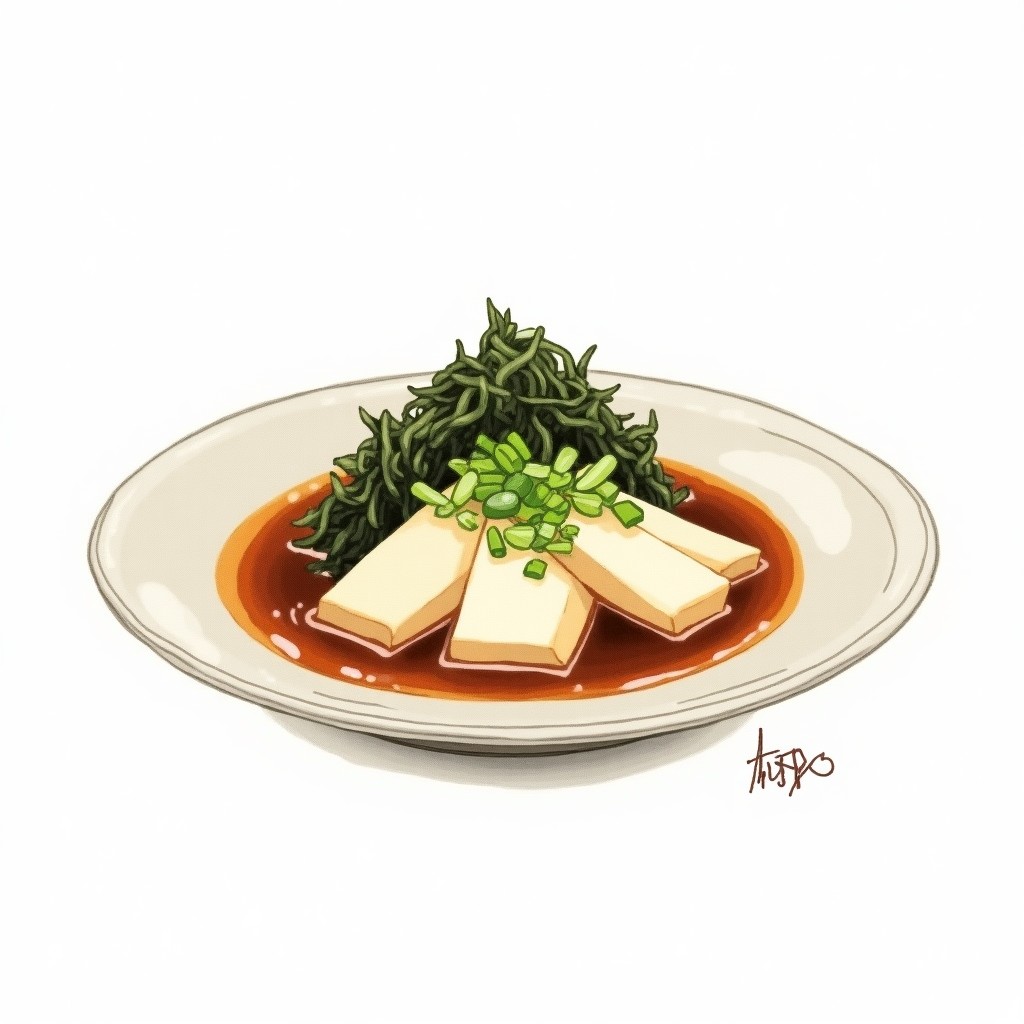
Miso Soup
Silky Miso Soup with Wakame and Tofu
Good miso soup depends on gentle heat and proper technique — dissolving the paste slowly prevents grittiness while preserving the delicate fermented flavors. The wakame adds a subtle ocean note that balances the rich, salty depth of the miso.
Miso soup lives in that sweet spot between simplicity and precision — just four ingredients, but every step matters. The key lies in understanding that miso paste is alive with beneficial bacteria and delicate flavors that harsh heat destroys. Too much boiling turns your soup cloudy and bitter, robbing it of the clean, umami-rich broth that makes good miso soup so satisfying.
The Japanese have been perfecting this technique for over a thousand years, and their method remains unchanged: dissolve the paste gently in hot (not boiling) dashi, add your garnishes, and serve immediately. Wakame seaweed brings a subtle mineral note that complements rather than competes with the miso's complex saltiness. Silken tofu adds protein and a creamy contrast without overwhelming the broth's clean character.
This isn't just soup — it's a daily ritual in Japan, appearing at breakfast, lunch, and dinner tables. Once you master the gentle dissolving technique, you'll understand why. The result is a bowl of liquid comfort that's both nourishing and deeply satisfying, with layers of flavor that develop on your palate with each sip.
Ingredients
- 4 cupdashi broth
- 7 ozsoft silken tofu
- 4 tbspmiso paste
- 1 tbspdried wakame seaweed
- 1 green onion, chopped
Instructions
- Bring the dashi to a slow boil in a saucepan over medium heat, reaching 205°F/96°C. Remove from heat immediately — boiling dashi loses its delicate flavor.
- Hold a ladle in the hot dashi and add the miso paste to it. Use chopsticks or a small whisk to gradually work the paste into the liquid until completely smooth with no lumps.
- Slice the tofu into 1/2-inch cubes and gently add them to the soup. Handle carefully to keep the cubes intact.
- Stir in the wakame seaweed and chopped green onions right before ladling into bowls. The seaweed will soften quickly in the hot broth.
- Ladle into bowls and serve right away. Never return miso soup to a boil as it will become cloudy and lose its smooth texture.
Tips & Tricks
- Use a fine-mesh strainer if your miso paste has stubborn lumps — press it through with the back of a spoon for perfectly smooth soup.
- Dried wakame expands dramatically in liquid, so start with less than you think you need — a tablespoon becomes about 1/4 cup when rehydrated.
- Different miso varieties have distinct flavors: white miso is mild and slightly sweet, red miso is robust and salty — adjust quantities accordingly.
- Room temperature dashi dissolves miso paste more easily than piping hot liquid, so let your dashi cool for 30 seconds before adding the paste.
- Leftover miso soup can't be reheated successfully — the texture breaks down and turns gritty, so make only what you'll eat immediately.
Frequently Asked Questions
Can I use regular tofu instead of silken?
Yes, but cut it into smaller pieces and add it more carefully. Regular tofu holds its shape better but has a firmer texture that's less traditional in miso soup.
What can I substitute for dashi?
Light chicken or vegetable broth works, though you'll lose some of the oceanic depth. For vegetarian dashi, simmer kombu seaweed in water for 20 minutes, then strain.
How do I know if my miso paste is still good?
Miso keeps for months in the refrigerator and rarely spoils completely. If it darkens or develops stronger flavors, it's still safe but may taste more intense than when fresh.
Can I add other vegetables to this soup?
Absolutely — thinly sliced mushrooms, corn kernels, or julienned daikon radish work well. Add harder vegetables to the dashi first to soften, then proceed with the miso.