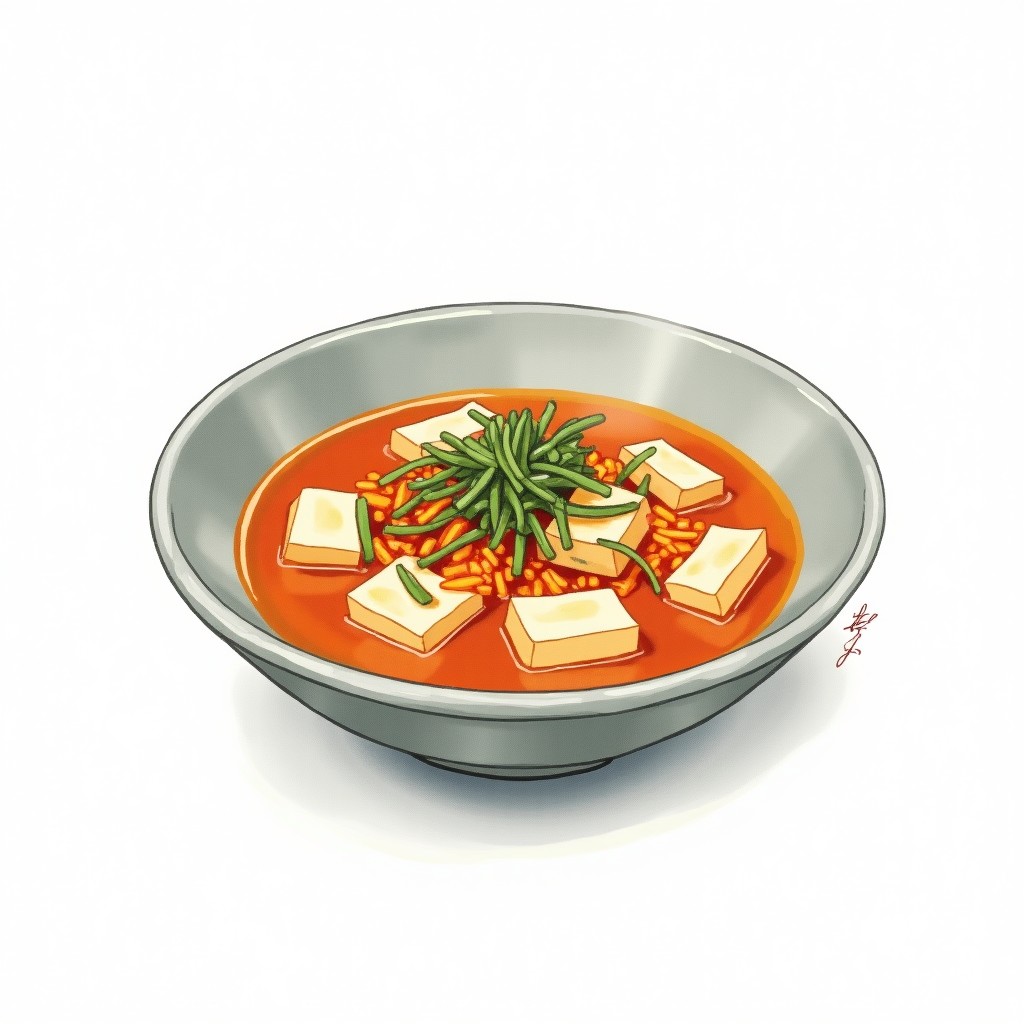
Miso Kimchi Soup
Rich Miso Kimchi Soup with Silky Tofu
Two fermentation powerhouses—tangy kimchi and earthy miso—transform simple dashi into something deeply satisfying. The result is a warming bowl with layers of umami that build with each spoonful.
The first spoonful of this soup tells you everything about why Korean and Japanese cuisines pair so naturally together. Both cultures understand the deep satisfaction that comes from fermentation — kimchi's lactic tang playing against miso's rounded earthiness creates something bigger than either could achieve alone.
This isn't fusion cooking, exactly. It's more like finding common ground between two traditions that both prize umami above all else. The dashi provides a clean, oceanic backdrop that lets both the kimchi and miso shine without competing. What you get is a bowl that tastes both familiar and surprising, with each ingredient pulling its weight.
The beauty lies in the timing and technique. Everything happens quickly once you start — the kimchi releases its fermented juices as it heats, the miso dissolves into silky richness off the heat, and the tofu absorbs all those complex flavors. It's the kind of soup that makes you understand why both cultures have built entire culinary philosophies around these simple, transformative ingredients.
Ingredients
- 4 cupdashi broth
- 1 green onion
- 1 cupkimchi
- 1 packagesoft tofu
- 4 tbspwhite or red miso paste
Instructions
- Prepare your dashi broth using instant dashi or homemade if you have it ready. Slice the green onion thinly on the diagonal and cut the tofu into bite-sized cubes—about ¾-inch pieces work well.
- Drop the kimchi and tofu cubes into the dashi and bring everything to a rolling boil over medium-high heat. The kimchi will release its tangy juices into the broth as it heats.
- Remove the pot from heat immediately once it boils. Whisk the miso paste into the hot soup until completely dissolved—this prevents the miso from curdling. Scatter the sliced green onions on top and serve right away.
Tips & Tricks
- Use soft or silken tofu if you want it to break apart slightly and thicken the soup, or firm tofu if you prefer distinct cubes that hold their shape.
- Never let the soup boil after adding the miso — the heat will make the proteins seize up and turn grainy instead of silky smooth.
- Choose kimchi that's well-fermented and tangy rather than fresh — you want those deep, sour notes to balance the miso's richness.
- Taste your dashi first and adjust the miso accordingly — some dashi is saltier than others, so start with 3 tablespoons if you're unsure.
Frequently Asked Questions
Can I use regular vegetable or chicken broth instead of dashi?
You can, but you'll lose the ocean-like depth that makes this soup special. If you must substitute, add a small piece of kombu seaweed to regular broth and simmer for 5 minutes before removing it.
What type of miso works best here?
White or red miso both work well — white miso is milder and sweeter, while red miso adds more robust, salty depth. Avoid very strong hatcho miso unless you really love intense flavors.
How do I store leftover soup?
Store it in the fridge for up to 2 days, but reheat gently without boiling to keep the miso from breaking. The tofu will absorb more flavor as it sits, which isn't necessarily a bad thing.
Can I add other vegetables to this soup?
Absolutely — mushrooms, bok choy, or bean sprouts all work well. Add heartier vegetables with the kimchi so they have time to cook through.