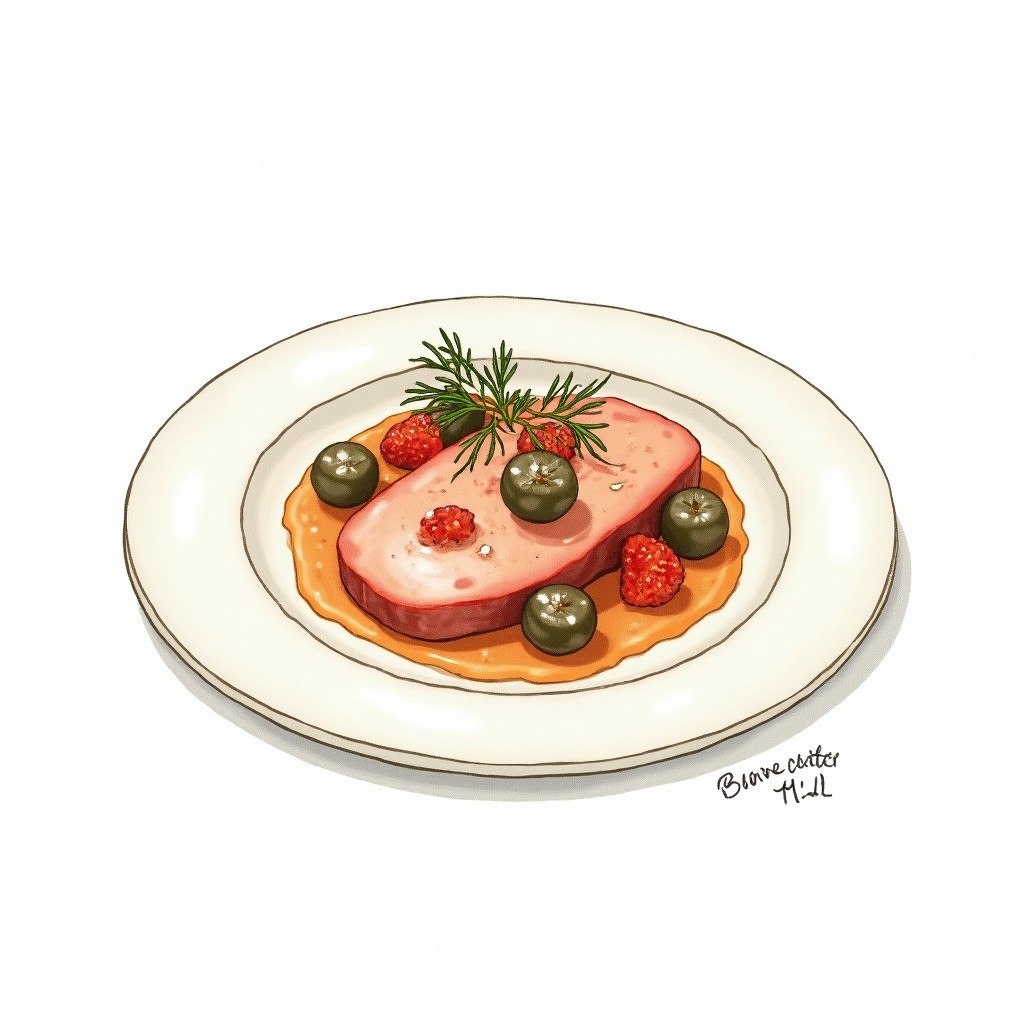
Marchand de Vin
Marchand de Vin — Traditional French Red Wine Pan Sauce
Few sauces pack as much sophisticated punch as this French bistro classic. Built on a foundation of reduced wine and aromatic shallots, then enriched with rich demi-glace, it's the kind of silky, wine-dark sauce that makes simple proteins shine. Perfect alongside steak, roasted chicken, or anything that deserves serious treatment.
Building a Marchand de Vin from scratch represents something of a culinary pilgrimage. You start with beef bones, work your way through hours of slow simmering to create Demi-Glace, and finally arrive here — at this intensely flavored sauce that French bistro cooks have been perfecting for generations. The name literally means "wine merchant," which tells you everything about its character: this is wine in its most concentrated, sophisticated form.
What makes this sauce remarkable isn't complexity — the ingredient list barely fills one hand. Instead, it's about the methodical reduction that transforms ordinary red wine into something profound. The shallots add a subtle sharpness that plays against the wine's depth, while the demi-glace provides the silky richness that makes each spoonful cling perfectly to whatever protein it graces.
This is the kind of sauce that separates bistro cooking from home cooking — not because it's difficult, but because it requires patience and good ingredients. When you taste it spooned over a perfectly seared steak or roasted chicken breast, you understand why French cooks have guarded this technique so carefully. It's liquid elegance, and once you master it, you'll find excuses to make it again and again.
Ingredients
- ½ cupdry red wine, preferably something you'd drink
- 2 tbspshallots, finely chopped
- 2 cupdemi-glace, homemade or high-quality store-bought
- kosher salt
- black pepper, freshly ground
Instructions
- Set out all your ingredients — this sauce moves quickly once you start, so having everything measured and ready prevents any scrambling.
- Pour the wine and chopped shallots into a heavy-bottomed saucepan and bring to a rolling boil over medium-high heat. Once boiling, dial back the heat to maintain a steady simmer and let it reduce until you have about 2 tablespoons of syrupy liquid left — this concentrates all that wine flavor into something potent.
- Stir in the demi-glace and bring everything back to a gentle simmer, then let it bubble away for 5 minutes to marry the flavors and achieve that glossy, coat-the-spoon consistency that makes this sauce so elegant.⏱ 5 min
- Pour the finished sauce through a fine-mesh strainer to catch the shallot pieces — you want pure, silky smoothness here. Taste and season with salt and pepper, keeping in mind that this sauce should be bold enough to complement rich meats without overwhelming them.
Notes
Check out the Demi-Glace recipe for the prior step. It is a real accomplishment to start with beef bones and arrive at a Marchand de Vin.
Tips & Tricks
- Use a wine you'd actually drink — the reduction concentrates every flavor, so cooking wine will give you cooking-wine taste.
- The shallots should disappear completely into the reduction at step 2; if they're still visible, keep simmering until you have that thick, syrupy consistency.
- Don't skip the straining step even if your shallots seem well-incorporated — any remaining pieces will mar that signature silky texture.
- The finished sauce should coat the back of a spoon without being gluey; if it seems too thin, simmer it down a bit more.
- This sauce reheats beautifully — store covered in the fridge for up to a week and gently warm before serving.
Frequently Asked Questions
Can I use white wine instead of red?
You can, but it creates a different sauce entirely — more delicate and less robust. Red wine gives Marchand de Vin its characteristic deep flavor and dark color that defines the dish.
What if I don't have demi-glace?
Store-bought demi-glace works fine, or you can substitute with very good beef stock reduced by three-quarters until it coats a spoon. The flavor won't be quite as rich, but it's still delicious.
How much sauce does this recipe make?
You'll get about 1 cup of finished sauce, which is perfect for 4 servings of steak or chicken. The sauce is rich enough that a few tablespoons per serving is plenty.
Why is my sauce too salty?
The demi-glace likely already contains salt, and reduction concentrates everything including sodium. Taste before adding any salt, and if it's already too salty, thin it with a splash of unsalted stock.