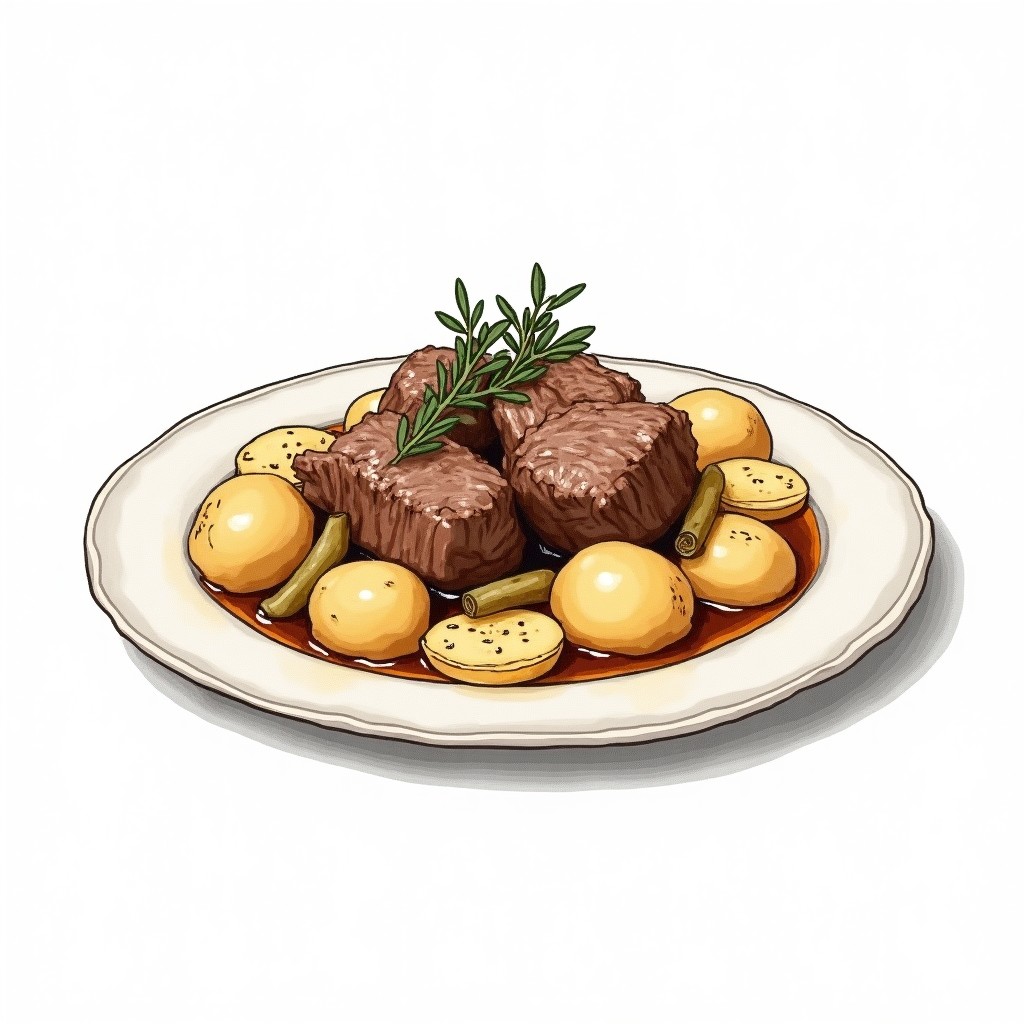
Lancashire Hotpot
Proper Lancashire Hotpot — Layers of Lamb and Golden Potato Perfection
This North England classic builds flavors slowly through careful layering — tender lamb shoulder nestled between sliced onions and crowned with overlapping potato rounds that turn magnificently golden. The stock creates its own gravy as it bubbles gently beneath those crispy potato tops, making every forkful a perfect balance of textures.
Lancashire hotpot represents working-class ingenuity at its finest — a dish born from necessity that became a regional treasure. Mill workers in 19th-century Lancashire needed meals that could cook unattended while they labored, and this slow-baked casserole delivered exactly that. Layer lamb, onions, and potatoes in a heavy pot, add stock, and let the oven do the work.
The genius lies in the layering technique that creates three distinct textures from simple ingredients. Bottom potatoes turn silky and absorb every drop of lamb essence, the middle lamb becomes fork-tender in its own steam, and the top potato layer develops a golden crust that's part crispy, part creamy underneath. No stirring, no checking — just patient heat doing what it does best.
Modern cooks sometimes overthink this dish, adding unnecessary ingredients or techniques. Traditional hotpot succeeds because of restraint, not complexity. Good lamb, quality potatoes, sweet onions, and proper stock create layers of flavor that need no embellishment. The slow oven heat melds everything into something greater than its parts — comfort food that actually comforts.
Nutrition
Ingredients
- 2 lblamb shoulder, cut into 2-inch chunks (bone-in adds flavor)
- 2 lbrusset or Yukon potatoes, peeled and sliced 1/4 inch thick
- 2 largelarge yellow onions, sliced into half-moons
- 2 cupbeef or lamb stock, warmed
- 2 tbspunsalted butter, cut into small pieces
- 1 tspkosher salt
- ½ tspfreshly ground black pepper
- 1 tspfresh thyme leaves, stripped from stems(optional)
Instructions
- Preheat your oven to 350°F and generously butter a 9x13 inch casserole dish. The butter prevents sticking and adds richness to the bottom layer of potatoes.
- Pat the lamb chunks dry with paper towels, then season generously with salt and pepper on all sides. Dry meat develops better flavor, and seasoning now means every bite of lamb will be properly seasoned.
- Arrange half the potato slices across the bottom of your prepared dish, overlapping them slightly like fallen dominoes. This foundation layer will absorb the lamb juices and become incredibly flavorful.
- Distribute the seasoned lamb chunks evenly over the potatoes, then scatter the sliced onions on top. The onions will soften and sweeten as they cook, creating natural flavor bridges between the lamb and potatoes.
- Sprinkle the thyme leaves over everything if using, then season the whole assembly with the remaining salt and pepper. The herbs will perfume the entire dish as it slowly braises.
- Create the signature top crust by arranging the remaining potato slices in overlapping rows, like roof shingles. Take your time here — neat, even rows will give you the most beautiful golden presentation.
- Pour the warm stock carefully around the edges of the dish, avoiding the top potatoes completely. Dot the potato surface with butter pieces. The stock should come about halfway up the sides — it will create steam and eventually reduce to a rich gravy.
- Cover tightly with aluminum foil and slide into the oven for 90 minutes. This covered phase gently steams everything together, tenderizing the lamb while the bottom potatoes absorb all those savory juices.⏱ 1 hr 30 min
- Remove the foil and continue baking until the top potatoes turn deep golden brown and slightly crispy at the edges, about 30 minutes more. You want real color here — that's where the flavor lives.⏱ 30 min
- Let the hotpot rest for 10 minutes before serving. This settling time allows the bubbling juices to calm down and makes serving much cleaner, plus the flavors will be perfectly melded together.⏱ 10 min
Tips & Tricks
- Choose waxy potatoes like Yukon Gold for the best texture — they hold their shape during the long bake and develop creamy interiors beneath that golden top.
- Cut your potato slices with a knife rather than a mandoline to get slight thickness variations that create more interesting texture in the finished dish.
- Warm your stock before adding it to prevent temperature shock that could crack your casserole dish and to jumpstart the cooking process.
- Don't skip the resting period — the bubbling juices need time to settle back into the layers, making serving much neater and flavors more concentrated.
Frequently Asked Questions
Can I use beef instead of lamb?
Absolutely — beef chuck or other braising cuts work perfectly and create an equally delicious hotpot. The cooking method remains exactly the same, though you might want to increase the cooking time by 15-20 minutes if using tougher cuts.
Why are my top potatoes not browning?
Make sure to remove the foil for the final 30 minutes and move your rack to the upper third of the oven if needed. Excess moisture from steam can prevent browning, so let the surface dry out completely before expecting color.
Can I make this ahead of time?
You can assemble the entire hotpot up to 24 hours ahead and refrigerate covered, then bake as directed (add 10-15 extra minutes to account for the cold start). The flavors actually improve with time.
What if my stock level seems too low during cooking?
Add more warm stock around the edges if the level drops below the lamb layer — you need that moisture to properly braise the meat and create the natural gravy.