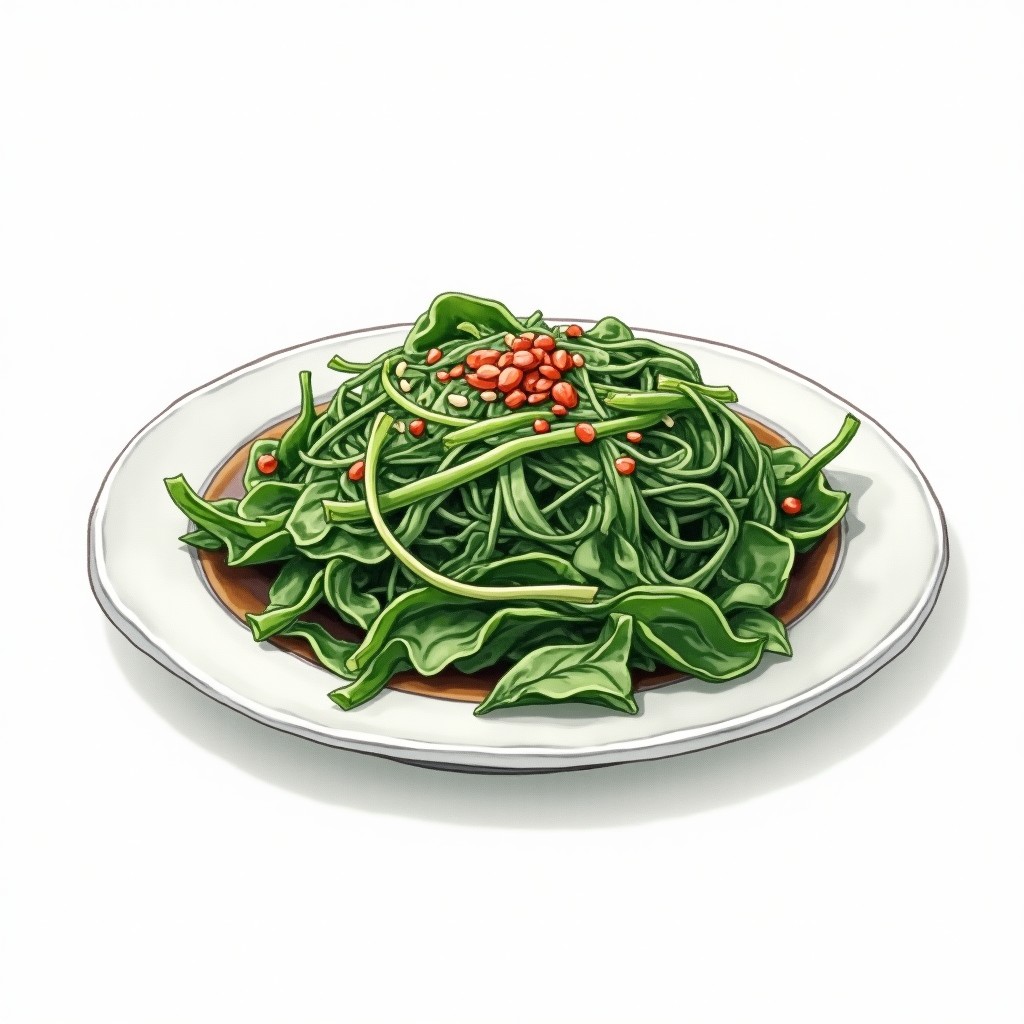
Korean Spinach Banchan (Sigeumchi-namul)
Simple Korean Seasoned Spinach (Sigeumchi-namul)
Fresh spinach wilts down in seconds, then gets dressed with nutty sesame oil, garlic, and soy sauce for a classic banchan that appears at every Korean meal. The technique is straightforward, but proper draining makes all the difference between soggy greens and perfectly seasoned bites.
At every Korean table, small dishes called banchan appear alongside the main meal — pickled vegetables, seasoned greens, marinated beans — each one adding its own flavor note to the symphony. Sigeumchi-namul might be the most essential of these, a dish so fundamental that most Korean home cooks could make it with their eyes closed.
The beauty here isn't in complexity but in restraint. Fresh spinach gets a quick blanch, just long enough to wilt the leaves and take away that raw bite, then meets the holy trinity of Korean seasoning: nutty sesame oil, sharp garlic, and the deep umami of soy sauce. Toasted sesame seeds add tiny pops of texture, while green onions bring a mild sharpness that cuts through the richness.
What separates good sigeumchi-namul from the soggy, over-seasoned versions you might encounter is the draining technique. Spinach holds onto water like a sponge, and every drop you leave behind will dilute those carefully balanced flavors. The extra minute you spend squeezing out moisture is what transforms this from a side dish afterthought into something that belongs on the table at every meal.
Ingredients
- 8 ozfresh spinach, cleaned and washed
- 1 clovegarlic clove, minced
- 1 green onion, chopped
- 1½ tspsoy sauce
- 1½ tsptoasted sesame oil
- 2 tsptoasted sesame seeds
- silgochu (Korean dried shredded red pepper)(optional)
Instructions
- Bring 8-10 cups of water to a rolling boil in a large pot. You need plenty of water so the spinach wilts quickly and evenly.
- Drop the spinach into the boiling water and blanch for 30 seconds to 1 minute, keeping the lid off. Stir with a wooden spoon to ensure all leaves get submerged — fresh spinach wilts fast.⏱ 1 min
- Drain the spinach immediately and rinse under cold running water several times. This stops the cooking and removes any grit that might still be clinging to the leaves.
- Squeeze the spinach firmly with your hands to remove as much water as possible, then cut into bite-size pieces. Getting the water out is crucial — wet spinach will dilute the seasoning.
- Combine the drained spinach with garlic, green onion, soy sauce, sesame oil, and sesame seeds in a mixing bowl. Use your hands to gently toss everything together until the spinach is evenly coated.
- Transfer to a serving bowl and sprinkle with silgochu if using. The red pepper adds a mild heat and beautiful color contrast.
- Serve alongside rice as part of a Korean meal. This banchan keeps well in the refrigerator for 2-3 days.
Tips & Tricks
- Don't crowd the pot — if you're doubling the recipe, blanch the spinach in two batches to keep the water at a rolling boil.
- Really squeeze that spinach dry; wrap it in a clean kitchen towel and twist it tight if your hands aren't getting enough water out.
- Mix the seasonings with your hands rather than a spoon — it distributes everything more evenly and helps break up any clumps of garlic.
- Toast your own sesame seeds in a dry pan for 2-3 minutes if you can't find pre-toasted ones; the flavor difference is worth it.
- Let the dressed spinach sit for 10 minutes before serving to allow the flavors to meld together.
Frequently Asked Questions
Can I use frozen spinach instead of fresh?
Frozen spinach works, but thaw it completely and squeeze out every drop of water — it holds even more moisture than fresh. You can skip the blanching step since it's already cooked.
How long does this keep in the fridge?
It stays fresh for 2-3 days refrigerated in an airtight container. The flavors actually improve after a day, but the texture starts to soften after that.
What if I can't find silgochu?
Regular red pepper flakes work fine, or just skip it entirely. The dish is complete without the heat — silgochu is more about color and mild spice than essential flavor.
Can I make this ahead for meal prep?
Yes, it's actually ideal for meal prep since the flavors develop over time. Make a big batch on Sunday and portion it out with rice for easy lunches all week.