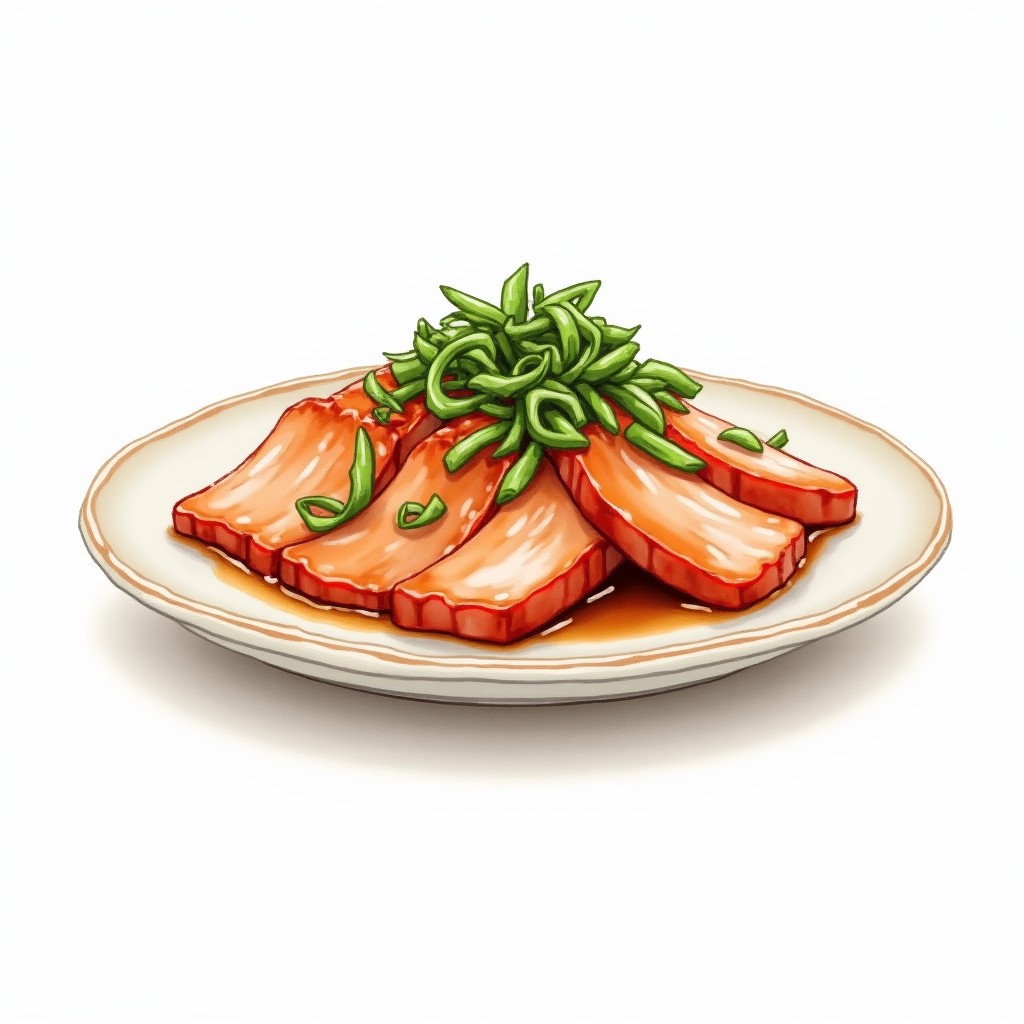
Korean Pork Belly
Twice-Cooked Korean Pork Belly in Spicy Gochujang Glaze
The initial boil removes excess fat and firms up the meat, making slicing effortless and the final texture perfect. A glossy gochujang sauce clings to every piece, delivering umami depth with building heat that doesn't overpower.
The twice-cooking method isn't just a clever technique — it's the secret to pork belly that actually behaves itself. Without that initial boil, you're fighting grease, uneven cooking, and pieces that fall apart when you try to slice them. The brief blanching firms up the meat and pulls out excess fat, leaving you with pork that slices cleanly and sears beautifully.
This dish represents Korean home cooking at its most practical. The gochujang glaze strikes that perfect balance between sweet, salty, and spicy that makes you reach for another bite before you've finished chewing. It's not restaurant flashy, but it's deeply satisfying in the way that good technique always is.
The timing here matters more than you might expect. Let the pork cool completely after boiling — rushing this step makes slicing harder and uneven. Once you start the final searing, everything moves quickly, so have your sauce mixed and your green onions sliced before you heat the pan.
Ingredients
- 1½ lbpork belly, cut into cubes
- 2 tbspneutral oil
- 3 green onions, thinly sliced
sauce
- ¼ cupgochujang (Korean chili paste)
- 1 tbspgochugaru (Korean red pepper flakes)
- 1 tbspagave nectar or brown sugar
- 1 tbspmirin (Japanese sweet rice wine)
- ¼ cuplight soy sauce
- 3 clovegarlic cloves
Instructions
- Drop the pork belly cubes into a large pot and add enough cold water to cover by about an inch. Starting with cold water helps draw out impurities gradually.
- Cover the pot and bring to a vigorous boil, then remove the lid and let it bubble away for exactly 5 minutes. You'll see foam and impurities rise to the surface — this is what we're getting rid of.⏱ 5 min
- Drain the pork immediately and rinse under cold running water to stop the cooking. Let the pieces drain completely and cool to room temperature before moving on.
- Mince the garlic as finely as possible — bigger pieces will burn in the hot pan later. Mix all the sauce ingredients in a bowl until smooth and glossy.
- Once the pork is completely cool, slice each cube into 1/4 inch thick pieces. The pre-cooking makes this step much easier — the meat should slice cleanly without falling apart.
- Heat your wok or heavy skillet over medium-high heat until quite hot. Add the oil and swirl to coat — it should shimmer and move freely when the pan is hot enough.
- Add the sliced pork and let it sear undisturbed for a minute before stirring. Cook until heated through and lightly browned on the edges — no pink should remain.
- Pour in the sauce and toss everything together quickly. Let it bubble and reduce slightly for 2 minutes, coating each piece with the glossy mixture.⏱ 2 min
- Pull the pan off the heat and immediately scatter the sliced green onions over the top. Their fresh bite cuts through the rich, spicy sauce perfectly.
Tips & Tricks
- Cut the pork belly into rough 2-inch cubes before boiling — they'll hold together better than thin slices during the initial cooking.
- The pork is ready to slice when it feels firm to the touch and no longer warm — this usually takes about 15 minutes after draining.
- Don't skip rinsing the pork after boiling, even though it seems unnecessary — this removes any lingering foam and impurities that would make your final dish taste muddy.
- Your pan needs to be properly hot before adding the sauce — if it's not sizzling immediately, the sauce will just coat the pork instead of reducing into a proper glaze.
- Save some sliced green onions to sprinkle on top after serving — their fresh bite gets lost if they're all cooked into the dish.
Frequently Asked Questions
Can I use a different cut of pork instead of belly?
Pork shoulder works well and gives you more meat, less fat. Boston butt is another good option. Avoid lean cuts like tenderloin — they'll dry out during the double cooking process.
How spicy is this dish with the gochujang and gochugaru?
It builds to a medium heat that most people can handle comfortably. The agave and mirin balance the spice, so it's more complex than just hot. Start with less gochugaru if you're heat-sensitive.
Can I make this ahead of time?
Yes — you can boil and slice the pork up to two days ahead, then store it covered in the fridge. The final stir-frying only takes 5 minutes, so it's perfect for quick weeknight dinners.
What should I serve this with?
Steamed rice is essential — you need something to absorb that glossy sauce. Add some pickled vegetables or a simple cucumber salad to cut through the richness.