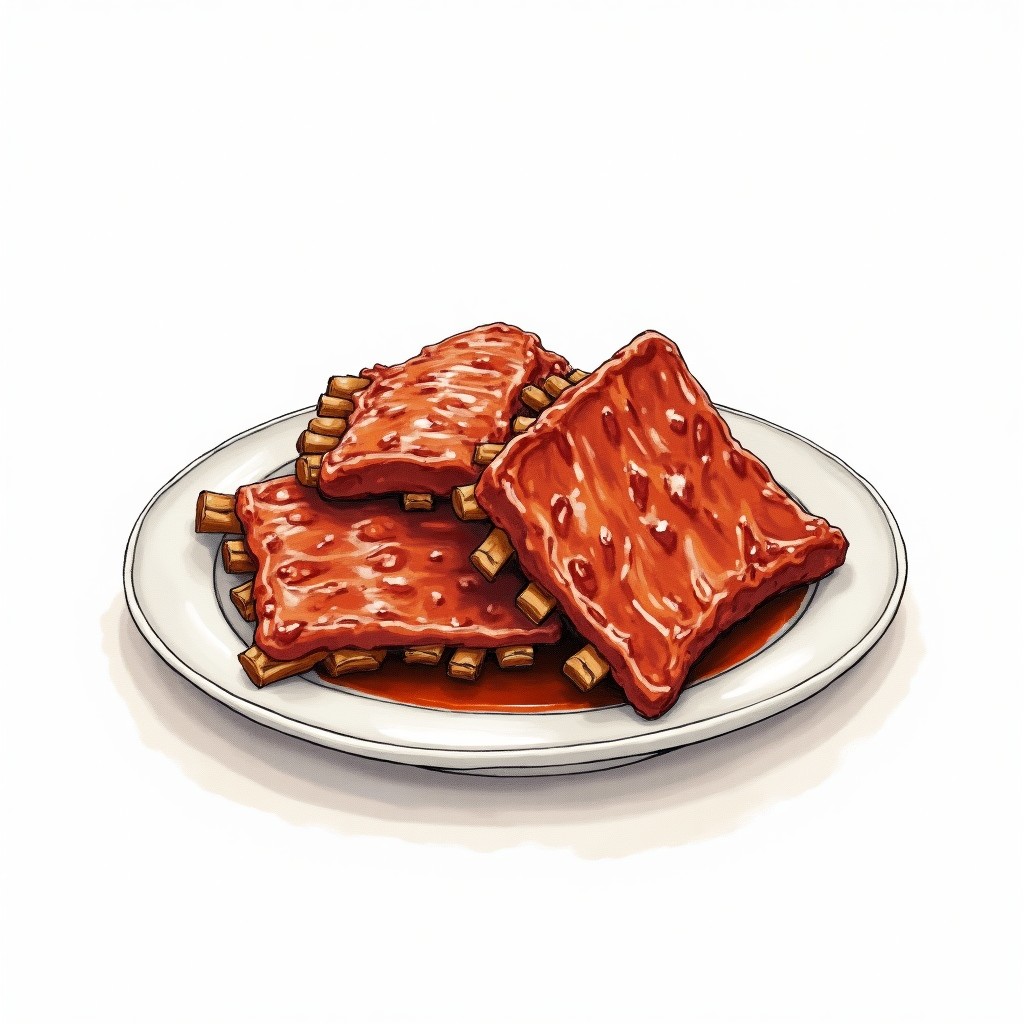
Korean BBQ Ribs
Slow-Baked Korean Ribs with Caramelized Gochujang Crust
These ribs spend hours absorbing a complex marinade where gochujang's funky heat mingles with apple sweetness and sesame richness. The low-and-slow bake keeps them impossibly tender before a final broiler blast creates lacquered, caramelized edges.
There's something deeply satisfying about ribs that cook so slowly they practically melt away from the bone, and these Korean-spiced beauties take that patience to its logical conclusion. The magic begins hours before cooking even starts, when gochujang — Korea's fermented chili paste — mingles with grated apple and onion to create a marinade that's equal parts sweet, funky, and complex.
Gochujang brings a heat that builds rather than burns, layered with umami depth that only comes from months of fermentation. Combined with the natural enzymes from fresh apple, this marinade doesn't just flavor the meat — it actively breaks down tough fibers while you sleep. The result is pork so tender it barely needs a knife, wrapped in a lacquered crust that tastes like concentrated Korean barbecue.
The cooking method here is pure restraint: low heat for most of the journey, then a blast of broiler intensity at the end. That final step transforms the marinade's sugars into a glossy, caramelized shell that crackles when you bite through it. It's the kind of dish that fills your kitchen with an aroma so compelling, neighbors start dropping by unannounced.
Ingredients
Spicy Marinade
- ⅔ cupKorean red pepper paste (gochujang)
- 1 tspKorean red chili pepper flakes (gochugaru)
- ¼ cupsoy sauce
- ¼ cuprice wine
- 2 tbspsesame oil
- 4 tbsphoney
- 2 tbspbrown sugar
- 3 tbspgarlic, minced
- 2 tbspfresh ginger, grated
- ½ mediummedium onion, grated
- ½ mediummedium sweet apple, grated
- ½ tspblack pepper
- pork ribs
Instructions
- Combine all marinade ingredients in a large bowl, stirring until the gochujang dissolves completely and the mixture is smooth. The grated apple and onion will add natural sweetness and help tenderize the meat.
- Check the back of each rib slab for the thin membrane — it peels away easily with a paper towel for grip if it's still attached. Slice each slab in half to create manageable portions, then rinse under cold water and pat dry.
- Slather the ribs thoroughly with marinade, getting into every crevice. Seal in a large bag or covered container and refrigerate for at least 8 hours, though 24-48 hours gives the best flavor penetration. Flip the ribs once during marinating.⏱ 8 hrs
- Heat your oven to 325°F and line a rimmed baking sheet with heavy-duty foil. The low temperature ensures the ribs stay moist while the collagen slowly breaks down into gelatin.
- Place ribs meat-side down on the prepared sheet, then tent tightly with another sheet of foil to create a steam environment. Bake for 1.5 hours — they should be fork-tender but not falling apart.⏱ 1 hr 30 min
- Strip away the foil and switch your oven to broil at 500°F. Let it preheat for a few minutes while you prepare for the final caramelization step.
- Broil the ribs about 5 minutes per side, brushing with any reserved marinade as they develop a glossy, charred crust. Watch closely — the sugars can go from caramelized to burnt quickly.⏱ 10 min
Tips & Tricks
- Score the fat cap in a crosshatch pattern before marinating — this helps the flavors penetrate deeper and prevents the ribs from curling during cooking.
- Save about 1/4 cup of marinade before adding the raw ribs, then use it for brushing during the final broil step for extra glaze without food safety concerns.
- If your ribs seem to be browning too quickly during the low bake, tent them more loosely with foil to allow some steam to escape.
- The meat should easily pull away from the bone when properly cooked, but shouldn't be so tender that it completely falls apart when you lift it.
- Let the ribs rest for 5-10 minutes after broiling — this helps the juices redistribute and makes them easier to slice cleanly.
Frequently Asked Questions
Can I use a different cut of ribs for this recipe?
Baby back ribs work beautifully with this marinade and will cook about 15-20 minutes faster than spare ribs. St. Louis-style ribs are also excellent and follow the same timing as spare ribs.
What if I can't find gochujang at my store?
Look in the international aisle or Asian grocery stores — it's becoming more widely available. In a pinch, mix 3 tablespoons sriracha with 2 tablespoons miso paste and 1 tablespoon brown sugar, though the flavor won't be quite as complex.
How do I know when the ribs are properly tender?
The meat should yield easily to a fork and pull back from the bone ends by about 1/4 inch. When you lift the slab with tongs, it should bend significantly but not break in half.
Can these be made ahead and reheated?
Absolutely — cook them completely, then wrap in foil and refrigerate for up to 3 days. Reheat in a 300°F oven for 20-25 minutes, then broil briefly to refresh the crust.