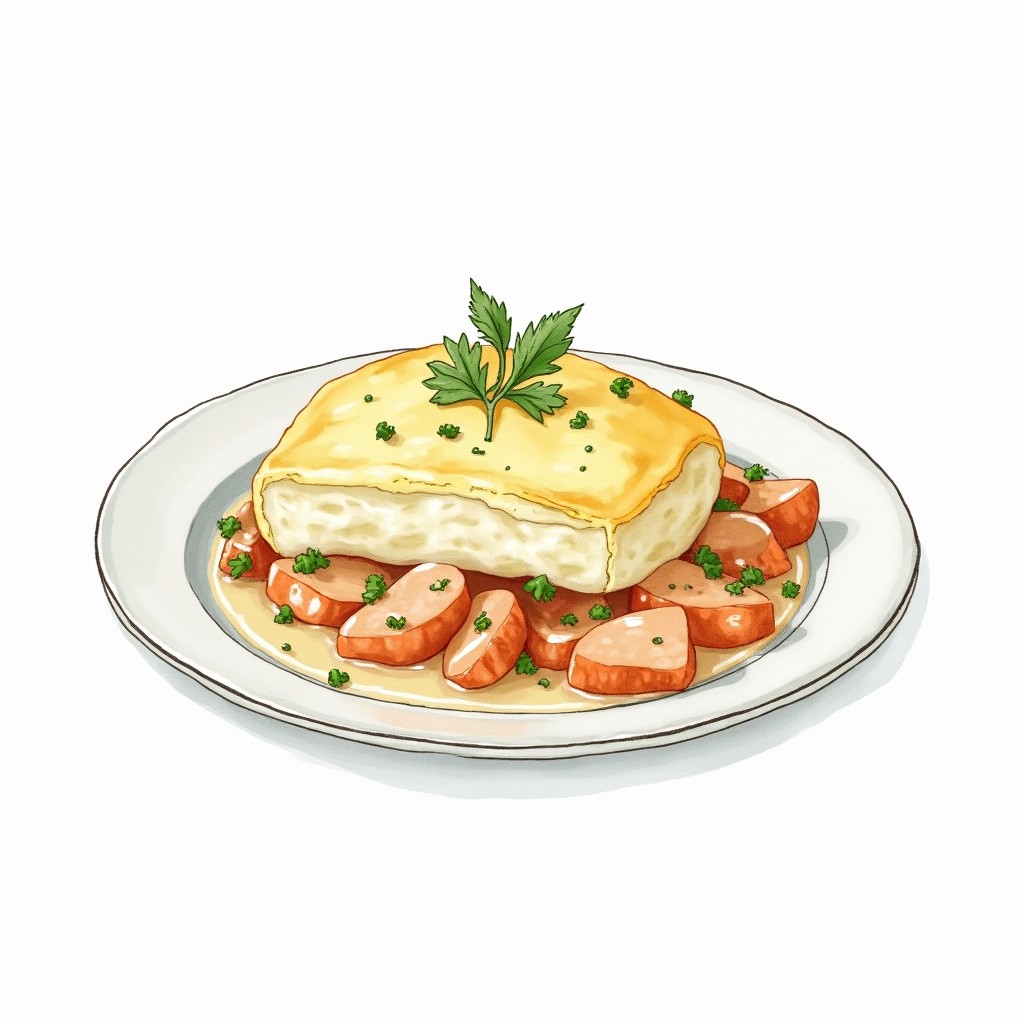
Irish Fish Pie with Mashed Potato Topping
Creamy Irish Fish Pie — Two Fish, One Perfect Comfort Dish
Cod and salmon nestle together in a gentle parsley-scented cream sauce, crowned with fluffy mashed potatoes that bake to golden peaks. This is the kind of cozy weeknight dinner that feels like a warm hug from the inside out.
Fish pie represents the soul of Irish coastal cooking — a dish born from practical necessity that became beloved tradition. When fishermen returned with their catch, this pie transformed whatever they brought home into something that could feed a family generously. The genius lies in its gentle approach: poaching the fish in milk creates both tender pieces and a flavorful liquid that becomes the sauce base.
The combination of cod and salmon isn't accidental. Cod provides flaky, mild chunks that absorb the parsley cream beautifully, while salmon adds richness and deeper flavor that elevates the entire dish. Together, they create layers of taste and texture that make each forkful interesting without overwhelming the palate.
What makes this version particularly satisfying is how the components work together during baking. The creamy filling bubbles up through the ridged potato topping, creating pockets where the flavors meld. Those golden peaks on top aren't just for show — they provide textural contrast to the tender fish and smooth sauce below. This is the kind of dinner that transforms a regular weeknight into something special, requiring nothing more than a simple green salad alongside.
Nutrition
Ingredients
Fish
- 1 lbcod fillets, skin removed, cut into 2-inch chunks
- 8 ozsalmon fillet, skin removed, cut into 2-inch chunks
- 2 cupwhole milk for poaching
- 1 bay leaf
Topping
- 2 lbrusset potatoes, peeled and quartered
- 4 tbspbutter for mashing
- 1 cupwarm milk for mashing
Sauce
- 3 tbspbutter for roux
- 3 tbspall-purpose flour
- 3 tbspfresh parsley, finely chopped
- 1 cupfrozen peas
Seasoning
- salt and white pepper to taste
Instructions
- Turn your oven to 400°F and generously butter a 9x13 inch baking dish. The buttered dish prevents sticking and adds another layer of richness to the finished pie.
- Arrange the fish pieces in a single layer in your largest skillet. Pour the milk over them and add the bay leaf. Bring to a very gentle simmer — you want tiny bubbles, not a rolling boil — and poach for 8 minutes until the fish flakes easily when tested with a fork.⏱ 8 min
- Carefully lift the fish from the skillet with a slotted spoon, letting excess liquid drain back into the pan. Strain the poaching liquid through a fine-mesh sieve and set aside — this flavored milk becomes your sauce base. Break the fish into generous, bite-sized chunks.
- Drop the quartered potatoes into a large pot of well-salted boiling water. Cook at a steady boil for about 15 minutes until they break apart easily when pierced with a knife. Thorough cooking here means fluffy mashed potatoes later.⏱ 15 min
- Drain the potatoes completely and return them to the pot. Mash with the butter and warm milk until completely smooth and creamy. Season generously with salt and pepper — remember, these potatoes need to flavor the whole top layer.
- In a medium saucepan, melt the remaining butter over medium heat. Sprinkle in the flour and whisk constantly for 2 minutes to cook out the raw flour taste. This creates your roux foundation.⏱ 2 min
- Slowly pour the reserved poaching liquid into the roux, whisking continuously to prevent lumps. Keep whisking and let the mixture simmer until it thickens enough to coat the back of a spoon, about 5 minutes.⏱ 5 min
- Remove the sauce from heat and stir in the chopped parsley and frozen peas. The residual heat will cook the peas perfectly. Taste and adjust seasoning with salt and pepper.
- Very gently fold the flaked fish into the sauce, being careful not to break it up further. You want distinct pieces of fish throughout. Spoon this mixture evenly into your prepared baking dish.
- Dollop the mashed potatoes over the fish mixture, then spread them evenly to the edges with a large spoon. Run a fork across the surface to create ridges — these will catch the heat and turn beautifully golden.
- Slide the pie into your preheated oven and bake for 25-30 minutes until the potato peaks are golden brown and you can see the filling bubbling around the edges. The contrast between golden top and creamy filling is what you're after.⏱ 30 min
- Let the pie rest for 5 minutes before serving. This brief cooling period lets the sauce set up slightly, making for neater portions that hold their shape on the plate.⏱ 5 min
Tips & Tricks
- Don't skip straining the poaching liquid — removing any stray fish bits prevents a grainy sauce and keeps the flavors clean.
- Make deep ridges in the potato topping with a fork; shallow marks won't catch enough heat to create those appealing golden peaks.
- If your mashed potatoes seem too stiff to spread easily, add a splash more warm milk rather than forcing them and potentially tearing the fish layer underneath.
- The pie can be assembled completely and refrigerated for up to 4 hours before baking; just add 5-10 minutes to the cooking time if starting from cold.
- Leftover portions reheat beautifully in a 350°F oven for 15 minutes, covered with foil to prevent the potatoes from drying out.
Frequently Asked Questions
Can I use different types of fish?
Absolutely — any firm white fish works well in place of cod (haddock, halibut, or pollock), and you can substitute the salmon with smoked trout or even leave it out entirely for an all-white fish version. Just avoid delicate fish like sole that might fall apart during cooking.
What if I don't have whole milk for poaching?
2% milk works fine, though the sauce will be slightly less rich. Avoid skim milk as it can curdle when heated, and half-and-half will make an overly heavy sauce that might separate.
Can this be made ahead and frozen?
The assembled pie freezes well for up to 3 months before baking. Thaw completely in the refrigerator overnight, then bake as directed, adding about 10 minutes to account for the chill. The texture stays remarkably good.
Why is my sauce lumpy despite whisking?
This usually happens when the poaching liquid is too hot when added to the roux. Let the liquid cool for a few minutes after straining, then add it gradually while whisking constantly. If lumps do form, strain the sauce through a fine mesh before adding the fish.
How do I know when the fish is perfectly cooked during poaching?
The fish should flake easily when gently pressed with a fork but still hold together in chunks. Overcooked fish will fall apart completely, while undercooked fish will be translucent in the center and won't flake.