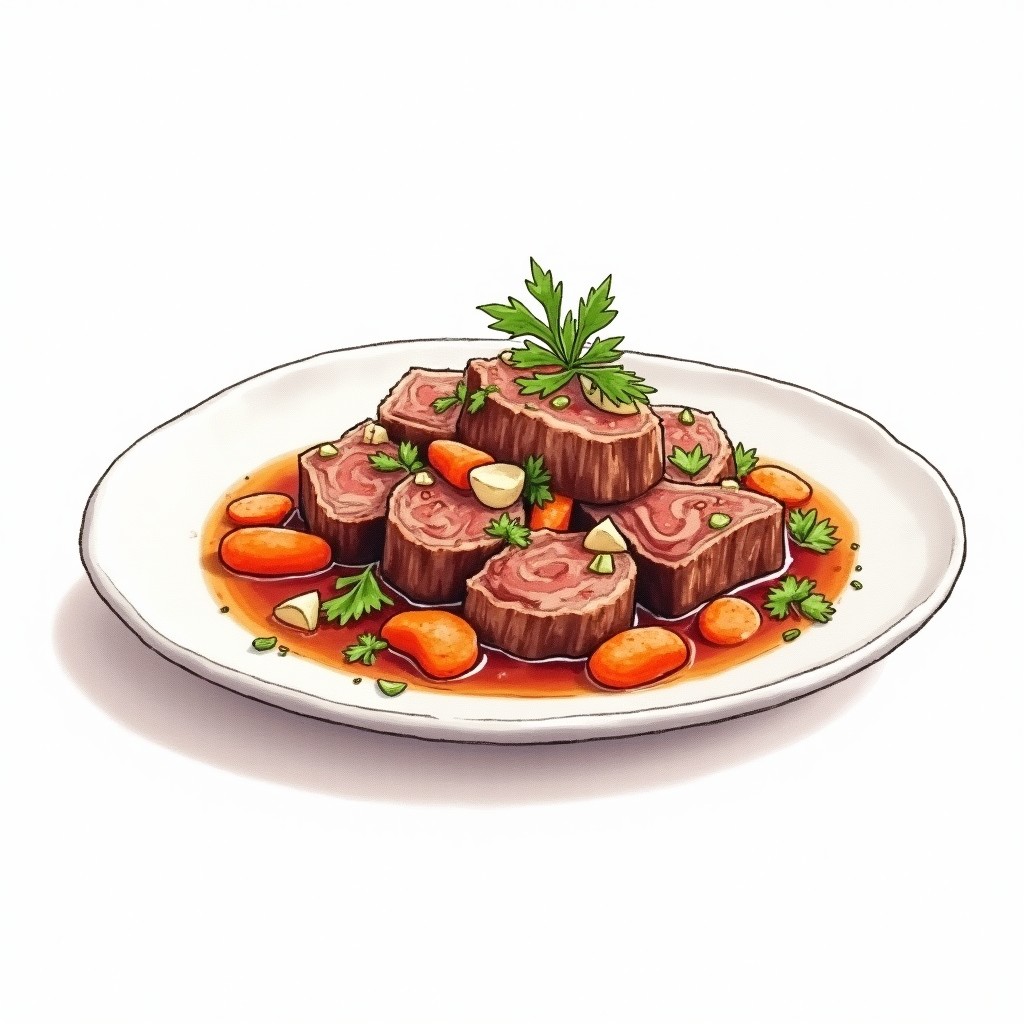
Homemade Beef Stock
Deep Brown Beef Stock from Roasted Bones
The difference between good stock and great stock is all in the browning — these bones spend serious time in a hot oven, developing layers of caramelized flavor that no shortcut can match. Twelve hours later, you'll have liquid gold that sets up firm in the fridge and transforms everything it touches.
Stock-making is one of those kitchen skills that separates serious home cooks from everyone else, and the secret isn't time or technique — it's heat. Most people skip the roasting step, tossing raw bones into a pot and wondering why their stock tastes flat. But those extra hours in the oven transform ordinary beef bones into something that will make your kitchen smell like the best steakhouse in town.
The science behind great stock is simple: proteins and sugars in the bones need serious heat to break down and caramelize. When bones roast at high temperature, they develop hundreds of flavor compounds that no amount of simmering can create. The Maillard reaction — the same process that makes a perfectly seared steak irresistible — works its magic on every surface, creating layers of savory depth that become the foundation of exceptional cooking.
This isn't quick stock or convenience cooking. Twelve hours is non-negotiable, and the prep work matters. But once you taste the difference — that rich, almost meaty intensity that makes even simple vegetable soup taste like it came from a French kitchen — you'll understand why professional chefs never skip this step. Good stock is the difference between home cooking and restaurant cooking, and it starts with bones that have seen serious heat.
Nutrition
Ingredients
- 4 lbbeef bones, mix of marrow and knuckle bones
- 2 lbmeaty beef bones (oxtail or short ribs work beautifully)
- 2 tbsptomato paste
- 1 tspblack peppercorns
- 5 quartscold water
aromatics
- 2 mediummedium onions, quartered
- 3 largelarge carrots, chopped into 2-inch pieces
- 3 stalkstalks celery, chopped into 2-inch pieces
- 1 headhead garlic, halved crosswise
herbs
- 3 sprigsprigs fresh thyme
- 2 bay leavesbay leaves
- 1 bunchfresh parsley stems (save the leaves for something else)
Instructions
- Crank your oven to 450°F and spread the bones across one or two large rimmed baking sheets in a single layer. Give them room to breathe — overcrowding means uneven browning.
- Roast the bones for 45 minutes, flipping them halfway through with tongs. You're looking for deep mahogany color on all surfaces — this browning is where your flavor lives.⏱ 45 min
- Scatter the onions, carrots, and celery around the bones and roast everything together for another 20 minutes. The vegetables should be golden and starting to caramelize at the edges.⏱ 20 min
- Brush the tomato paste over the bones and vegetables — don't be shy about coating them well. Roast for 5 more minutes until the paste has darkened and smells sweet and concentrated.⏱ 5 min
- Transfer everything to your largest stockpot. Pour hot water onto the roasting pans and scrape up every bit of those gorgeous browned drippings — that's pure flavor you don't want to waste.
- Pour the deglazing liquid into the pot and add the garlic, thyme, bay leaves, parsley stems, and peppercorns. Cover everything with cold water by about 2 inches — the bones should be completely submerged.
- Bring to a very gentle simmer over medium heat, which will take about 30 minutes. As it heats, skim off the foam and gray scum that rises to the surface — this keeps your finished stock crystal clear.⏱ 30 min
- Drop the heat to low and let it bubble lazily, uncovered, for 10-12 hours. Skim occasionally and add water if the level drops below the bones. The stock is ready when it coats a spoon and jiggles like Jell-O when cooled.⏱ 10 hrs
- Strain through a fine-mesh sieve lined with cheesecloth into containers. Let it cool completely on the counter before refrigerating — you'll know it's good when it sets up firm and wobbly.
Tips & Tricks
- Ask your butcher to cut large bones into smaller pieces — more surface area means better browning and faster extraction of gelatin.
- Save roasted bone scraps from prime rib or standing rib roasts in the freezer until you have enough for stock.
- The stock is properly reduced when a spoonful coats the back of a wooden spoon and leaves a clear line when you draw your finger through it.
- Strain while hot but don't squeeze the solids — pressing releases cloudy particles that will muddy your finished stock.
- Freeze stock in ice cube trays for easy portioning, then transfer to bags for up to six months of storage.
Frequently Asked Questions
Can I make this in a slow cooker or pressure cooker?
You still need to roast the bones in the oven first — that browning step is non-negotiable. From there, a slow cooker on low works perfectly for the long simmer, though you'll miss some evaporation and concentration. Pressure cooking will extract gelatin faster but won't give you the same depth of flavor as the traditional long simmer.
How do I know if my stock has enough gelatin?
Properly made stock will set up like firm Jell-O when completely chilled — it should jiggle and hold its shape when you tap the container. If it stays liquid in the fridge, simmer it uncovered for another few hours to concentrate the gelatin.
What's the difference between marrow bones and knuckle bones?
Marrow bones are cut from the leg and contain rich marrow that adds flavor and body. Knuckle bones are joint bones packed with cartilage that breaks down into gelatin during the long simmer. You need both for the best balance of flavor and body.
Can I reuse the bones to make a second batch?
The bones won't have much left to give after 12 hours, but you can make a weaker second stock called 'remouillage' by covering the spent bones with fresh water and simmering for another 6-8 hours. It's perfect for braising liquid or when recipes call for stock and you want to save your good stuff.