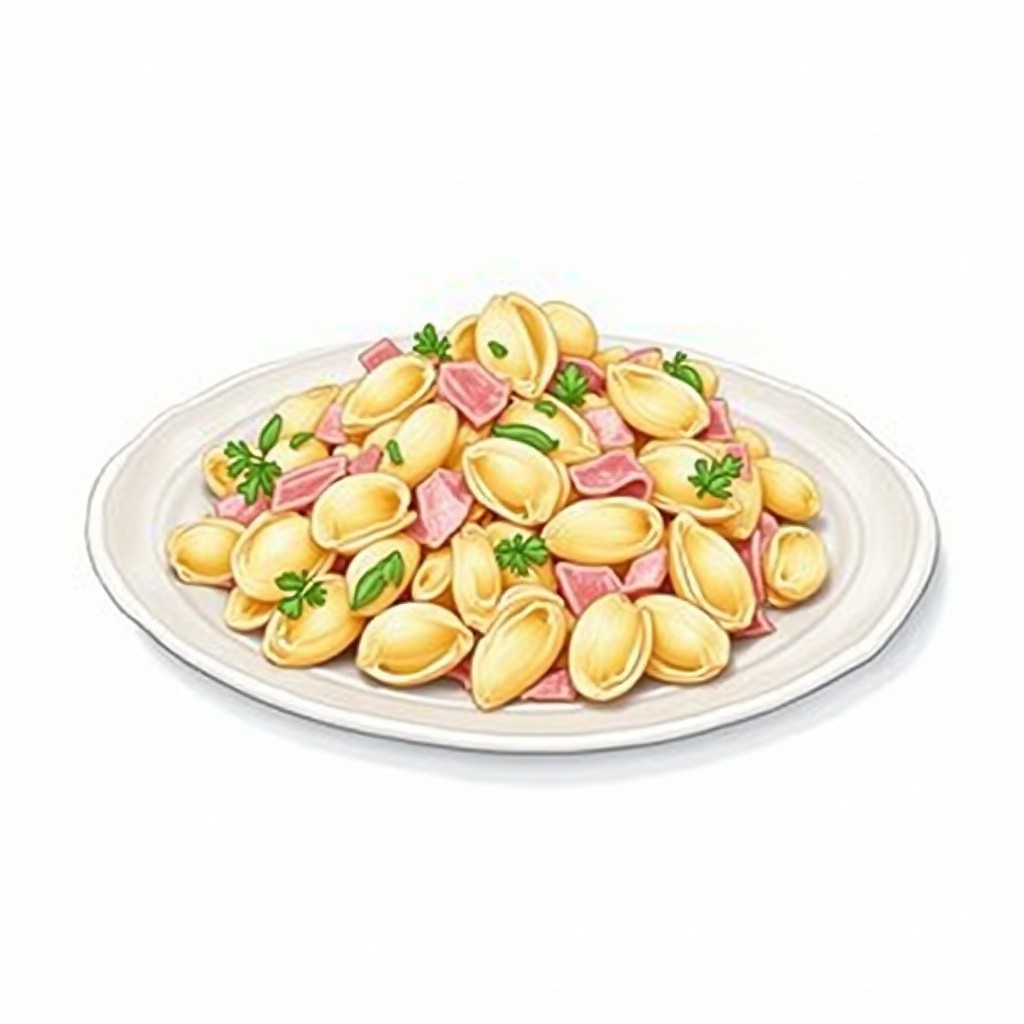
Ham and Butter Pasta (Coquillettes au Jambon)
Coquillettes au Jambon — The French Way to Make Pasta Night Special
Sometimes the simplest French dishes hit the hardest. This is pasta stripped down to its essentials: tender shells catching pools of melted butter, smoky ham adding substance, and nutty Gruyère bringing it all together. It's the kind of weeknight dinner that feels like a warm hug from a Parisian grandmother.
Every French parent has their version of this dish tucked away for busy weeknights when time is short but standards remain high. Coquillettes au jambon isn't trying to be impressive — it's trying to be perfect at being simple. The genius lies in the technique: tossing hot pasta with cold butter off the heat creates an emulsion that turns humble ingredients into something that tastes far more luxurious than the sum of its parts.
This is comfort food with a French accent, the kind of meal that transforms a regular Tuesday into something a little more special. The shells catch the melted butter and cheese in their curves, while bits of smoky ham add just enough substance to make it feel like a proper dinner. It's what French families have been making for generations when they want something satisfying without the fuss.
The technique here matters more than you might expect. That reserved pasta water isn't just insurance — it's what transforms melted cheese into a proper sauce that clings to every shell. And timing the cheese addition just right means the difference between silky perfection and a grainy mess that no amount of stirring will fix.
Nutrition
Ingredients
- 12 ozshell pasta (coquillettes or small shells)
- 6 ozcooked ham, diced small (about 1/4-inch pieces)
- 4 tbspunsalted butter
- ¾ cupGruyère cheese, freshly grated
- kosher salt
- freshly ground black pepper
- 2 tbspfresh flat-leaf parsley, finely chopped(optional)
Instructions
- Fill a large pot with water and salt it generously — it should taste like the sea. Bring it to a rolling boil over high heat.
- Drop the pasta into the boiling water and cook according to package directions until just al dente. The shells should have a slight bite but no chalky center when you test one.⏱ 10 min
- Before draining, scoop out half a cup of the starchy pasta water and set it aside — this liquid gold will help create a silky sauce. Drain the pasta thoroughly.
- Return the drained pasta to the pot and place it over low heat. This gentle warming helps the butter melt evenly without breaking.
- Add the butter to the warm pasta and toss continuously until it melts completely and coats every shell with a glossy sheen.⏱ 1 min
- Fold in the diced ham and continue tossing until the pieces warm through and start to release their smoky aroma.⏱ 2 min
- Pull the pot off the heat immediately and add the grated Gruyère, tossing vigorously until it melts into a creamy coating. The residual heat will melt the cheese perfectly.
- If the pasta looks dry or the cheese isn't melting smoothly, gradually add the reserved pasta water, one tablespoon at a time, until you achieve a silky consistency.
- Taste and adjust with salt and several grinds of black pepper. Remember, the ham and cheese are already salty, so go easy at first.
- Divide among warm bowls and scatter with fresh parsley if using. Serve immediately while the cheese is still melty and the pasta is piping hot.
Tips & Tricks
- Save that pasta water before you drain — the starch content varies by pasta brand, so having extra insurance helps you adjust the consistency perfectly.
- Cut the ham into small, uniform pieces so they distribute evenly and warm through quickly without overcooking.
- Grate the Gruyère yourself rather than buying pre-shredded; it melts much more smoothly and won't have that chalky coating.
- Pull the pot completely off the heat before adding cheese — residual heat is gentler and prevents the proteins from seizing up.
- Warm your serving bowls with hot water for 30 seconds before plating to keep the dish hot longer.
Frequently Asked Questions
Can I use a different type of pasta?
Small shells work best because they catch the sauce, but penne, cavatappi, or any short pasta with curves or tubes will do. Avoid long pasta like spaghetti since the sauce won't cling as well.
What can I substitute for Gruyère?
Swiss cheese is the closest substitute, or try Comté for something more authentically French. Emmental works too, though it's milder. Avoid pre-shredded cheeses as they contain anti-caking agents that prevent smooth melting.
Can I make this ahead of time?
This dish is best served immediately since the cheese sauce can become grainy when reheated. If you must make it ahead, undercook the pasta slightly and reheat gently with a splash of milk or cream.
My cheese sauce turned grainy — what went wrong?
The heat was likely too high when you added the cheese, causing the proteins to seize. Next time, make sure the pot is completely off the heat and add the cheese gradually while tossing constantly.