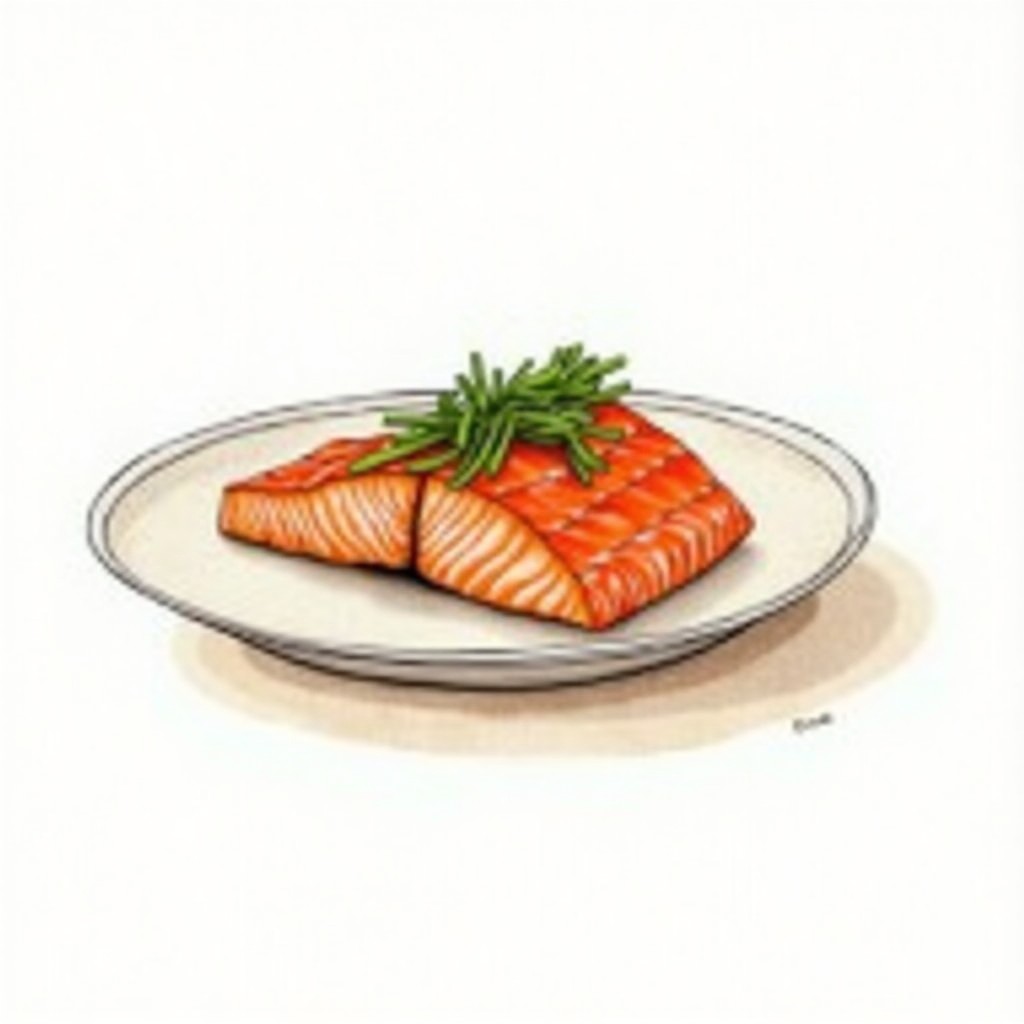
Glazed Salmon, Hongshao-Style
Hongshao-Style Glazed Salmon with Ginger and Scallions
This elegant fusion technique brings the beloved Chinese red-cooking method to tender salmon fillets. The aromatic glaze develops into a glossy, caramelized coating that perfectly balances sweet, savory, and tangy notes—a restaurant-quality dish that's surprisingly approachable for the home cook.
Salmon and soy sauce might sound like an unlikely pairing to Western palates, but this combination has been captivating diners across Asia for decades. The technique borrows from hongshao, the traditional Chinese red-cooking method that transforms tough cuts of meat into silky, deeply flavored braises. Here, we adapt that same principle to delicate salmon fillets, creating a glossy glaze that clings beautifully to the fish without overwhelming its natural richness.
The magic happens in the sauce reduction, where Shaoxing wine mingles with dark and light soy sauces to create layers of umami complexity. Chinese black vinegar adds a subtle tang that cuts through the salmon's oils, while sugar balances everything with gentle sweetness. The cornstarch coating does double duty—it gives the fish a gorgeous golden crust and helps the finished glaze achieve that restaurant-quality shine.
What makes this dish particularly rewarding is how quickly it comes together. Twenty minutes from start to finish, yet the flavors taste like they've been developing for hours. The technique is forgiving too—as long as you don't overcook the salmon, the sauce will guide you to success. Serve this over steamed rice with some blanched vegetables, and you'll have a dinner that feels both familiar and wonderfully unexpected.
Ingredients
- 2 salmon fillets, skin-on, 8 oz each, 1-1.5 inches thick (center-cut preferred)
- 2 tspcornstarch, for dusting
- 1 tbspneutral oil (vegetable or canola)
- 3 slicefresh ginger, peeled and sliced into coins
- 2 scallions, white and green parts, cut into 2-inch lengths
- ⅓ cupShaoxing wine or dry cooking sherry
- 1½ tbspsugar or brown sugar
- 4 tspChinese black vinegar (Chinkiang preferred)
- 1 tspdark soy sauce (for color and depth)
- 1 tsplight soy sauce (for seasoning)
Instructions
- Pat the salmon fillets completely dry with paper towels—this is crucial for achieving a golden sear. Dust both sides evenly with cornstarch, pressing gently to help it adhere. The cornstarch will create a beautiful crust and help thicken the glaze later.
- Heat a stainless steel pan over medium-high heat until it shimmers—about 2 minutes. Add the oil and swirl to coat. The pan should be hot enough that the oil moves freely but doesn't smoke.
- Add the ginger slices first to release their fragrance, then immediately place salmon skin-side down. You should hear a confident sizzle. Cook undisturbed for 2 minutes until the skin is golden and crispy, then flip and sear the flesh side for another 2 minutes. The salmon should release easily when ready. Transfer to a plate and set aside.⏱ 4 min
- Add the scallions to the aromatic pan drippings, then pour in the wine, sugar, black vinegar, and both soy sauces. The mixture will bubble vigorously—this deglazes the pan and captures all those flavorful browned bits. Bring to a gentle simmer, stirring to dissolve the sugar completely.
- Return the salmon to the pan skin-side down, nestling it into the simmering sauce. Cook for 3-4 minutes, continuously spooning the glossy sauce over the fish. The sauce will reduce and become beautifully syrupy while the salmon finishes cooking through. The fish is done when it flakes easily and the internal temperature reaches 145°F. Serve immediately with the rich, caramelized glaze spooned over top.⏱ 3 min 30 sec
Tips & Tricks
- Use skin-on salmon fillets if possible—the skin protects the flesh from overcooking and creates a beautiful contrast in texture.
- Don't skip patting the salmon completely dry; any surface moisture will cause the oil to sputter and prevent proper browning.
- If you can't find Chinese black vinegar, substitute with rice vinegar mixed with a tiny splash of balsamic for similar depth.
- The sauce should coat the back of a spoon when done—if it's too thin, simmer a bit longer; too thick, add a splash more wine.
- Save any leftover glaze to drizzle over steamed vegetables or use as a dipping sauce for dumplings.
Frequently Asked Questions
Can I use frozen salmon fillets for this recipe?
Yes, but thaw them completely first and pat extra dry—frozen salmon tends to release more moisture. Let the fillets sit at room temperature for 15 minutes before cooking for even heating.
What's the best substitute for Shaoxing wine?
Dry sherry works perfectly and is easily found in most grocery stores. Avoid cooking wines with added salt, which will make the glaze too salty.
How do I know when the salmon is properly cooked?
The flesh should flake easily when pressed with a fork and look opaque throughout. Internal temperature should reach 145°F, but the fish will continue cooking slightly in the hot glaze.
Can this recipe be doubled for more servings?
Absolutely—use a larger pan to avoid crowding the salmon, and you may need an extra minute or two for the sauce to reduce properly with the increased volume.