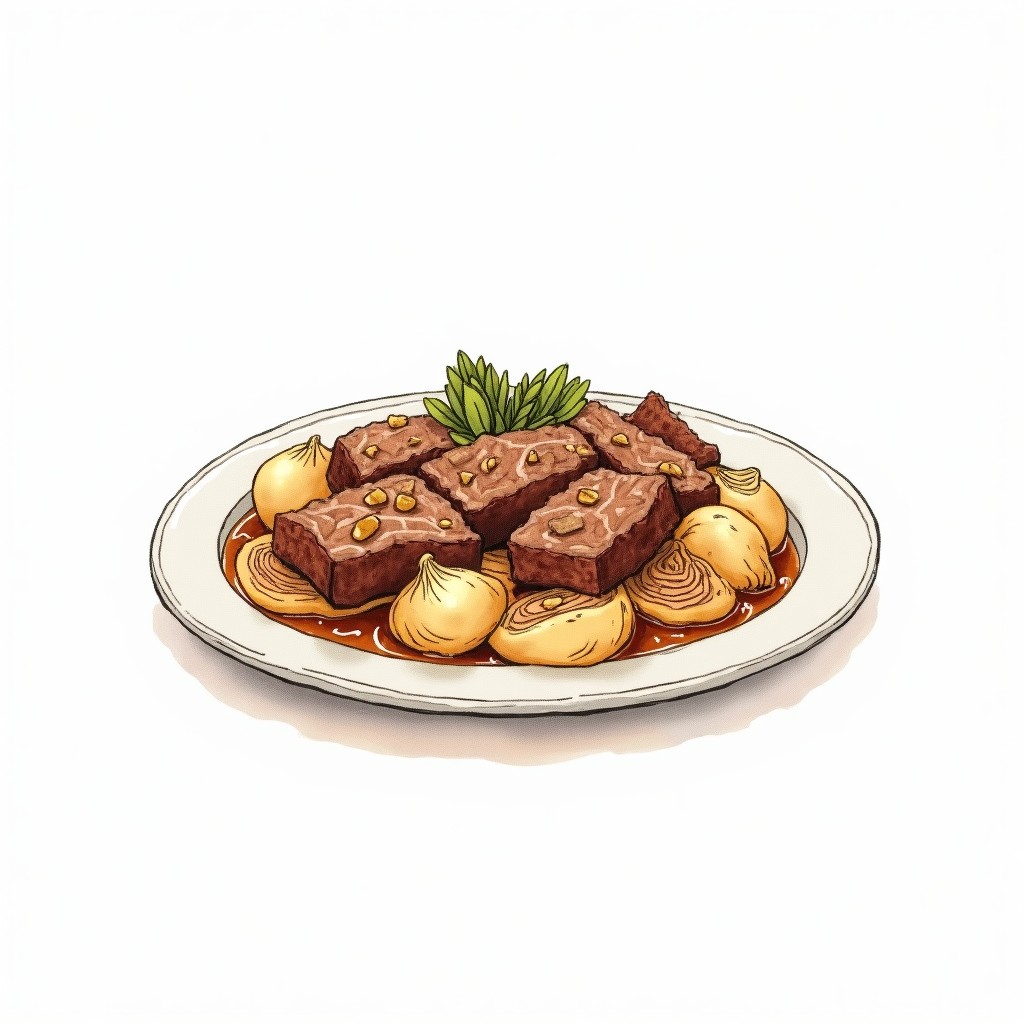
German Zwiebelfleisch (Beef and Onions)
Authentic German Zwiebelfleisch — Beef and Onions That Define Comfort
Few dishes capture the soul of German cooking like zwiebelfleisch — tender beef braised with sweet, golden onions until fork-tender. The secret lies in building layers of flavor: first the caramelized onions, then the rich gravy that brings everything together. This is the kind of meal that fills your kitchen with warmth and your table with satisfied faces.
The name tells you everything — zwiebel means onions, fleisch means meat, and together they create one of Germany's most beloved comfort dishes. But zwiebelfleisch isn't about equal partnership; it's about transformation. Those thick-cut onions slowly melt down into jammy sweetness, while tough chuck roast surrenders its fibers to gentle braising heat.
What makes this dish special isn't complexity — it's the alchemy that happens when patience meets proper technique. The onions caramelize into deep amber pools that become the foundation of your gravy, while the beef develops that fork-tender texture that only comes from slow, steady cooking. No shortcuts, no pressure cookers, just time and heat working their magic.
This is the kind of meal German grandmothers ladled over spätzle on cold Sunday afternoons, the kind that turns your kitchen into a sanctuary of warmth and rich aromas. The caraway seeds add that distinctly German note, while the dark beer brings depth that water simply can't match. Every element builds on the next, creating layers of flavor that taste like they've been simmering for generations.
Nutrition
Ingredients
- 2 lbbeef chuck roast, cut into 2-inch chunks
- 4 largelarge yellow onions, sliced thick
- 3 tbspneutral vegetable oil
- 2 tbspunsalted butter
- 2 tbspall-purpose flour
- 1 cupbeef broth, preferably low-sodium
- ½ cupdark German beer or stout
- 2 tspsweet Hungarian paprika
- 1 tspcaraway seeds
- 2 bay leavesbay leaves
- kosher salt and freshly ground black pepper
Instructions
- Pat the beef chunks completely dry and season generously on all sides with salt and pepper. Don't skimp here — the seasoning creates the foundation for all the flavors to come.
- Pour the oil into your heaviest Dutch oven and set it over medium-high heat until shimmering. The oil should be hot enough that a corner of beef sizzles immediately when it touches the surface.
- Brown the beef chunks in batches, giving each piece plenty of space to develop a deep, caramelized crust. Turn them only when they release easily from the bottom — rushing this step costs you flavor later.⏱ 8 min
- Transfer the browned beef to a plate and don't worry about the dark bits stuck to the pot — those are pure gold for your gravy base.
- Drop the butter into the same pot and watch it foam, then add your onions. Cook them low and slow, stirring occasionally, until they turn deep amber and smell sweetly caramelized. This patience pays dividends.⏱ 15 min
- Scatter the flour over the caramelized onions and stir it in thoroughly, cooking until the raw flour smell disappears. The mixture will look a bit pasty, but that's exactly right.⏱ 2 min
- Bloom the paprika and caraway seeds in the hot mixture, stirring constantly so they release their oils without burning. You'll smell the difference when it's ready.⏱ 30 sec
- Pour in the broth and beer slowly, whisking constantly to prevent lumps. Scrape up all those beautiful browned bits from the bottom as you go — they're the soul of your gravy.
- Nestle the beef back into the pot along with the bay leaves, making sure most pieces are submerged in the liquid. The mixture should look rich and promising already.
- Bring everything to a rolling boil, then immediately reduce the heat to low, cover tightly, and let it barely simmer. The surface should just barely bubble — vigorous boiling will toughen the meat.⏱ 1 hr 50 min
- Fish out the bay leaves and taste your masterpiece, adjusting the salt and pepper as needed. The beef should be fork-tender and the gravy should coat the back of a spoon beautifully.
Tips & Tricks
- Don't crowd the beef when browning — work in batches so each piece gets a proper crust instead of steaming in its own juices.
- Your onions are ready when they're deep amber and smell intensely sweet, not just softened and pale.
- Use a wooden spoon to scrape up those dark, caramelized bits from the bottom after browning the beef — they're pure flavor that will elevate your gravy.
- Keep the simmer barely perceptible once you cover the pot; aggressive bubbling will make the meat stringy instead of tender.
- The dish tastes even better the next day, so consider making it ahead and reheating gently on the stovetop.
Frequently Asked Questions
Can I use a different cut of beef?
Chuck roast is ideal because it has enough fat and connective tissue to stay moist during long braising. Beef short ribs or bottom round work well too, but avoid lean cuts like sirloin which will dry out.
What can I substitute for the dark beer?
Additional beef broth works fine, though you'll lose some depth of flavor. Red wine adds richness too, but changes the traditional German character of the dish.
How do I know when the beef is done?
The meat should shred easily when pierced with a fork and offer no resistance when you try to pull it apart. If it's still tough, give it another 20-30 minutes of gentle simmering.
Can I make this in a slow cooker?
Yes, but brown the beef and caramelize the onions on the stovetop first, then transfer everything to your slow cooker on low for 6-8 hours. You'll miss some of the concentrated flavors from stovetop reduction, but it's still delicious.