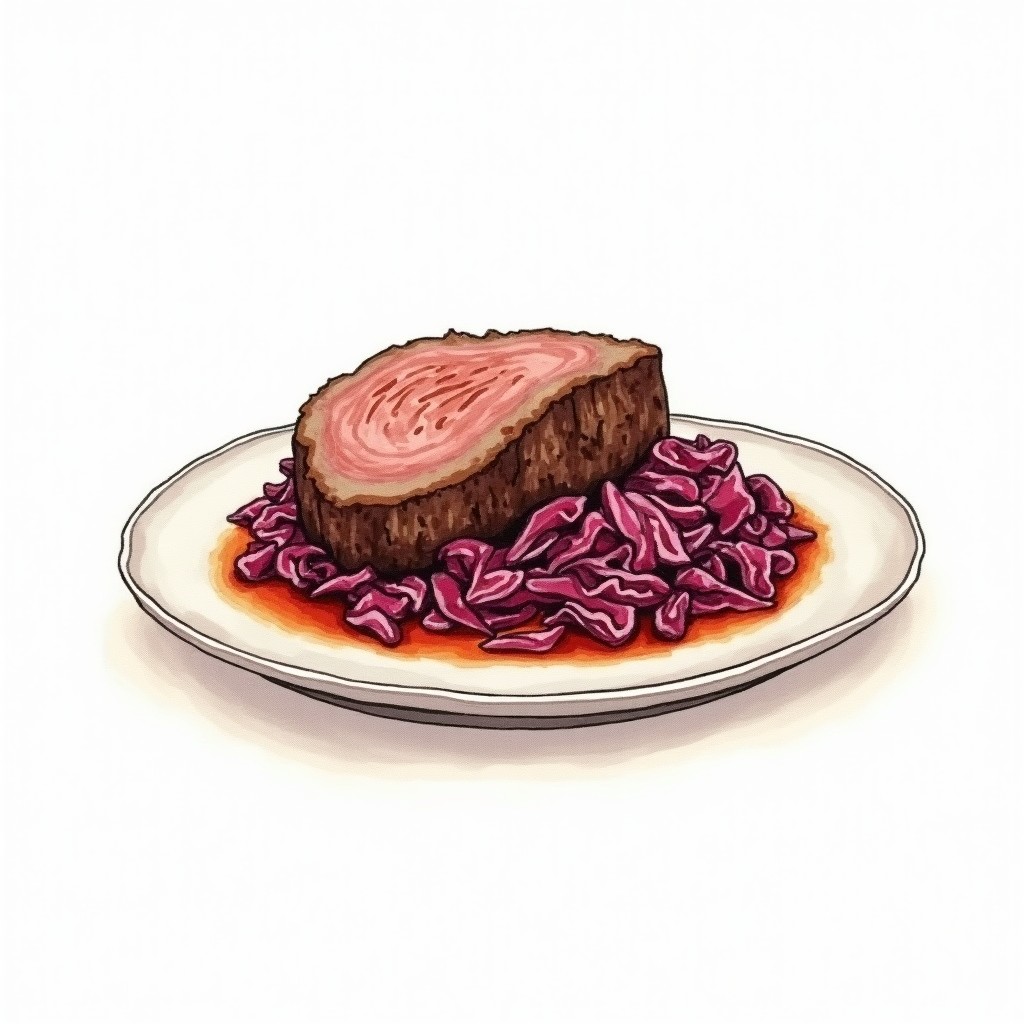
German Sauerbraten with Red Cabbage
Traditional German Sauerbraten — Four-Day Marinated Roast That Melts Into Tangy Perfection
This centuries-old German roast demands patience but rewards it tenfold. The beef spends days soaking in a spiced vinegar marinade, transforming tough chuck into fork-tender perfection with an unforgettable sweet-sour flavor that's pure comfort food magic. Paired with jewel-toned red cabbage, it's worth every minute of the wait.
Four days feels like forever when you're staring at raw beef in your refrigerator, but sauerbraten taught me that some things can't be rushed. This dish belongs to the old school of German cooking, where patience wasn't just a virtue — it was the secret ingredient. The name literally means "sour roast," and that acidic marinade does more than flavor the meat. It breaks down tough connective tissue, turning an affordable chuck roast into something that rivals the most expensive cuts.
Sauerbraten varies by region across Germany, with each area claiming the "authentic" version. Some cooks swear by buttermilk marinades, others insist on wine and vinegar. The Rhineland version adds raisins to the sauce, while Swabian cooks prefer their gingersnaps. What they all share is time — lots of it. The meat marinates for days, then braises for hours, developing layers of flavor that simply can't happen any other way.
What strikes me most about this dish is how it transforms humble ingredients into something extraordinary. Chuck roast, vinegar, a handful of spices — none of it sounds particularly special on paper. But chemistry happens in that marinade, and by day three, you can smell the change. The vinegar mellows, the spices bloom, and the meat begins its slow surrender. By the time it emerges from the oven, fork-tender and glossy with sauce, you understand why German families have been making this for centuries.
Nutrition
Ingredients
Meat
- 3 lbbeef chuck roast, well-marbled for braising
Marinade
- 1 cupred wine vinegar
- 1 cupdry red wine
- 1 largelarge yellow onion, sliced into rings
- 2 bay leavesbay leaves
- 6 whole cloves
- 1 tspjuniper berries, lightly crushed(optional)
- 1 tspblack peppercorns, whole
Cooking
- 2 tbspvegetable oil for browning
- 2 tbspbrown sugar, packed
- 1 cupbeef broth, low-sodium preferred
Sauce
- 3 tbspgingersnap cookies, finely crushed
Side
- 1 mediumred cabbage, cored and finely shredded
- 1 mediumtart apple, peeled and diced small
- 2 tbspapple cider vinegar
- 1 tbspgranulated sugar
Instructions
- Mix the vinegar, wine, onion slices, bay leaves, cloves, juniper berries, and peppercorns in a large non-reactive bowl or container. This acidic marinade will start breaking down the beef's tough fibers immediately, so use glass or food-safe plastic.
- Submerge the chuck roast completely in the marinade, turning to coat all surfaces. Cover tightly and refrigerate for 2-3 days, flipping the roast once daily. The longer marination develops deeper flavor — don't rush this crucial step.
- Lift the beef from the marinade and pat it completely dry with paper towels — any lingering moisture will prevent proper browning. Strain the marinade through a fine-mesh sieve and reserve both the liquid and the aromatics separately.
- Heat the oil in a heavy Dutch oven over medium-high heat until shimmering. Brown the roast thoroughly on all sides, developing a deep golden crust. This browning creates the foundation of flavor for your finished dish.⏱ 8 min
- Sprinkle the brown sugar directly over the browned roast and let it caramelize without stirring. You'll see it bubble and turn amber — this adds the characteristic sweet note that balances the vinegar's tang.⏱ 2 min
- Pour in the reserved marinade liquid and beef broth, scraping up any caramelized bits from the bottom. The liquid should come about halfway up the roast. Bring to a rolling boil, then immediately proceed to the next step.
- Cover the Dutch oven with a tight-fitting lid and transfer to a 325°F oven. Braise until the meat yields completely to a fork with no resistance — this slow, gentle cooking is what creates the signature texture.⏱ 2 hrs 40 min
- Carefully remove the tender roast to a cutting board and tent with foil. Strain the braising liquid through a fine-mesh sieve into a clean saucepan, pressing the solids to extract maximum flavor before discarding them.
- Bring the strained liquid to a gentle simmer and whisk in the crushed gingersnaps gradually. They'll dissolve and thicken the sauce while adding subtle spice notes. Simmer until the sauce coats the back of a spoon.⏱ 5 min
- Meanwhile, combine the shredded cabbage, diced apple, cider vinegar, and sugar in a large covered pan over medium heat. Cook until the cabbage wilts and sweetens, stirring occasionally. The apple should hold its shape but soften slightly.⏱ 30 min
- Slice the rested roast against the grain into thick portions — it should cut like butter if properly braised. Arrange on a platter, ladle the gingersnap sauce generously over top, and serve alongside the sweet-sour red cabbage.
Tips & Tricks
- Use a non-reactive container for marinating — stainless steel, glass, or food-safe plastic only, as the acid will react with aluminum or cast iron.
- Don't skip the browning step even though the meat's been marinating — those caramelized bits are crucial for building the sauce's depth.
- The gingersnaps should dissolve completely into the sauce, so crush them fine or use a food processor if they're particularly hard.
- Test doneness by checking if the meat shreds easily with a fork — if you meet any resistance, give it another 30 minutes in the oven.
- Make this a day ahead if possible; the flavors marry beautifully overnight, and reheating gently actually improves the texture.
Frequently Asked Questions
Can I shorten the marinating time?
While two days is the absolute minimum, three to four days gives you the best results. The acid needs time to penetrate and tenderize the meat properly. Anything less than 48 hours and you'll miss the signature texture.
What can I substitute for juniper berries?
Juniper berries add a subtle pine-like flavor, but they're not essential. You can skip them entirely or add an extra bay leaf and a few more peppercorns for complexity.
Why are my gingersnaps not dissolving in the sauce?
Crush them finer before adding, and make sure your sauce is at a gentle simmer. Stale or very hard cookies take longer to break down, so give them extra time and whisk frequently.
Can I make this in a slow cooker?
Yes, after browning the meat, transfer everything to your slow cooker and cook on low for 6-8 hours. The texture will be slightly different but still delicious.
How do I store leftovers?
Sauerbraten keeps beautifully in the refrigerator for up to four days. Slice only what you need and store the rest whole in the sauce to prevent drying out.