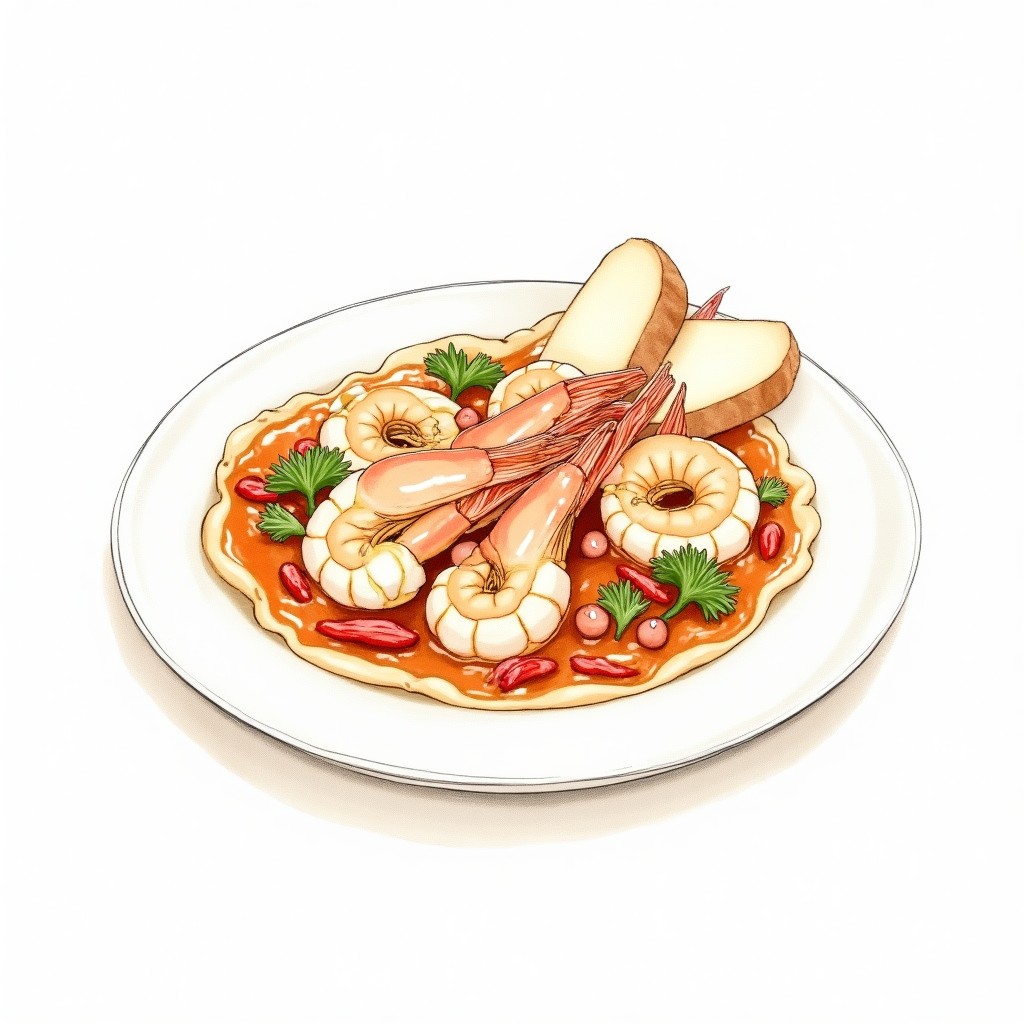
Gambas al Ajillo
Sizzling Gambas al Ajillo — Spanish Garlic Shrimp in Bubbling Oil
Few dishes capture the essence of Spanish cooking like gambas al ajillo — sweet shrimp swimming in fragrant olive oil perfumed with garlic and chili. The key is gentle heat that coaxes golden color from the garlic without burning it, creating an aromatic oil that's as important as the shrimp themselves.
In Spanish bars from Madrid to Málaga, the sound of gambas al ajillo sizzling in clay dishes signals the start of a proper evening. The garlic hits the oil first, releasing that unmistakable aroma that draws people closer to the bar, then comes the theatrical moment when the shrimp meet the fragrant oil with an audible hiss.
This isn't just about cooking shrimp — it's about creating an aromatic oil that becomes the dish's soul. The technique seems almost too simple: warm oil, gentle garlic, a whisper of heat from dried chilies, then sweet shrimp that cook in minutes. But the magic lies in restraint. Too much heat burns the garlic and turns bitter. Too little and the oil never develops that golden depth that makes the dish irresistible.
The beauty of gambas al ajillo is how it transforms humble ingredients into something that feels luxurious. The shrimp remain tender and sweet while the oil becomes a vehicle for pure flavor — garlicky, slightly spicy, and utterly addictive when soaked up with good bread. It's the kind of dish that makes you understand why Spaniards take their time with meals, savoring each bite alongside conversation that stretches late into the night.
Nutrition
Ingredients
- 1 lblarge shrimp (31-40 count), peeled and deveined
- ½ cupextra virgin olive oil
- 6 clovegarlic cloves, sliced paper-thin
- 2 dried red chilies (such as árbol), halved and seeded
- ½ tspkosher salt
- ¼ cupfresh flat-leaf parsley, roughly chopped
- 1 tbspdry sherry or dry white wine(optional)
- crusty bread for dipping and sopping(optional)
Instructions
- Lay the shrimp on paper towels and pat completely dry — any surface moisture will cause dangerous oil splattering. Season evenly with salt and let them sit while you prepare the oil.
- Warm the olive oil in a large skillet over medium heat until it shimmers but doesn't smoke. The oil should feel hot when you hover your hand above it but not be aggressively bubbling.⏱ 2 min
- Drop in the garlic slices and chili halves. They should sizzle gently on contact. Cook, stirring occasionally, until the garlic turns pale golden and releases its aroma — don't let it brown or it will taste bitter.⏱ 1 min 30 sec
- Arrange the shrimp in the pan in a single layer without crowding. They should sizzle immediately and start turning pink around the edges. Don't move them until the bottoms are opaque and lightly golden.⏱ 2 min
- Flip each shrimp and cook just until the second side turns opaque white with hints of pink. The shrimp should feel firm but still give slightly when pressed — they'll finish cooking in the residual heat.⏱ 1 min
- Add the sherry if using and let it bubble and reduce slightly, scraping up any browned bits from the pan bottom. The alcohol will cook off quickly.⏱ 30 sec
- Remove the pan from heat immediately and scatter the parsley over the top. Give everything a gentle stir to distribute the herbs, then serve straight from the pan with plenty of bread for soaking up the aromatic oil.
Tips & Tricks
- Pat the shrimp bone dry before seasoning — even a little surface moisture will cause violent oil splattering when they hit the hot oil.
- Keep the garlic slices uniform and thin so they cook evenly; thick pieces will still be raw when the thin ones burn.
- Don't crowd the pan with shrimp — they should have space around each piece to cook evenly and avoid steaming.
- The oil temperature is perfect when a slice of garlic sizzles gently on contact but doesn't aggressively bubble.
- Save any leftover garlic oil in the fridge — it's incredible drizzled over grilled vegetables or stirred into pasta.
Frequently Asked Questions
Can I use frozen shrimp for this recipe?
Yes, but thaw them completely first and pat them extra dry since frozen shrimp release more moisture. Let them sit on paper towels for 15 minutes before cooking to ensure they're completely dry.
What if I don't have dry sherry?
White wine works well as a substitute, or simply omit it entirely — the dish is delicious without any alcohol. The sherry adds a subtle depth but isn't essential to the flavor profile.
How do I know when the shrimp are perfectly cooked?
They're done when they feel firm but still give slightly when pressed, and the color is opaque white with pink edges. Overcooked shrimp become rubbery, so err on the side of underdone — they'll finish cooking in the residual heat.
Can I make this for a larger crowd?
It's better to make multiple batches rather than overcrowd the pan. Cook in batches if needed, keeping the first batch warm while you finish the rest — the oil stays flavorful between batches.