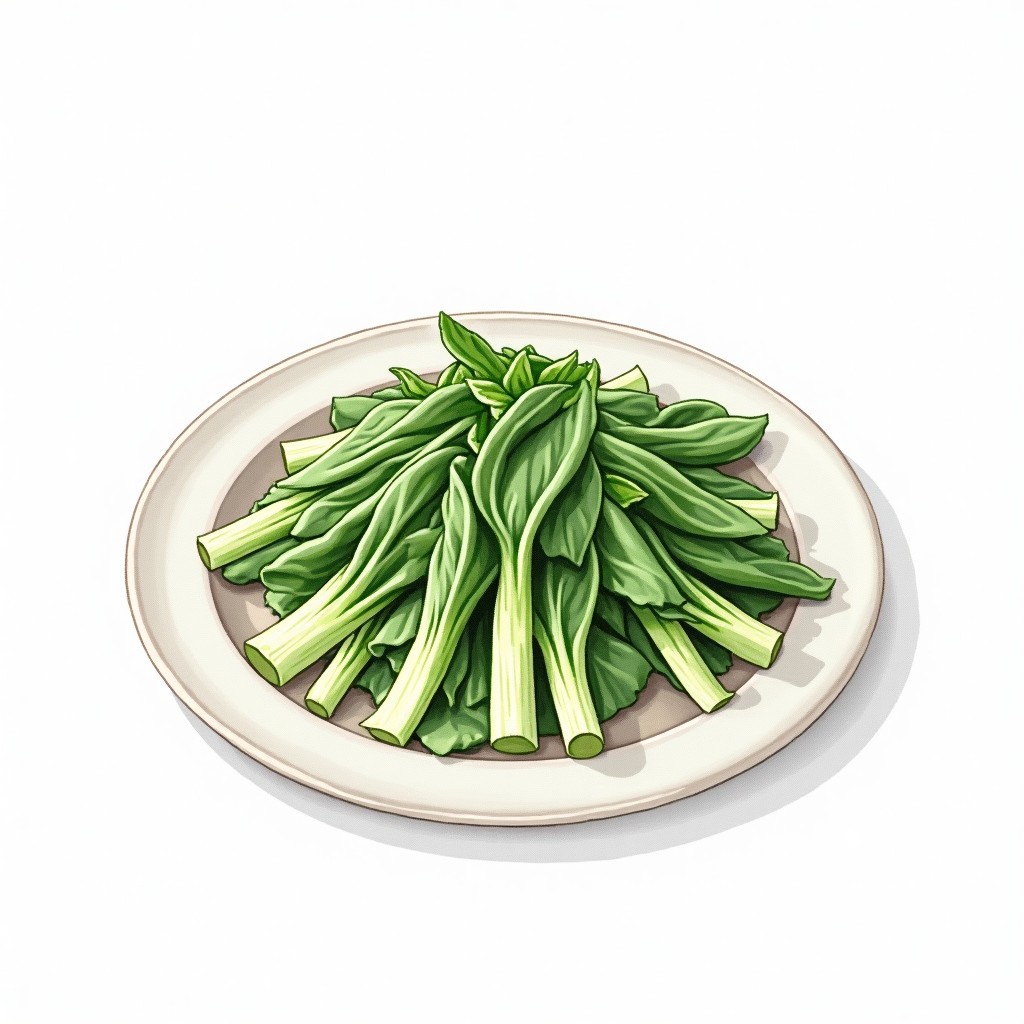
Gai Lan
Classic Gai Lan with Aromatic Oyster Sauce
Master this fundamental Chinese technique of perfectly blanched gai lan topped with a fragrant garlic-ginger oyster sauce. The key is achieving that ideal tender-crisp texture while building layers of savory flavor in the glossy sauce.
The particular shade of green that perfectly cooked gai lan achieves—bright, almost electric—tells you everything about why this dish has endured as a cornerstone of Cantonese cooking. It's a color that can only come from precise timing and technique, the kind that separates good Chinese vegetable cookery from great.
Gai lan, often called Chinese broccoli though it tastes nothing like its Western namesake, has a mineral earthiness that pairs beautifully with the deep, complex salinity of oyster sauce. The vegetable's sturdy stems and tender leaves require different cooking considerations, which is why the blanching method here works so well—it cooks everything evenly while preserving that signature snap.
This isn't just about following steps; it's about understanding the rhythm of Chinese stir-fry cooking. The sauce comes together in under a minute, transforming from separate ingredients into something glossy and aromatic that clings perfectly to each piece of gai lan. Get the timing right, and you'll understand why this simple preparation appears on tables from Hong Kong teahouses to family kitchens across the diaspora.
Ingredients
For the Chinese broccoli
- 7 cupwater for blanching
- 1 lbbaby gai lan (Chinese broccoli), washed and trimmed
- 1 tspsalt for blanching water
- 1 tbspneutral oil (vegetable or canola)
For the sauce
- 1 tbspneutral oil for stir-frying
- 3 clovegarlic cloves, roughly minced
- ½ thumbfresh ginger, cut into thin matchsticks
- 3 tbsppremium oyster sauce
- 2 tbspwater to thin sauce
- ½ tspgranulated sugar
- 1 tsptoasted sesame oil for finishing
Instructions
- Bring the water to a vigorous rolling boil in a large pot. Add the salt and neutral oil—the salt seasons the gai lan while the oil helps maintain its vibrant green color and prevents sticking.
- Carefully lower the gai lan into the boiling water, ensuring all pieces are fully submerged. The water should return to a boil quickly. Cook for exactly 3 minutes—this timing gives you that perfect tender-crisp texture that's the hallmark of properly blanched Chinese vegetables.⏱ 3 min
- Immediately drain the gai lan through a fine mesh strainer and arrange on your serving plate. The residual heat will continue cooking slightly, so work quickly to preserve that ideal texture.
- Heat the oil in a wok or heavy skillet over medium-high heat, swirling to coat the surface. Add the minced garlic and ginger matchsticks, stirring constantly for 30 seconds until fragrant and lightly golden—don't let them brown or they'll turn bitter.⏱ 30 sec
- Pour in the oyster sauce and water, stirring to create a smooth, glossy sauce. Add the sugar and sesame oil, stirring until everything is beautifully incorporated and the sauce coats the back of your spoon lightly.
- Immediately pour the hot, aromatic sauce over the arranged gai lan, ensuring each piece gets coated. Serve right away while the contrast between the warm sauce and perfectly cooked vegetables is at its peak.
Tips & Tricks
- Don't skip the oil in the blanching water—it creates a thin protective layer that keeps the gai lan's color vibrant and prevents the pieces from sticking together.
- If your gai lan stems are particularly thick (more than ½ inch), score them lightly with a knife before blanching so they cook evenly with the leaves.
- The sauce should be glossy, not watery—if it looks thin after mixing, cook it another 15-20 seconds to reduce slightly before pouring over the vegetables.
- Baby gai lan works best here, but if you can only find mature gai lan, increase the blanching time to 4-5 minutes and trim any particularly tough stem ends.
Frequently Asked Questions
Can I use regular broccoli instead of gai lan?
While the flavors will be different, you can substitute broccoli florets and peeled, sliced stems. Reduce blanching time to 2-3 minutes since broccoli cooks faster than gai lan's sturdy stems.
What if I can't find oyster sauce?
You can substitute with a mixture of 2 tablespoons soy sauce, 1 tablespoon dark soy sauce (or regular soy sauce), and 1 teaspoon sugar. The flavor will be lighter but still delicious.
How do I prevent the gai lan from getting soggy?
The key is immediate draining after blanching and serving right away. Don't let the blanched gai lan sit in water, and make sure your serving plate is ready before you start cooking.
Can I make this ahead of time?
This dish is best served immediately, but you can blanch the gai lan up to 2 hours ahead and store it covered at room temperature. Reheat briefly in the microwave before adding the fresh, hot sauce.