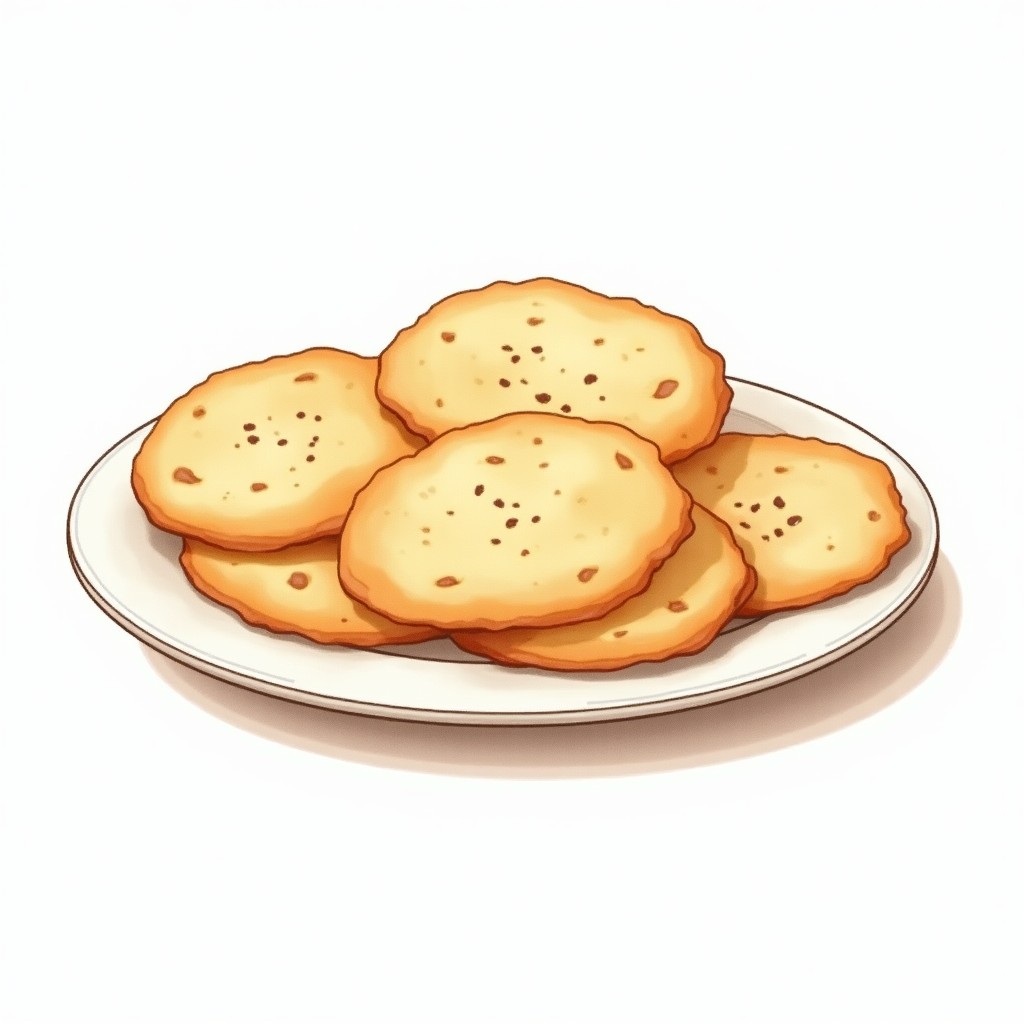
Fry Bread
Golden Fry Bread — Tender Pillows of Comfort
This time-tested dough creates incredibly tender, slightly chewy flatbreads that puff and blister beautifully in hot oil. The secret lies in the rest period and gentle handling — treat the dough with care, and it rewards you with golden rounds perfect for sopping up stew or enjoying with honey.
Hot oil meeting tender dough creates something almost magical — that satisfying sizzle, the sudden puff of steam, the way a simple disc of flour and water transforms into golden, pillowy bread. Fry bread holds deep cultural significance in Native American communities, born from government commodity ingredients but evolved into a cherished comfort food that connects families across generations.
The technique here centers on patience and gentle handling. That rest period isn't optional — it's when the flour fully hydrates and the gluten relaxes, turning what starts as a sticky, unworkable mass into dough that stretches thin without tearing. The hot water activates the baking powder immediately, creating tiny air pockets that later expand in the oil.
What emerges from the fryer bears little resemblance to the humble ingredients that went in. These rounds puff with trapped steam, their surfaces blistering into an irregular landscape of golden peaks and valleys. The contrast between the crispy exterior and tender, slightly chewy interior makes them irresistible on their own, but they're equally at home alongside a hearty stew or drizzled with honey for dessert.
Ingredients
- 4 cupall-purpose flour
- 1 tspfine salt
- 1½ tbspbaking powder
- 1½ cuphot water (not boiling, just hot from the tap)
- 3 tbspvegetable oil (for the dough)
- 1 quartvegetable oil for deep frying
Instructions
- Whisk together flour, salt, and baking powder in a large mixing bowl until evenly distributed. Pour the hot water in gradually while stirring with a wooden spoon — the dough will look shaggy at first, then come together into a somewhat sticky mass that pulls away from the bowl sides.
- Drizzle the 3 tablespoons of oil evenly over the dough surface, then cover the bowl with a clean kitchen towel. Let it rest at room temperature — this relaxes the gluten and makes the dough much easier to shape later.⏱ 2 hrs
- Pinch off portions of dough about the size of a golf ball, then gently stretch each piece with your hands into a thin round, working from the center outward. Aim for translucent thinness without creating holes — the dough should be pliable enough to stretch easily after its rest.
- Pour the quart of oil into a heavy pot or deep skillet to a depth of 2 inches. Heat over medium-high heat until it reaches exactly 350°F on a deep-fry thermometer — this temperature ensures the bread cooks through while developing a beautiful golden crust.
- Carefully slide one piece of stretched dough into the hot oil — it should sizzle immediately and start to puff. Fry until deep golden brown on the bottom, about 1-2 minutes, then flip with tongs and cook the second side until equally golden. Transfer to a paper towel-lined plate and repeat with remaining dough pieces.
Tips & Tricks
- Use a thermometer to maintain 350°F oil temperature — too hot and the outside burns before the inside cooks, too cool and you'll get greasy, heavy bread.
- Don't skip the rest period, even if the dough seems workable earlier; 30 minutes gives the best texture.
- Stretch the dough until it's nearly translucent but watch for thin spots that might tear — uneven thickness leads to uneven cooking.
- Fry only one or two pieces at a time to avoid crowding, which drops the oil temperature and creates soggy results.
- Serve immediately while the contrast between crispy exterior and tender interior is at its peak.
Frequently Asked Questions
Can I make the dough ahead of time?
Yes, the rested dough keeps well covered in the refrigerator for up to 24 hours. Let it come to room temperature before stretching and frying for the best results.
What if I don't have a thermometer for the oil?
Drop a small piece of dough into the oil — it should sizzle immediately and rise to the surface. If it browns too quickly, lower the heat; if it doesn't sizzle vigorously, the oil needs more time to heat.
Why did my fry bread come out tough?
Overworking the dough or skipping the rest period are the most common causes. Handle gently and let the dough relax fully before shaping.
Can I bake these instead of frying?
Baking won't give you the same texture — the hot oil creates the characteristic puff and crispy exterior. For a lower-fat version, try cooking them in a dry cast iron skillet like tortillas, though they won't puff as dramatically.