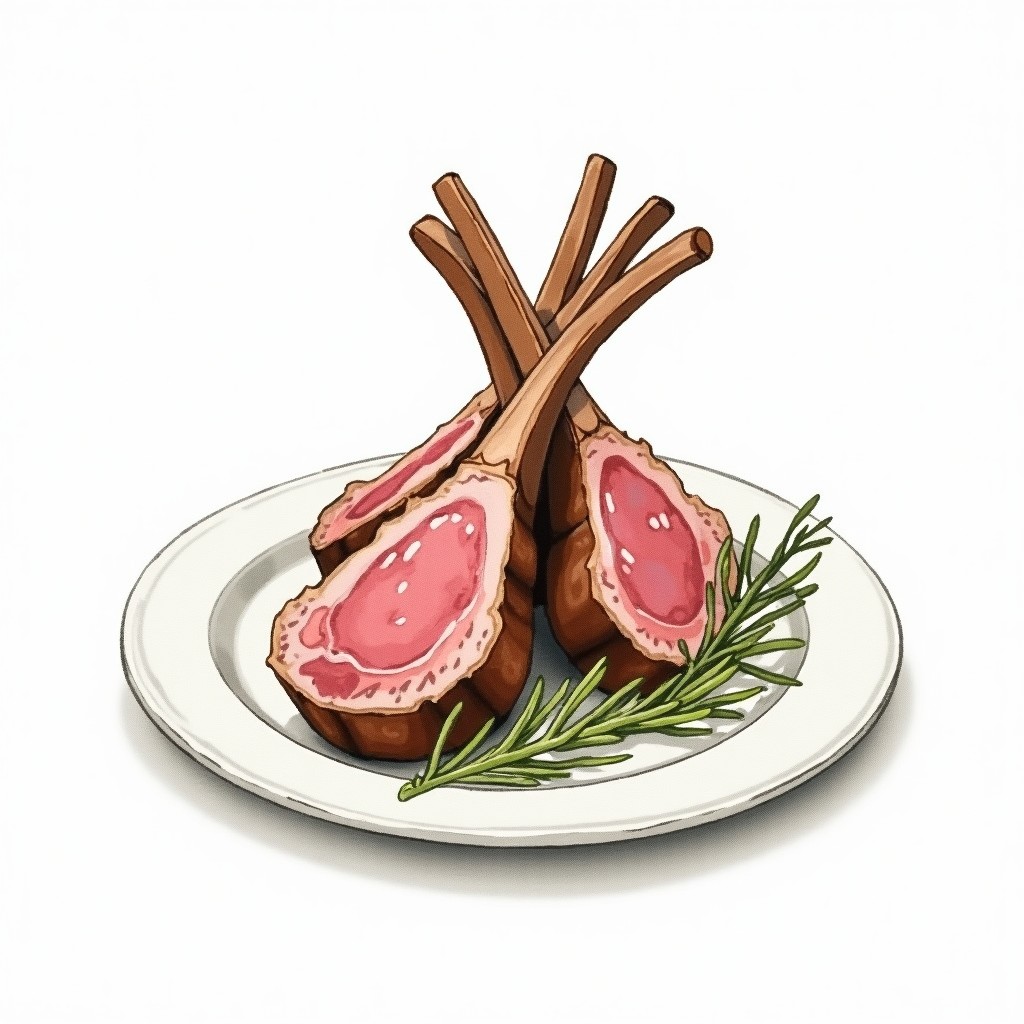
Frenched Rack of Lamb
Frenched Rack of Lamb with Rosemary-Garlic Crust
A restaurant-quality lamb rack that's surprisingly manageable at home once you understand the two-temperature method. The initial blast of high heat creates that beautiful crust while the gentle finish ensures rosy, tender meat throughout.
A properly cooked rack of lamb transforms dinner into an event, but the technique intimidates many home cooks who assume it requires chef-level precision. The reality is much more forgiving — lamb rack is actually one of the most reliable cuts to roast once you grasp the two-temperature method.
This approach starts with aggressive heat to build that gorgeous mahogany crust, then drops to gentle warmth to coax the interior to perfect doneness. The overnight marinade isn't just about flavor; it also tenderizes the meat and creates a fragrant herb coating that protects against overcooking. French butchers have been "frenching" these racks for centuries, scraping the rib bones clean both for presentation and to prevent them from burning during the high-heat sear.
What makes this recipe particularly reliable is the emphasis on bringing the meat to room temperature before cooking. Cold lamb from the fridge will give you gray edges and a cool center, while properly tempered meat cooks evenly from surface to bone. The result is restaurant-quality lamb that slices into perfect pink medallions, each one bordered by that coveted herb-scented crust.
Ingredients
- 3 clovegarlic cloves, minced
- 3 sprigfresh rosemary sprigs, leaves stripped and chopped
- 2 tbspextra-virgin olive oil
- 1 tbspDijon mustard
- ½ tbspkosher salt
- 1 tspfreshly ground black pepper
- 1 rackfrenched lamb rack (about 2 pounds)
- flaky finishing salt(optional)
Instructions
- Pat the lamb rack completely dry, then massage the minced garlic, chopped rosemary, salt, and pepper into every surface. Slide it into a plastic bag with the olive oil, working the oil around to coat thoroughly. Seal tight, pressing out air, then marinate overnight in the fridge or 1.5-2 hours at room temperature.
- Pull the lamb from the refrigerator 1.5-2 hours before cooking — cold meat will cook unevenly. This step is crucial for achieving consistent doneness from edge to center.
- Position your oven rack in the center and preheat to 450°F. The high initial temperature will be key to developing that coveted crust.
- Score the fat cap with shallow cuts about 1 inch apart — this helps render the fat and prevents the meat from curling. Season again with salt and pepper, then place fat-side up on a foil-lined roasting pan. Wrap the exposed rib bones with foil to prevent burning.
- Slide into the 450°F oven for exactly 10 minutes. You'll hear it sizzle and see the surface develop a rich golden-brown color — that's the Maillard reaction working its magic.⏱ 10 min
- Drop the temperature to 300°F and continue cooking 10-20 minutes more. For rare, pull it at 125°F internal temperature; for medium-rare, wait until 135°F. Use an instant-read thermometer inserted into the thickest part of the meat.
- Transfer to a cutting board, tent loosely with foil, and let rest for 15 minutes. The temperature will continue rising slightly while the juices redistribute throughout the meat. Slice between the bones and finish with flaky salt if desired.⏱ 15 min
Tips & Tricks
- Ask your butcher to french the rack for you — they'll do it better than most home cooks, and it saves time and mess in your kitchen.
- If your rack seems particularly thick, add 2-3 minutes to the low-temperature phase rather than raising the heat.
- The marinade can work its magic for up to 24 hours, but don't go longer or the acid will start breaking down the meat's texture.
- Let the rested lamb sit an extra 5 minutes if you're serving a crowd — the internal temperature will stabilize and make slicing cleaner.
- Save the pan drippings mixed with a splash of red wine for an instant sauce that needs nothing more than a pat of butter.
Frequently Asked Questions
Can I cook this without the overnight marinade?
Yes, but give it at least 2 hours at room temperature for the flavors to penetrate. The overnight version will be more tender and flavorful, but the shorter marinade still produces excellent results.
What if I don't have an instant-read thermometer?
Press the meat gently with your finger — rare feels very soft and squishy, medium-rare has slight resistance but still gives easily. You can also make a small cut near the bone to check the color.
How do I reheat leftover lamb without overcooking it?
Slice it first, then warm gently in a 275°F oven for just 5-8 minutes. Cold sliced lamb is also excellent on salads or in sandwiches.
Can I substitute dried herbs for fresh rosemary?
Use 1 tablespoon of dried rosemary instead of the fresh sprigs, but crush it between your fingers first to release the oils. Fresh will always give better flavor and aroma.
What's the best way to carve the rack?
Use a sharp knife and slice straight down between each bone with confident, smooth strokes. Don't saw back and forth — this tears the meat and releases the juices you worked to preserve.