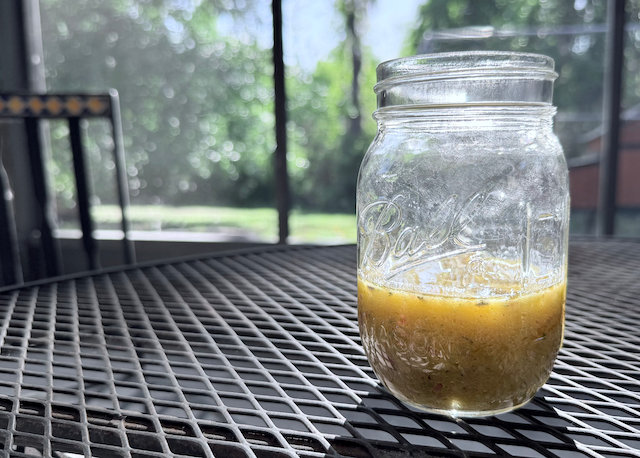
French Vinaigrette
Classic French Vinaigrette — The Five-Minute Foundation Every Kitchen Needs
Real French vinaigrette starts with patience — letting minced shallots bloom in acidic wine vinegar before building an emulsion that actually stays together. Once you master this technique, you'll never reach for bottled dressing again.
The French don't complicate vinaigrette because they don't need to. When you understand the fundamentals — acid, oil, emulsifier, and time — you can whip up something that puts any store-bought dressing to shame. This isn't about exotic ingredients or fancy equipment; it's about technique that's been refined over centuries.
The secret lies in that ten-minute wait. Letting the shallots macerate in vinegar transforms their raw bite into something mellow and aromatic, while the acid begins breaking down their cell walls to release maximum flavor. Meanwhile, the Dijon mustard does double duty as both flavor enhancer and natural emulsifier, helping create that silky texture that clings perfectly to greens without weighing them down.
Once you've mastered this foundation, the variations become endless. Swap red wine vinegar for champagne vinegar, add minced garlic alongside the shallots, or whisk in fresh herbs just before serving. But start here first — with patience, good ingredients, and the understanding that great vinaigrette is built, not rushed.
Ingredients
- 2 tbspshallots, finely minced (about 1 medium shallot)
- 2 tbspred or white wine vinegar
- ¼ tspfine sea salt
- 2 tspDijon mustard
- 4 tbspextra-virgin olive oil, good quality
- black pepper, freshly ground(optional)
Instructions
- Stir the minced shallots, vinegar, and salt together in a small bowl, then step away for 10 minutes. This maceration time softens the shallots' sharp bite and helps them release their flavor into the vinegar — it's the difference between harsh and harmonious.⏱ 10 min
- Stir in the Dijon mustard until smooth, then begin drizzling in the olive oil drop by drop while whisking constantly. Once the mixture starts to thicken and look cohesive, you can add the remaining oil in a thin, steady stream, still whisking vigorously until you have a glossy, stable emulsion.
- Taste and adjust with additional salt if needed, then finish with several grinds of fresh black pepper. The vinaigrette should taste bright and balanced — neither too acidic nor too oily.
Notes
This can be thought of as base recipe that can be tweaked to your hearts content. Try different vinegars, minced garlic, dry herbs, etc.
Tips & Tricks
- Mince your shallots as finely as possible — chunks will overpower the dressing and create an unpleasant texture contrast.
- Don't skip the maceration time even if you're in a rush; five minutes is better than none, but ten minutes gives you noticeably better flavor.
- Add the oil slowly at first to build a proper emulsion — if you dump it all in at once, the dressing will break and taste greasy.
- Make extra and store it in the fridge for up to a week; just bring it to room temperature and give it a good whisk before using.
- Use this ratio as your template: one part acid to two parts oil, with enough mustard to help everything bind together.
Frequently Asked Questions
Can I use a different type of vinegar?
Absolutely — white wine vinegar, champagne vinegar, or even a mild sherry vinegar work beautifully. Avoid balsamic or other sweet vinegars, which will throw off the balance.
What if I don't have shallots?
Use the white part of a scallion or a small piece of sweet onion, minced very finely. Shallots are milder and more refined, but these substitutes will still give you good results.
Why does my vinaigrette separate after I make it?
The emulsion broke, usually from adding oil too quickly or not whisking vigorously enough. Whisk it back together before serving — it'll still taste great even if it looks broken.
Can I make this without mustard?
The mustard helps create a stable emulsion and adds subtle flavor, but you can skip it if needed. Just expect the dressing to separate more easily and taste a bit sharper.
How much dressing does this recipe make?
About 6 tablespoons total, enough to dress a large salad serving 4-6 people. The recipe doubles easily if you need more.