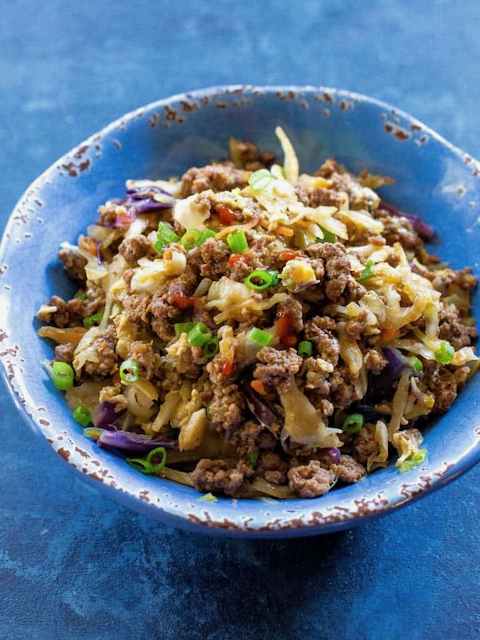
Egg Roll in a Bowl
Crispy-Bottom Egg Roll Bowl
All the savory satisfaction of egg rolls without the wrapper — ground meat gets perfectly browned while vegetables stay bright and crisp. The magic happens when everything comes together with rice vinegar and sesame oil, creating that familiar takeout flavor you've been craving.
The beauty of deconstructing takeout classics lies in discovering what actually makes them taste so good. Strip away the wrapper from an egg roll and you'll find it's all about contrasts — the way crispy ground meat mingles with tender-crisp vegetables, how rice vinegar cuts through rich sesame oil, and why that hit of ginger makes everything come alive.
This bowl delivers everything you love about egg rolls without any frying or folding. The technique hinges on getting your meat properly browned first — that caramelized crust creates the flavor foundation that makes the difference between homemade that tastes homemade and homemade that rivals your favorite Chinese restaurant. The cornstarch marinade isn't just for texture; it helps create those golden bits that cling to every piece.
What makes this particularly satisfying is how quickly fresh vegetables transform in a hot wok. The cabbage wilts just enough to lose its raw bite while keeping its crunch, and the carrots add sweetness that balances the salty-tangy sauce. It's the kind of dish that proves sometimes the best part of takeout isn't the breading or the deep frying — it's the harmony of simple ingredients treated with respect.
Ingredients
- 3 tbsplow-sodium soy sauce
- 1 tspcornstarch
- 16 oz90% lean ground meat (beef, pork, or turkey)
- 8 ozmushrooms (button or baby bella)
- 3 clovegarlic cloves
- 1 small bunchgreen onions, divided for cooking and garnish
- 1 tbspgrapeseed oil (or vegetable oil)
- 12 ozshredded cabbage (coleslaw mix works fine)
- 1 cupgrated carrots
- 1 tbspfresh ginger, minced fine
- 1 tbsprice vinegar
- 2 tspchili paste (sambal oelek or garlic chili sauce)
- 2 tsptoasted sesame oil
- ¼ tspfreshly ground black pepper
Instructions
- Mix 1 tablespoon of the soy sauce with the cornstarch in a medium bowl until smooth. Add the ground meat and use your hands to work the mixture evenly through every piece. Let this sit for 10 minutes — the cornstarch helps create better browning and the soy sauce starts the flavor foundation.⏱ 10 min
- While the meat marinates, prep your vegetables. Dice the mushrooms into small, uniform pieces about the size of the ground meat. Mince the garlic finely so it doesn't burn in the hot wok. Slice the green onions thin, keeping the white and green parts separate — save about half the green tops for serving.
- Get your wok smoking hot over high heat, then add the oil and swirl to coat. Immediately add the marinated meat, spreading it out so it can brown properly. Let it sear undisturbed for the first minute, then break it into small, uniform pieces with your spoon. Keep cooking until no pink remains and you've got good browning in spots — about 5 minutes total.⏱ 5 min
- Toss in the white parts of the green onions and all the diced mushrooms. Keep the heat high and stir constantly — the mushrooms will release their moisture quickly and start to caramelize. You want them soft but not mushy, which takes about 2 minutes.⏱ 2 min
- Turn the heat down to medium-low and add the cabbage, carrots, ginger, and minced garlic all at once. Stir everything together and cook until the cabbage wilts but still has some bite — about 2 minutes. The vegetables should be tender-crisp, not soggy.⏱ 2 min
- Pour in the rice vinegar, remaining 2 tablespoons soy sauce, chili paste, sesame oil, and black pepper. Toss everything together and cook just until the seasonings are heated through and evenly distributed — about 1 minute. Taste and adjust the salt, heat, or acidity as needed.⏱ 1 min
- Serve immediately in individual bowls while everything is still steaming hot. Top with the reserved green onion tops for a fresh pop of color and mild onion bite.
Notes
This is a low-carb keto friendly classic. Once you have the technique, feel free to play around with the ingredients to make it your own. Of course, serving with white rice is a natural fit, albeit not quite as healthy.
Tips & Tricks
- Don't skip the cornstarch marinade step — it creates better browning on the meat and helps the soy sauce penetrate more evenly.
- Keep your vegetables cut to similar sizes as the ground meat so every bite has the right ratio of protein to vegetables.
- If your wok isn't large enough to hold everything without overcrowding, cook the meat first and set it aside, then add it back with the final seasonings.
- The dish is best served immediately while the vegetables still have their crisp texture, but leftovers reheat well in a hot skillet for a minute or two.
- Ground turkey, pork, or chicken all work equally well — just make sure you're using a lean variety so the meat browns instead of steams.
Frequently Asked Questions
Can I make this ahead of time?
The components can be prepped ahead, but the dish is best cooked and served immediately. The vegetables will lose their crispness if they sit too long after cooking.
What can I substitute for the chili paste?
Sriracha, sambal oelek, or even a pinch of red pepper flakes work well. Start with less and add more to taste since heat levels vary between brands.
Do I need a wok for this recipe?
A large skillet or sauté pan works fine, though you may need to cook in batches if your pan isn't large enough to avoid overcrowding.
How do I know when the vegetables are done?
The cabbage should be wilted but still have some bite when you chew it — think tender-crisp rather than soft. This usually takes about 2 minutes over medium-low heat.