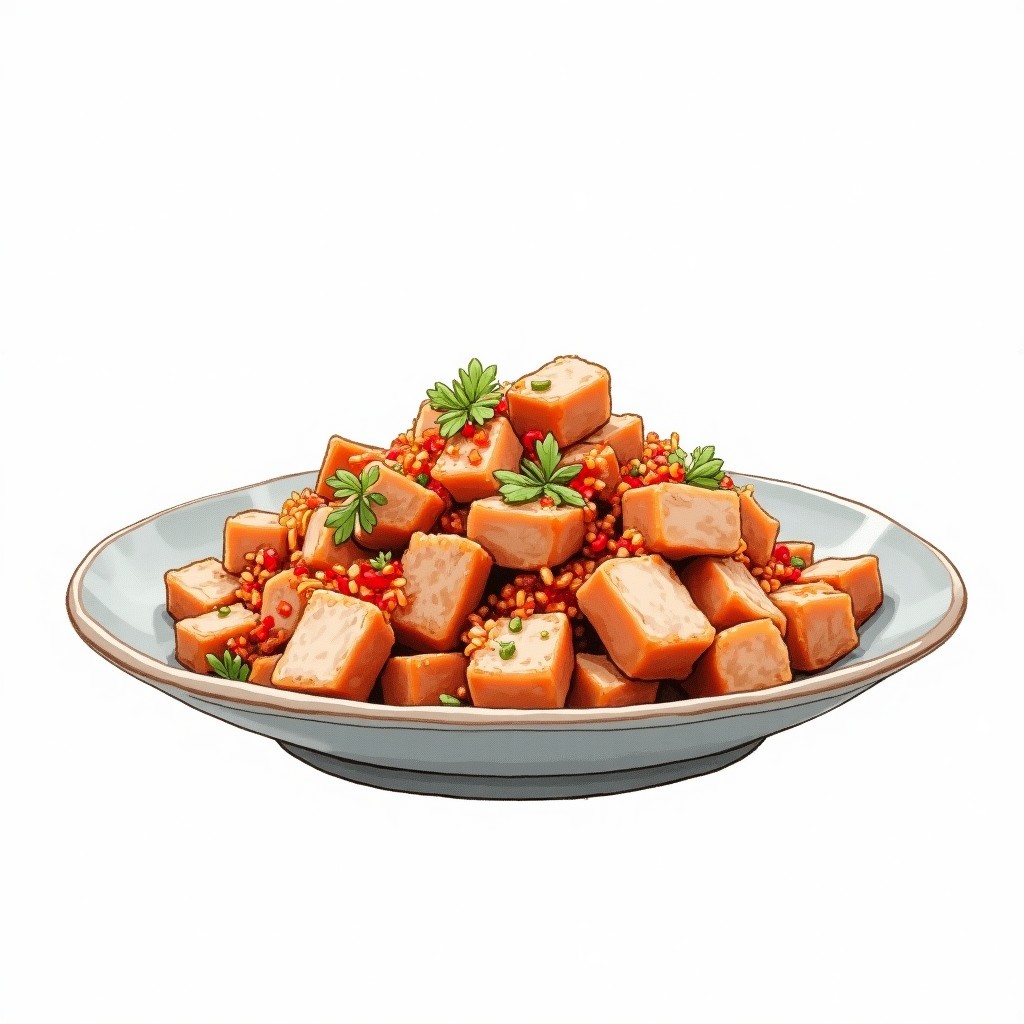
Dwaejigogi-bokkeum (Spicy Stir-fried Pork)
Crispy-Edged Pork Belly with Gochujang and Scallions
Thinly sliced pork belly renders its fat while absorbing gochujang's fermented complexity. The high heat creates caramelized edges while keeping the meat tender inside.
The trick to perfect pork belly isn't low and slow — it's high heat and complete confidence. When you dump thinly sliced pork belly into a screaming-hot pan with gochujang and let physics take over, something magical happens. The fat renders fast, creating its own cooking medium while the fermented chili paste caramelizes into glossy, mahogany patches that cling to every surface.
This technique comes from Korean street food vendors who understand that pork belly's natural marbling is meant to be exploited, not babied. The sugar in the gochujang mixture helps those edges develop the kind of concentrated flavor that makes you reach for another piece before you've finished chewing the first. It's the kind of dish that transforms a Tuesday night into something worth remembering.
What makes this approach work is the marriage of temperature and timing. The pork needs enough heat to render properly without steaming in its own juices, while the aromatics — garlic, ginger, scallions — get just enough time to soften and perfume the fat without burning. Fifteen minutes from start to finish, and you've got something that belongs wrapped in crisp lettuce with a smear of ssamjang.
Ingredients
- 1 lbpork belly, cut into bite size pieces (1/8 inch thick)
- ¼ cupgochujang
- 1 tbspsoy sauce
- 1 tbspsugar
- 2 tbspgochugaru (Korean red pepper flakes)
- ¼ tspground black pepper
- 1 tbsptoasted sesame oil
- 5 garlic cloves, minced
- 1 tspfresh ginger, minced
- 1 medium onion, sliced
- 4 green onions, sliced
- 1 tsptoasted sesame seeds
Instructions
- Preheat a large skillet over medium-high heat until it's hot enough that a drop of water sizzles and evaporates immediately.
- Dump in the pork belly along with gochujang, soy sauce, sugar, gochugaru, black pepper, and sesame oil all at once.
- Use a wooden spoon to toss everything together vigorously, making sure each piece of pork gets completely coated in the sauce mixture. Let it cook for a few minutes until the pork starts releasing its fat.
- Toss in the garlic, ginger, onion, and green onions. Keep stirring and cooking for 12-15 minutes until the pork is completely cooked through, glistening with rendered fat, and developing crispy, caramelized spots along the edges.⏱ 15 min
- Slide everything onto a serving platter and scatter the sesame seeds over the top.
- Serve immediately with steamed rice, kimchi, fresh lettuce leaves, and ssamjang for wrapping.
Tips & Tricks
- Don't crowd the pan — if your skillet isn't large enough for the pork belly in a single layer, cook it in batches or the pieces will steam instead of sear.
- The pork is done when the edges look deeply caramelized and the fat has turned translucent — this usually takes 12-15 minutes but trust your eyes over the timer.
- Save any leftover rendered fat in the refrigerator; it's perfect for frying eggs or roasting vegetables for up to a week.
- For less heat, reduce the gochugaru to 1 tablespoon — the gochujang provides plenty of fermented complexity on its own.
- Slice your pork belly while it's still cold from the refrigerator; it holds its shape better and cuts more evenly than at room temperature.
Frequently Asked Questions
Can I use bacon instead of pork belly?
Bacon will work but expect different results — it's already cured and smoked, so the flavor will be more intense and salty. Use about 3/4 the amount and reduce or skip the soy sauce to avoid oversalting.
What if I can't find gochugaru?
Crushed red pepper flakes work as a substitute, but use half the amount since they're typically hotter than gochugaru. The flavor won't be as complex, but the dish will still be delicious.
How do I know when the pork belly is cooked through?
The meat should be opaque throughout with no pink areas, and the fat should look translucent rather than white and solid. If you're unsure, cut into a thicker piece — it should feel tender, not chewy.
Can I make this ahead of time?
This dish is best served immediately while the edges are still crispy. Reheating works but you'll lose that textural contrast that makes it special.