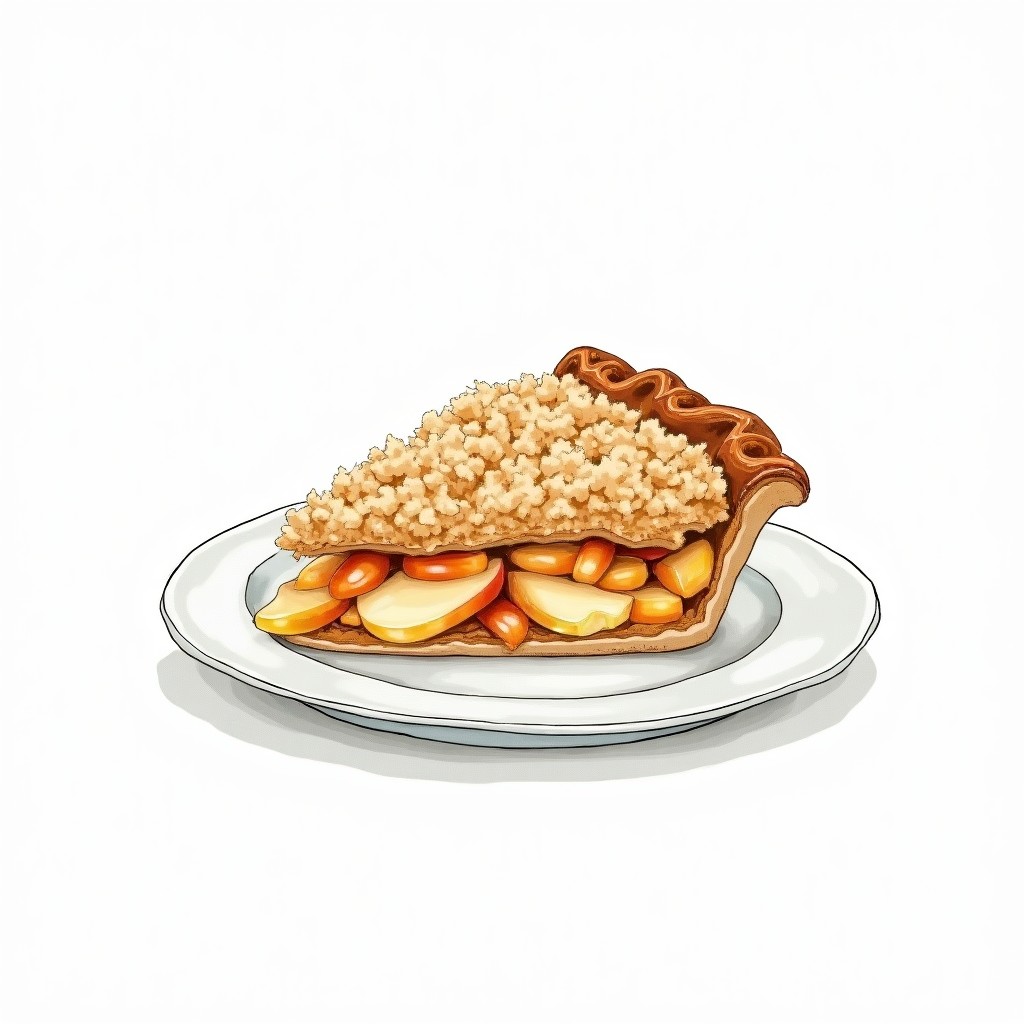
Dutch Apple Pie with Crumb Topping
Dutch Apple Pie with Brown Butter Crumb Top
There's something deeply satisfying about a pie that skips the fussy lattice work and goes straight for rustic charm. This version pairs tender, spiced apples with a rich crumb topping that bakes into golden clusters — part streusel, part cookie crumb. The contrast between the jammy fruit and those buttery nuggets makes every bite interesting.
The Dutch apple pie earned its name not from Holland, but from Pennsylvania Dutch settlers who preferred their fruit pies with a crumb topping instead of a second crust. Smart choice — all the buttery richness of pastry without the structural engineering of lattice work.
This version takes that practical approach and adds brown butter notes to the topping, which deepens the flavor and makes your kitchen smell like a bakery. The key is getting your apple mixture just right — not so wet that it makes the bottom crust soggy, not so dry that the filling tastes floury. The small amount of flour mixed with the apples absorbs just enough juice to create a glossy, spiced filling that holds together when sliced.
What sets this apart from standard apple pies is that crumb topping. It bakes into irregular golden clusters — some crispy, some tender — that contrast beautifully with the soft apples underneath. Each forkful gives you different textures, which is exactly what makes Dutch apple pie so satisfying to eat.
Nutrition
Ingredients
Crust
- 1 recipepie crust, unbaked (homemade or store-bought)
Filling
- 6 cuptart apples, peeled and sliced 1/4-inch thick (Granny Smith or Honeycrisp work well)
- ¾ cupgranulated sugar
- 2 tbspall-purpose flour
- 1 tspground cinnamon
- ¼ tspground nutmeg, freshly grated if possible
- ¼ tspsalt
- 2 tbspunsalted butter, cut into small cubes
Crumb Topping
- 1 cupall-purpose flour
- ½ cupbrown sugar, packed (light or dark both work)
- ½ tspground cinnamon
- ½ cupcold unsalted butter, cut into small cubes
Instructions
- Crank your oven to 425°F and roll out your pie crust, settling it into a 9-inch pie pan. Trim any overhang to about 1 inch, then fold it under and crimp the edges however makes you happy.
- Toss the sliced apples with granulated sugar, flour, cinnamon, nutmeg, and salt in a large bowl. Use your hands to make sure everything gets coated — the flour prevents a soggy bottom and the spices need to reach every slice.
- Pile the seasoned apples into your prepared crust, mounding them slightly in the center since they'll cook down. Scatter those 2 tablespoons of butter cubes over the top — they'll melt and create pockets of richness as the pie bakes.
- Make your crumb topping by whisking together the flour, brown sugar, and cinnamon. Add the cold butter cubes and work them in with your fingertips or a pastry cutter until you get a mixture that looks like chunky breadcrumbs with some larger butter pieces still visible.
- Distribute the crumb topping evenly over the apples, pressing gently so it adheres. Don't pack it down — you want those loose bits that will turn golden and crispy.
- Slide the pie into your hot oven for 15 minutes, then drop the temperature to 350°F and continue baking until the topping is deep golden brown and you can see the apple juices bubbling around the edges. The apples should feel tender when poked with a knife.⏱ 35 min
- Let the pie cool completely on a wire rack before slicing — this gives the filling time to set up so it doesn't run all over the plate. The hardest part is waiting, but it's worth it.⏱ 1 hr
Tips & Tricks
- Use a mix of apple varieties if you have them — Granny Smith for tartness and structure, Honeycrisp or Gala for sweetness and flavor.
- Don't skip the 425°F start — that initial blast of heat helps set the bottom crust before the apple juices really start flowing.
- Press a few larger butter pieces into the crumb topping before baking; they'll create those irregular golden patches that make the topping look bakery-professional.
- The pie is done when you can slide a thin knife through the center apples with no resistance and the crumbs are deep golden brown.
- If your edges are browning too fast, cover them with strips of foil halfway through baking.
Frequently Asked Questions
Can I make this pie ahead of time?
Yes, but assemble and bake it the day you plan to serve. The crumb topping loses its crispness after the first day, though the flavors actually improve. You can prep the components separately up to a day ahead.
What if I don't have brown sugar for the topping?
Regular granulated sugar works fine, but add an extra pinch of cinnamon and maybe a tablespoon of maple syrup to the butter mixture for depth. The topping will be lighter in color but still delicious.
Why is my bottom crust soggy?
Usually this happens when the apples release too much moisture. Make sure you're tossing them with the flour mixture thoroughly, and don't skip the high-heat start which helps set the crust.
How do I know when it's fully baked?
The crumb topping should be deep golden brown and you should see thick, bubbling juices around the edges. A knife inserted into the center should meet no resistance from the apples.