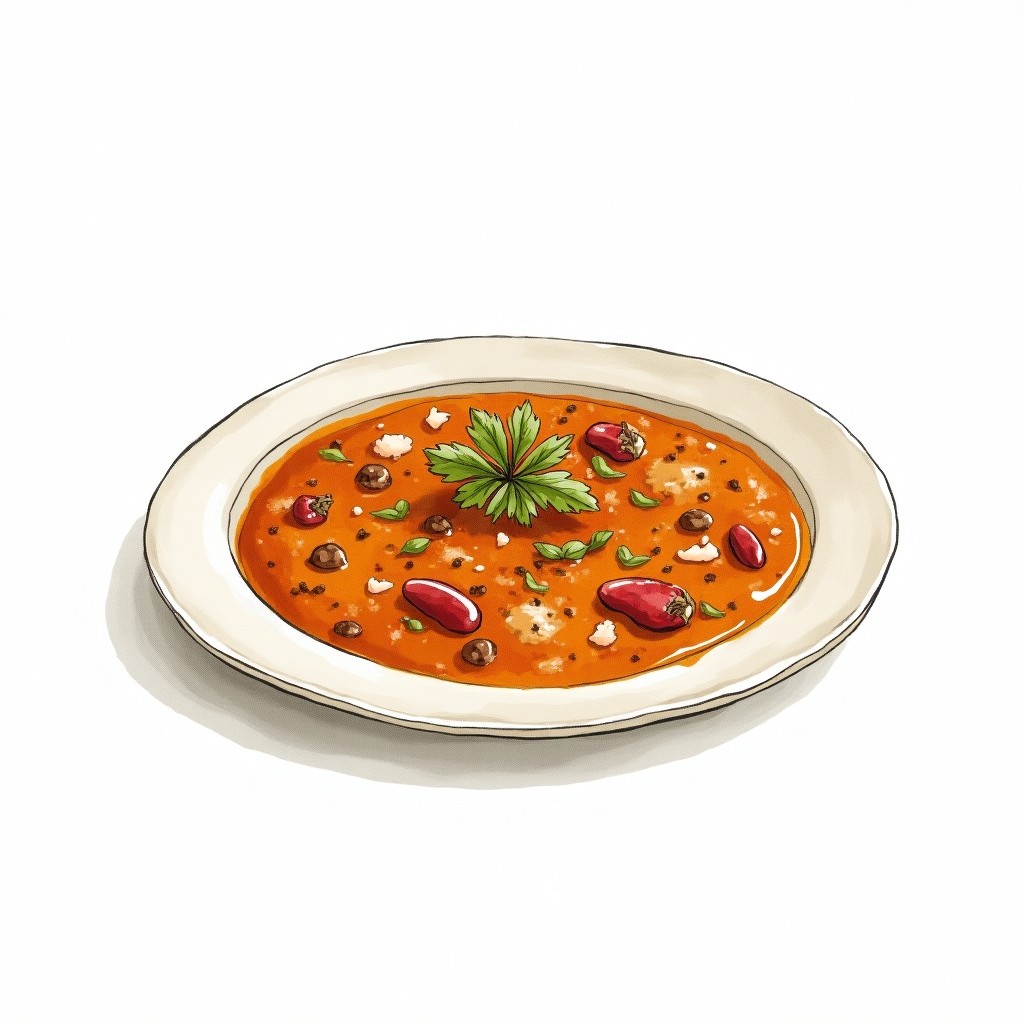
Dal Makhani
Dal Makhani — Slow-Simmered Black Lentils in Rich Tomato Cream
This restaurant-style dal transforms humble black lentils into something luxurious through hours of patient simmering. The key is building layers of flavor — first cooking the lentils until they're completely tender, then letting them meld with aromatic spices and cream until the whole pot becomes velvety and deeply satisfying.
Black lentils have a reputation for being stubborn. Unlike their red or yellow cousins that cook down quickly, these small obsidian gems refuse to surrender their structure easily — which is exactly what makes dal makhani so compelling. The hours of gentle simmering aren't just about cooking; they're about coaxing the lentils to release their starch and create that signature velvety texture that coats each grain while still maintaining some bite.
This isn't the quick weeknight dal you throw together in twenty minutes. Dal makhani earned its place as a restaurant favorite because it demands time and patience, rewarding both with depth that can't be rushed. The cream and butter traditionally added at the end aren't just for richness — they're the final layer that transforms an already complex dish into something that feels both rustic and luxurious.
What surprises most home cooks is how active the process actually is. Yes, there's plenty of waiting time, but the stirring, the gradual building of the spice base, the careful monitoring as everything comes together — these steps matter. Skip the proper caramelization of the onions or rush the tomato cooking, and you'll taste the difference. This is comfort food that asks you to slow down and pay attention, and the result is worth every minute spent stirring.
Nutrition
Ingredients
- 1 cupblack lentils (urad dal), soaked overnight and drained
- ¼ cupred kidney beans, soaked overnight and drained
- 4 cupwater
- 1 tspsalt, plus more to taste
- 2 tbspghee or clarified butter
- 1 mediumyellow onion, finely diced
- 4 clovegarlic cloves, minced to a paste
- 1 inchfresh ginger, minced fine
- 2 mediumripe tomatoes, pureed until smooth
- 1 tspground cumin
- 1 tspground coriander
- ½ tspgaram masala
- ¼ tspKashmiri red chili powder or paprika
- ½ cupheavy cream
- 2 tbspunsalted butter
- 1 tbsptomato paste
- fresh cilantro, roughly chopped(optional)
Instructions
- Give the soaked lentils and kidney beans a good rinse under cold water until the water runs clear. This removes any loose skins and debris that might cloud your finished dal.
- Place the drained lentils and kidney beans in a large, heavy-bottomed pot with the water and salt. Use a pot that holds at least 6 quarts — the lentils will foam up considerably as they cook.
- Bring the mixture to a rolling boil, then reduce to the lowest simmer your stove allows. Cover and let cook for 90 minutes, stirring every 20 minutes and adding hot water if needed. The lentils should be completely soft and starting to break down.⏱ 1 hr 30 min
- While the lentils finish cooking, heat the ghee in a large, heavy-bottomed pan over medium heat. The pan should be wide enough to hold all your aromatics without crowding.
- Drop in the diced onion and cook, stirring regularly, until deep golden brown — about 8 minutes. Don't rush this step; properly caramelized onions add essential sweetness and depth to the dal.⏱ 8 min
- Add the minced garlic and ginger to the pan, stirring constantly for 1 minute until intensely fragrant. If the mixture starts to stick, lower the heat slightly.⏱ 1 min
- Pour in the tomato puree and cook, stirring frequently, until the mixture darkens and you see small pools of oil separating around the edges — roughly 10 minutes. This concentrates the tomato flavor and removes any raw taste.⏱ 10 min
- Stir in the tomato paste, cumin, coriander, garam masala, and chili powder. The paste helps deepen the color and adds another layer of concentrated tomato flavor.
- Cook the spice mixture for 2 minutes, stirring constantly to prevent burning. The spices should smell toasted and aromatic, not harsh or bitter.⏱ 2 min
- Add the cooked lentil mixture to your spice base, stirring well to combine. The consistency should be loose and soupy at this point — it will thicken as it simmers.
- Let the dal simmer uncovered on the lowest heat for 45 minutes, stirring every 10 minutes to prevent sticking. Scrape the bottom of the pot each time — that's where the best flavor develops.⏱ 45 min
- Using the back of a wooden spoon, gently mash about half the lentils against the side of the pot. This creates the signature creamy texture while leaving some lentils intact for body.
- Stir in the cream and butter, mixing thoroughly until the butter melts completely. The dal should turn a rich, pale orange color.
- Continue simmering for 10 more minutes, stirring occasionally, until the dal coats the back of a spoon but still flows easily. If it gets too thick, add hot water a few tablespoons at a time.⏱ 10 min
- Taste and adjust the salt — it usually needs more than you think. Serve hot, garnished with fresh cilantro if desired. The flavors will continue developing even after you turn off the heat.
Tips & Tricks
- Soak the lentils and kidney beans for at least 8 hours — they need to plump fully or they won't break down properly during the long simmer.
- Use a heavy-bottomed pot for both cooking the lentils and the final simmering; thin pots will cause scorching during the long cooking time.
- The tomato mixture is ready when you see small pools of oil separating around the edges — this means the water has evaporated and the flavors are concentrated.
- If your dal gets too thick during the final simmer, add hot water rather than cold to avoid shocking the mixture and causing it to break.
- Day-old dal makhani tastes even better as the flavors meld overnight — just thin it with a splash of cream or water when reheating.
Frequently Asked Questions
Can I use regular black beans instead of black lentils?
No, black beans won't work here — you need whole black lentils (urad dal) which have a completely different texture and cooking behavior. Look for them in Indian grocery stores or online.
Can I make this in a slow cooker?
Yes, after building your spice base on the stovetop, combine everything in a slow cooker and cook on low for 6-8 hours. You'll miss some of the deep flavors that develop from stovetop simmering, but it's still delicious.
What if I don't have heavy cream?
Whole milk works, but add it gradually and don't let the dal boil hard afterward or it might curdle. Coconut cream is an excellent dairy-free substitute that adds richness without changing the flavor profile dramatically.
Why are my lentils still hard after cooking for hours?
Old lentils or very hard water can prevent proper cooking. Try adding a pinch of baking soda to the cooking water, or if your lentils are over a year old, they may need replacing.
How long will this keep in the refrigerator?
Dal makhani keeps for up to 5 days refrigerated and actually improves in flavor. It will thicken considerably when cold, so thin it with water or cream when reheating.