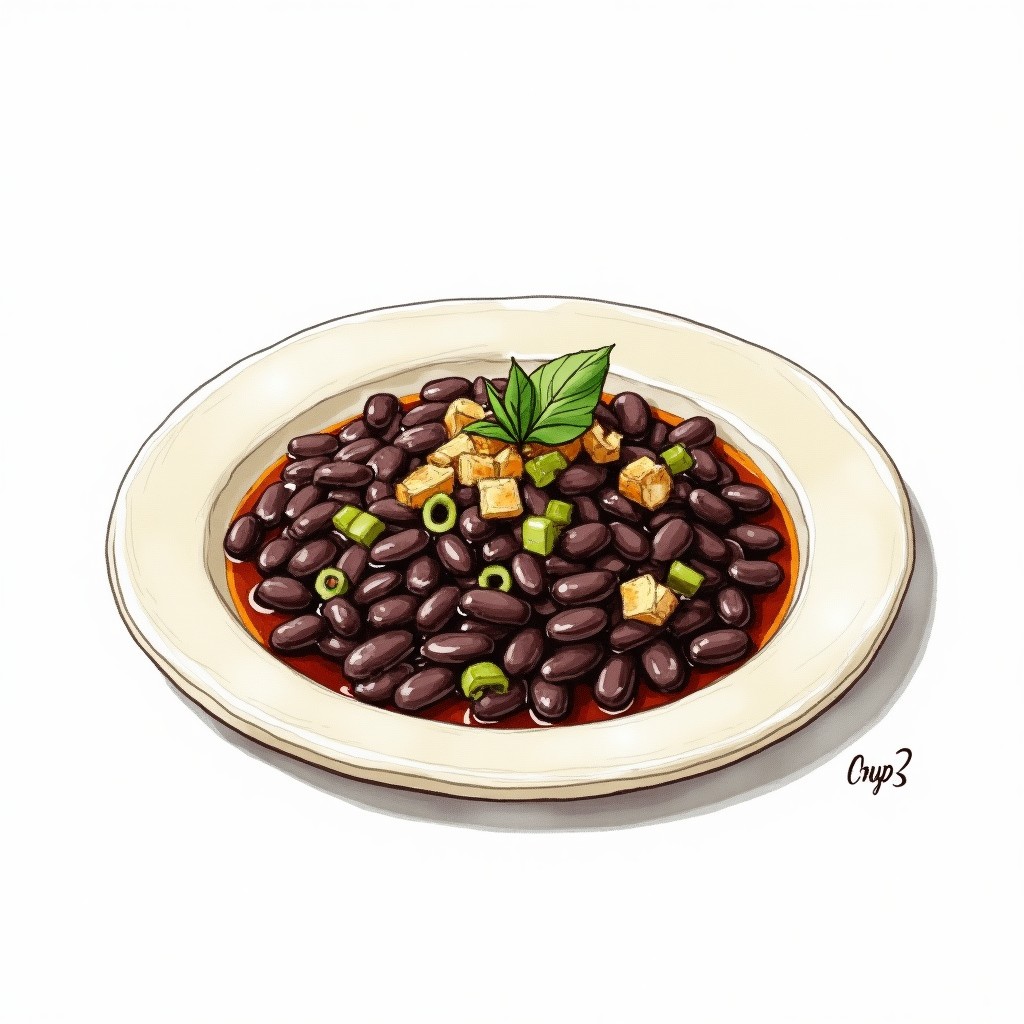
Cuban Black Beans
Havana-Style Black Beans with Traditional Sofrito
These beans take their time developing layers of flavor, just like they should. The sofrito builds an aromatic foundation while the beans slowly transform from hard pellets into creamy, rich mouthfuls that hold their shape perfectly.
Cuban black beans aren't meant to be rushed, and anyone who's grown up eating them will tell you that patience makes all the difference. The traditional approach involves building a proper sofrito — that holy trinity of onion, bell pepper, and garlic that forms the flavor backbone of so many Cuban dishes. What starts as simple aromatics sautéing in olive oil becomes something much more complex as it mingles with the beans and their cooking liquid.
The magic happens during that final simmer, when the bean liquid reduces and concentrates while the sofrito infuses every spoonful. This isn't the quick-cooking version you might find at some restaurants — these beans develop their characteristic creamy texture and rich, earthy flavor through slow, steady cooking that can't be hurried. The vinegar added at the very end is crucial too, cutting through the richness and bringing all those deep flavors into sharp focus.
What you end up with is something that works equally well as a hearty main dish with rice or as a robust side that can hold its own next to grilled meats. The beans hold their shape beautifully while the sauce becomes silky and clings to each one, creating that perfect balance between substance and comfort that defines great Cuban home cooking.
Nutrition
Ingredients
- 1 lbdried black beans, soaked overnight and drained
- 3 tbspextra-virgin olive oil
- 1 tspground cumin, preferably whole cumin toasted and ground
- 1 tspdried oregano, crumbled between your fingers
- 2 bay leaves, preferably Turkish
- 1 tspkosher salt
- ¼ tspfreshly ground black pepper
- 2 tbspwhite vinegar or white wine vinegar
Sofrito
- 1 mediummedium yellow onion, diced fine
- 1 mediummedium green bell pepper, diced fine
- 4 clovegarlic cloves, minced to a paste
Instructions
- Empty the soaked beans into a colander and rinse under cold water until the water runs clear. Transfer to a large pot and cover with fresh water by about 2 inches — the beans will absorb quite a bit as they cook.
- Bring the pot to a rolling boil, then immediately reduce to a gentle simmer. Keep the pot partially covered and let the beans bubble away until they're completely tender but still holding their shape — a properly cooked bean should give no resistance when you bite into it.⏱ 1 hr
- While the beans simmer, warm the olive oil in a large skillet over medium heat until it shimmers. Add the diced onion and bell pepper, stirring to coat everything in oil.
- Let the vegetables cook steadily, stirring every few minutes, until they're completely soft and the onion turns translucent. Don't let them brown — you want them sweet and mellow.⏱ 8 min
- Stir in the minced garlic along with the cumin and oregano. Keep everything moving in the pan until the garlic smells toasty and the spices bloom — about a minute of active stirring should do it.⏱ 1 min
- Scrape every bit of the sofrito into the pot with the tender beans. Add the bay leaves, salt, and pepper, stirring gently to distribute everything without mashing the beans.
- Keep the mixture at a gentle simmer, stirring occasionally, until the cooking liquid reduces to a creamy consistency that coats the beans nicely. The flavors should marry and intensify during this time.⏱ 30 min
- Remove from heat and stir in the vinegar — it brightens everything up and balances the richness perfectly. Taste and add more salt or pepper as needed, then fish out the bay leaves before serving.
Tips & Tricks
- Don't skip the overnight soak — it cuts cooking time significantly and helps the beans cook more evenly.
- Keep the sofrito vegetables moving in the pan but don't let them brown; you want them sweet and mellow, not caramelized.
- The beans are done when you can easily mash one against the side of the pot with a spoon, but they should still hold their shape when stirred.
- Add the vinegar off the heat to preserve its bright acidity — cooking it too long will make it taste flat.
- If your final consistency is too thin, simmer uncovered for a few extra minutes; too thick, add hot water a splash at a time.
Frequently Asked Questions
Can I use canned beans instead of dried?
You can, but the texture won't be quite the same — use three 15-oz cans, drain and rinse them, then add them to the finished sofrito with just enough water to create a light sauce. Simmer for 10-15 minutes to let the flavors meld.
What if I forgot to soak the beans overnight?
Use the quick-soak method: bring the beans to a boil for 2 minutes, then remove from heat, cover, and let sit for 1 hour. They'll take a bit longer to cook through, but it works in a pinch.
How do I store leftovers and how long do they keep?
These beans actually improve overnight as the flavors continue to develop. Store in the refrigerator for up to 5 days, or freeze for up to 3 months. Add a splash of water when reheating as they tend to thicken up.
My beans are taking forever to get tender — what went wrong?
Old beans can take much longer to soften, and hard water or acidic ingredients added too early can also slow cooking. Make sure your beans are relatively fresh and avoid adding the vinegar until the very end.