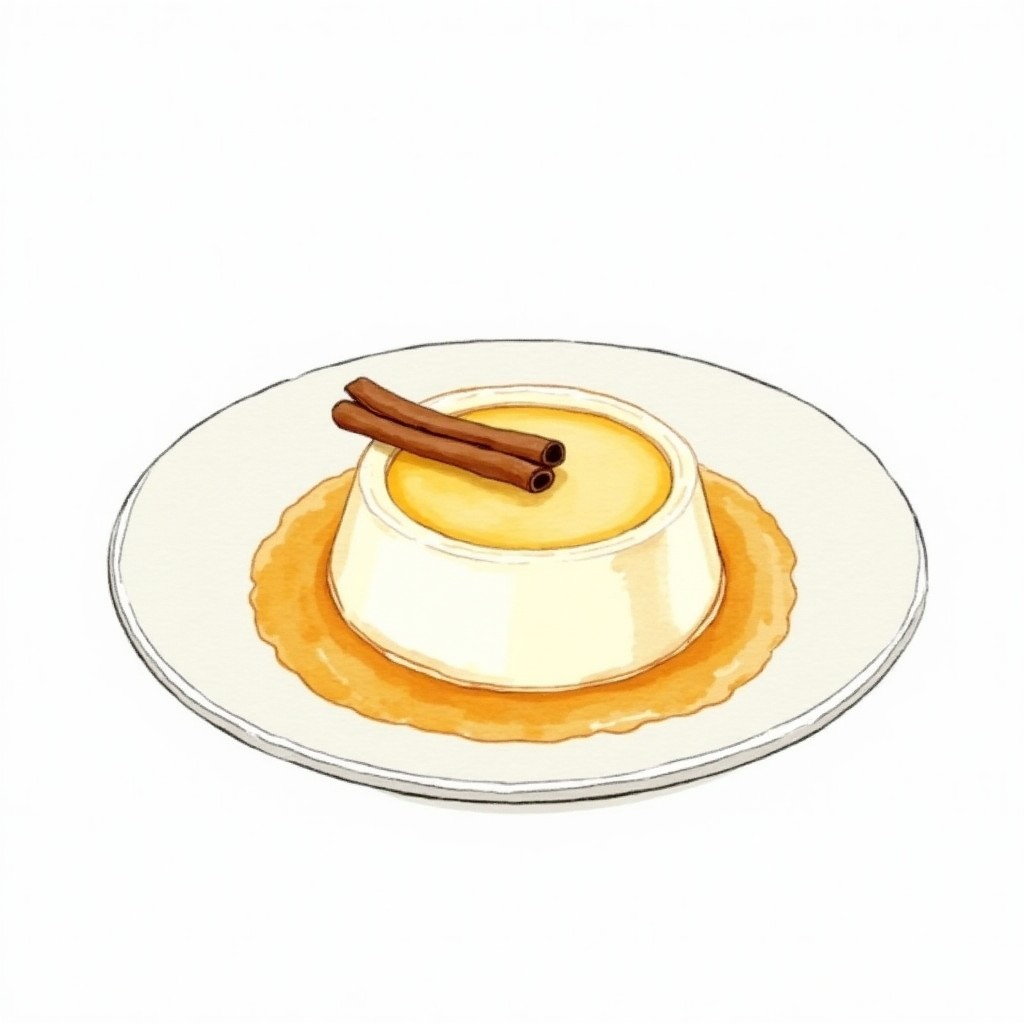
Crema Catalana
Classic Crema Catalana with Torched Sugar Crust
Catalonia's answer to crème brûlée brings cinnamon and lemon zest into a silky custard that's thickened on the stovetop rather than baked. The real magic happens when you torch that sugar topping into crackling amber glass — it's impossible to resist tapping it with your spoon.
The rivalry between France and Catalonia over who invented the ultimate torched custard may never be settled, but one taste of crema catalana proves the Catalans were onto something special. Their version ditches the water bath and oven entirely, building its silky richness through careful stovetop stirring. The addition of cinnamon and lemon zest creates a perfume that's distinctly Mediterranean — warmer and brighter than its French cousin.
What makes this dessert so compelling is the contrast between technique and final effect. You're essentially making a sophisticated pastry cream, whisking constantly over gentle heat until the cornstarch works its thickening magic. The process demands your full attention, but the result is a custard with perfect body — substantial enough to support that famous sugar crust without being heavy.
That final torching step transforms the dish completely. The granulated sugar melts into liquid amber before hardening into a shell so thin it shatters at the gentlest tap of your spoon. Underneath, the cold custard waits with its delicate spice notes and citrus brightness. It's a dessert that announces itself — the crack of the sugar, the reveal of the cream beneath, the way those flavors bloom together on your tongue.
Nutrition
Ingredients
- 2 cupwhole milk
- 1 cupheavy cream
- 1 cinnamon stick (preferably Ceylon)
- 1 fresh lemon peel strip (avoid the white pith)
- 6 large egg yolks, room temperature
- 3 tbspcornstarch
- 1 tsppure vanilla extract
custard
- ½ cupgranulated sugar
topping
- 6 tbspgranulated sugar for caramelizing
Instructions
- Combine the milk, cream, cinnamon stick, and lemon peel in a medium saucepan over medium heat. Let it warm until you see steam rising and tiny bubbles forming around the edges — this gentle infusion pulls the aromatic oils from the cinnamon and citrus without scorching the dairy.⏱ 5 min
- Meanwhile, whisk the egg yolks and 1/2 cup sugar in a large bowl until the mixture lightens to pale yellow and thickens slightly. The sugar needs time to dissolve completely, so keep whisking even when your arm gets tired.⏱ 2 min
- Add the cornstarch to the egg mixture and whisk vigorously until no lumps remain. The cornstarch is what gives crema catalana its distinctive thick texture, different from French custards.⏱ 30 sec
- Fish out the cinnamon stick and lemon peel from the hot milk mixture using a spoon or small strainer. They've done their job infusing flavor, and leaving them in will make the next step messy.
- Here's the crucial tempering step: pour the hot milk mixture into the egg mixture in a slow, steady stream while whisking constantly. Go too fast and you'll scramble the eggs, so patience pays off here.⏱ 1 min
- Pour everything back into the saucepan and cook over medium-low heat, whisking continuously in figure-eight motions. The custard is ready when it coats the back of a spoon and holds a line when you draw your finger across it. Don't let it boil or it will curdle.⏱ 5 min
- Pull the pan off the heat immediately and stir in the vanilla extract. The residual heat will distribute the vanilla without cooking off its delicate flavor.
- Divide the custard evenly among six ramekins, then press plastic wrap directly onto the surface of each one. This prevents that skin from forming on top while they chill.
- Refrigerate the custards until they're completely set and cold throughout — this usually takes at least 4 hours, but overnight is even better. Proper chilling is essential for the sugar topping to work properly.⏱ 4 hrs
- Just before serving, sprinkle exactly 1 tablespoon of sugar evenly over each custard surface. Use the back of a spoon to spread it into a thin, uniform layer — thick spots won't caramelize properly.
- Fire up your kitchen torch and caramelize the sugar with steady, overlapping passes until it turns deep amber and bubbles vigorously. Let it cool for 30 seconds to harden into that signature crackling crust before serving.⏱ 1 min
Tips & Tricks
- Keep your whisk moving in figure-eight patterns during the stovetop cooking — this motion covers more surface area and prevents hot spots that could scramble the eggs.
- Test the custard's doneness by lifting your spoon and watching how the mixture coats it; properly thickened custard will cling and hold a clear line when you draw your finger across the back of the spoon.
- If you don't have a kitchen torch, place the sugared custards under a preheated broiler for 1-2 minutes, watching carefully to prevent burning.
- The sugar layer should be thin and even — too thick and it won't caramelize properly, too thin and you won't get that satisfying crack.
- Make these a day ahead if possible; the flavors meld beautifully overnight and the custard firms up to the perfect consistency.
Frequently Asked Questions
Can I make crema catalana without cornstarch?
Cornstarch is essential for the proper texture — it's what allows the custard to thicken on the stovetop without curdling. Flour won't work as a substitute since it needs longer cooking to lose its raw taste.
How far ahead can I torch the sugar topping?
Torch the sugar just before serving for the best crack and texture. The caramelized sugar starts to soften after about 30 minutes, losing that signature brittle shell.
What can I substitute for the cinnamon stick?
Use 1/2 teaspoon ground cinnamon added directly to the egg mixture if you don't have sticks. The flavor won't be quite as refined, but it will still taste authentically Catalonian.
My custard curdled during cooking — can I save it?
If it's just slightly grainy, strain it through a fine-mesh sieve while still warm. Badly curdled custard unfortunately can't be rescued and needs to be started over with lower heat and constant whisking.