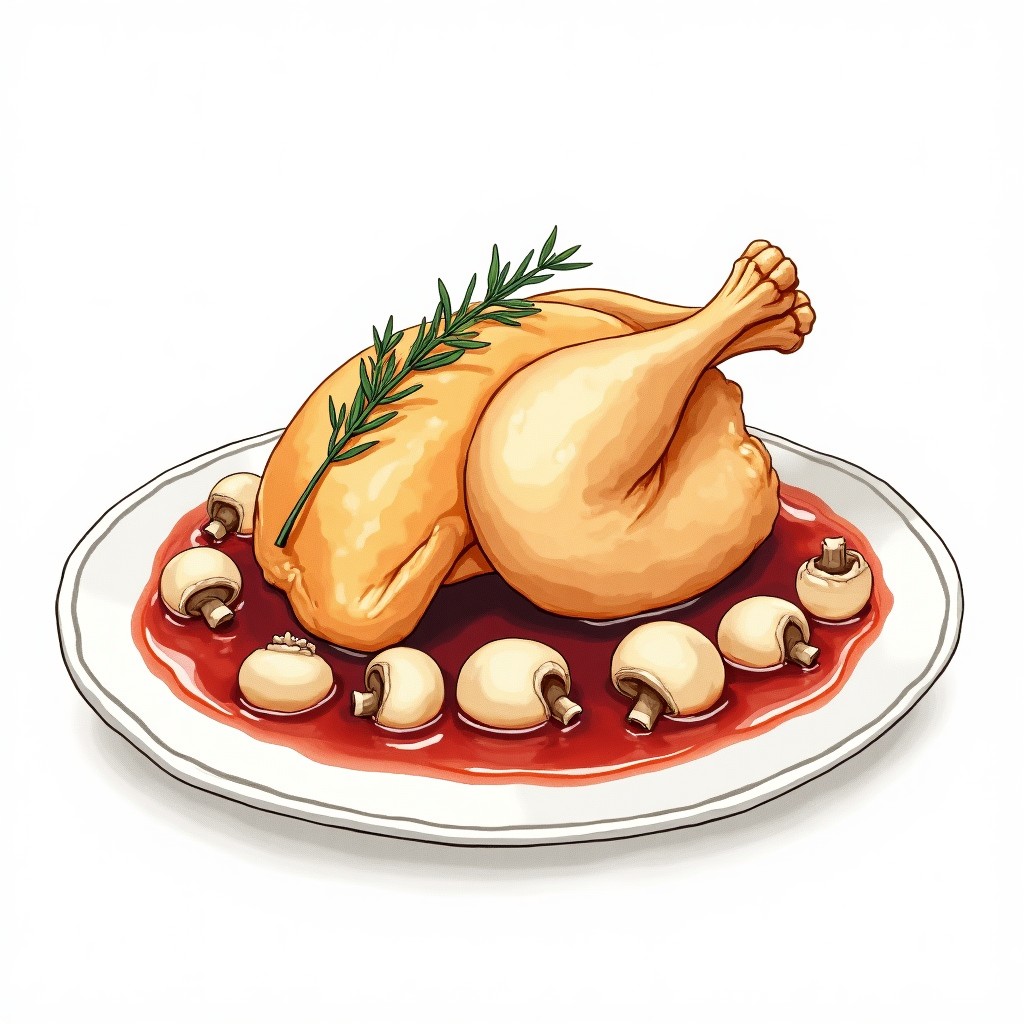
Coq au Vin
Rustic Coq au Vin with Silky Wine Sauce
This is comfort food that happens to be elegant — chicken pieces slowly braised until they practically fall off the bone, swimming in a glossy red wine sauce studded with bacon and vegetables. The long, gentle cooking transforms simple ingredients into something that tastes like it took all day, though most of the work happens in the first half hour.
French cooks have been turning tough old roosters into silk with wine for centuries, but the real magic of coq au vin happens when you stop worrying about authenticity and focus on the technique. The dish transforms completely ordinary ingredients — chicken, wine, vegetables — into something that feels like a special occasion, all through the patient alchemy of braising.
The secret lies in building layers of flavor at every step. That bacon fat becomes the foundation, the browned chicken adds depth, and the wine pulls everything together into a sauce that's rich without being heavy. Modern versions often skip the flambéing and complicated garnishes, but they keep the essential truth: low, slow cooking turns inexpensive cuts into restaurant-quality results.
What makes this version particularly satisfying is how the vegetables become part of the sauce rather than afterthoughts floating in it. The pearl onions sweeten as they caramelize, the mushrooms add earthiness, and everything melds into a cohesive dish where each component supports the others. It's the kind of cooking that fills your kitchen with aromas that make neighbors jealous.
Served over egg noodles, mashed potatoes, or with crusty bread to soak up that glossy sauce, this coq au vin delivers the comfort of a long Sunday dinner without requiring you to tend the stove all day. Most of the magic happens unattended in the covered pot.
Nutrition
Ingredients
- 1 whole chicken, cut into 8 pieces (thighs, drumsticks, breast halves, wings)
- 6 slicethick-cut bacon, chopped into bite-sized pieces
- 2 cupdry red wine (Burgundy or Pinot Noir work beautifully)
- 1 cupchicken broth, preferably low-sodium
- 1 lbpearl onions, peeled (frozen are fine, thawed first)
- 8 ozmushrooms, halved or quartered if large
- 3 clovegarlic cloves, minced fine
- 2 tbsptomato paste
- 2 sprigfresh thyme sprigs
- 2 bay leavesbay leaves
- 3 tbspbutter, at room temperature
- 3 tbspall-purpose flour
- salt and freshly ground black pepper
- 2 tbspfresh parsley, chopped fine for garnish
Instructions
- Pat the chicken pieces completely dry with paper towels, then season generously all over with salt and pepper. Don't be shy here — the seasoning needs to penetrate the meat, and some will be lost during browning.
- Heat your Dutch oven over medium heat and add the chopped bacon. Let it render slowly, stirring occasionally, until the pieces are deeply golden and crispy. The fat should be bubbling but not smoking. Transfer the bacon to a paper towel-lined plate but leave the fat in the pot.⏱ 5 min
- Working in batches to avoid crowding, brown the chicken pieces in the bacon fat, about 4 minutes per side. You want deep golden color — this creates the flavor foundation for the entire dish. Don't move them too soon or they'll stick. Transfer to a plate as they're done.⏱ 8 min
- Add the pearl onions to the same pot and cook, stirring occasionally, until they're golden brown on multiple sides. They should caramelize nicely in the rendered fat — this sweetness will balance the wine's acidity later. Remove and set aside with the chicken.⏱ 8 min
- Toss the mushrooms into the pot and let them cook undisturbed for a couple minutes before stirring. They'll release their moisture and then start to brown. Once they're golden and slightly crispy, remove them to join the other ingredients.⏱ 5 min
- Lower the heat slightly and add the minced garlic and tomato paste to the pot. Stir constantly — the tomato paste should darken and become fragrant, but watch carefully so the garlic doesn't burn. This builds a rich, concentrated base for the sauce.⏱ 1 min
- Pour in the red wine and immediately start scraping up all those beautiful browned bits from the bottom of the pot with a wooden spoon. Let the wine come to a gentle simmer — you'll see it bubble and the alcohol will start to cook off, concentrating the flavors.⏱ 3 min
- Return the chicken pieces and crispy bacon to the pot, nestle in the thyme sprigs and bay leaves, then pour in the chicken broth. The liquid should mostly cover the chicken — add a splash more broth or water if needed.
- Bring everything to a gentle simmer, then cover and reduce heat to maintain just barely bubbling liquid. The chicken will slowly become tender as it braises — no need to stir, just let time do the work. The meat should start pulling away from the bones when it's ready.⏱ 45 min
- Nestle the pearl onions and mushrooms back into the pot, pressing them down into the sauce. Cover again and continue the gentle simmer until the onions are fork-tender and the flavors have melded together beautifully.⏱ 15 min
- Mash the soft butter and flour together with a fork until you have a smooth paste — this is called beurre manié. Whisk this paste into the simmering sauce bit by bit. It will thicken the sauce to a glossy, coating consistency that clings perfectly to the chicken.
- Fish out the bay leaves and thyme stems, then taste and adjust the seasoning with salt and pepper. The sauce should be rich and balanced — not too sharp from the wine, not too salty. Scatter the fresh parsley over the top just before serving for a bright finish.
Tips & Tricks
- Don't skip drying the chicken thoroughly — wet skin won't brown properly and the whole dish depends on that initial caramelization for flavor.
- Use a wine you'd actually drink; cooking wine concentrate the flavors, so cheap, harsh wine will make harsh sauce.
- If pearl onions are a hassle to peel, drop them in boiling water for 30 seconds, then ice water — the skins will slip right off.
- The beurre manié (butter-flour paste) should go in gradually while the sauce is simmering — dump it all at once and you'll get lumps.
- Let the finished dish rest off the heat for 10 minutes before serving; the flavors continue to meld and the sauce thickens slightly as it cools.
Frequently Asked Questions
Can I use white wine instead of red?
Yes, that would make coq au vin blanc, which is equally delicious but lighter in flavor. Use a dry white wine and expect a more delicate sauce color and taste.
What if I can't find pearl onions?
Regular yellow onions work fine — cut them into thick wedges so they hold their shape during braising. Frozen pearl onions are another good option and don't need peeling.
Can this be made ahead?
Absolutely, and it actually improves overnight. Cool completely, refrigerate up to 3 days, then reheat gently on the stovetop. The flavors deepen and the sauce may thicken slightly, which is perfect.
My sauce seems thin — how do I fix it?
Remove the chicken and vegetables, then simmer the sauce uncovered to reduce it, or whisk in a bit more beurre manié. The sauce should coat a spoon lightly but not be gluey.
What cut of chicken works best?
Bone-in, skin-on pieces are essential — thighs and drumsticks stay most tender, but a mix of dark and white meat works well. Boneless pieces will dry out during the long cooking time.