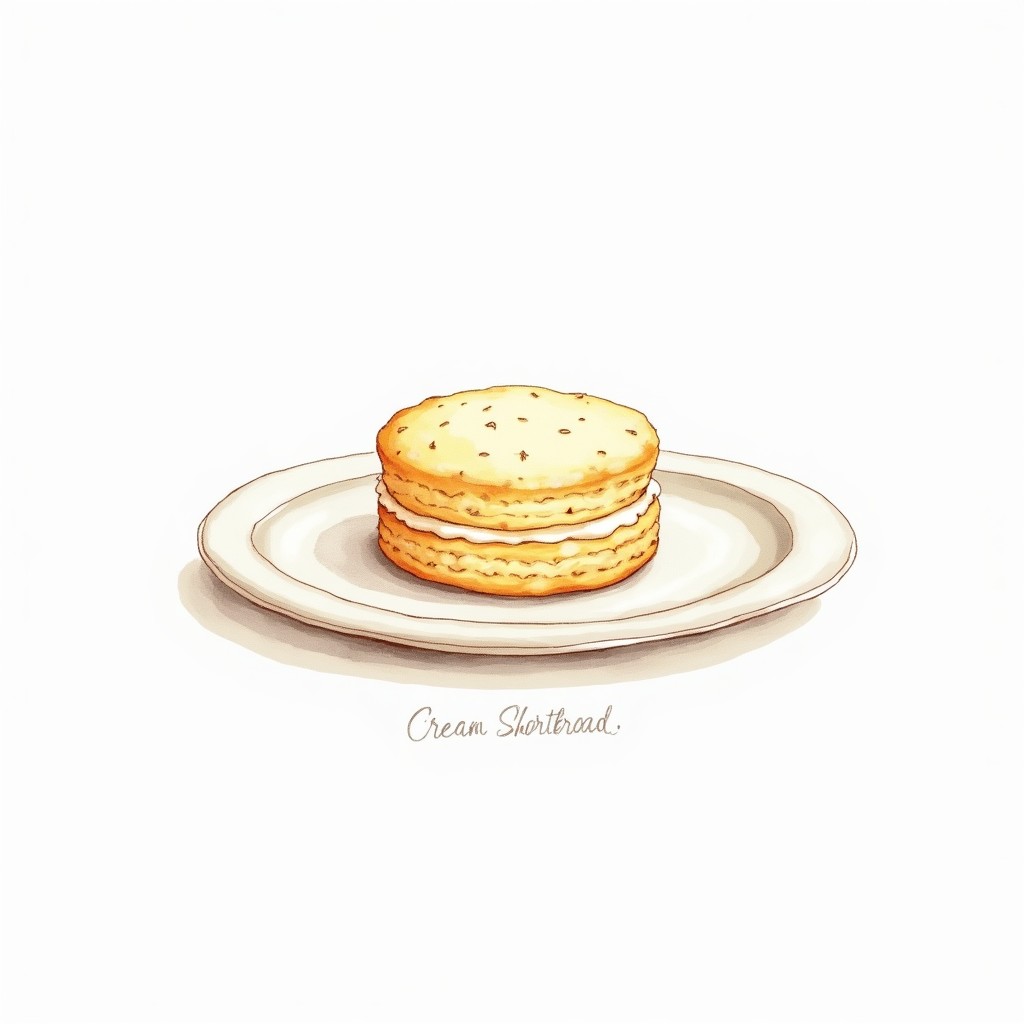
Clotted Cream Shortbread
Clotted Cream Shortbread — Tender English Biscuits with Devon's Finest Secret
Clotted cream elevates these shortbread cookies from good to extraordinary, lending an almost cake-like tenderness while keeping that essential buttery crunch. The luxurious Devon staple does what regular butter can't — it creates cookies that practically dissolve on your tongue yet hold their shape beautifully.
Most Americans discover clotted cream spread thick on scones, but the Brits have quietly been using this silky treasure in their baking for generations. When you fold clotted cream into shortbread dough, something magical happens — the high fat content creates an impossibly tender crumb while the cream's subtle tang balances the butter's richness perfectly.
These aren't your grandmother's sandy shortbread cookies. The clotted cream transforms the texture completely, yielding biscuits that feel almost weightless yet maintain that satisfying snap when you bite down. Devon cream makers stumbled onto this technique by accident — leftover clotted cream from tea service found its way into cookie dough, and the results were so superior that the method spread quietly through English kitchens.
What makes this version special is how the cream's natural moisture creates steam pockets as the cookies bake, leaving behind tiny air bubbles that give each bite an almost cake-like quality. The result tastes unmistakably like shortbread but feels entirely different in your mouth — richer, more luxurious, yet somehow lighter than traditional versions.
Nutrition
Ingredients
- 2 cupall-purpose flour
- ½ cuppowdered sugar, sifted
- ½ tspfine sea salt
- ½ cupunsalted butter, softened to room temperature
- ½ cupclotted cream, at room temperature
- 1 tsppure vanilla extract
Instructions
- Position a rack in the center of your oven and heat to 325°F. Line a large baking sheet with parchment paper, leaving some overhang for easy removal later.
- In a medium bowl, whisk together the flour, powdered sugar, and salt until evenly distributed. This dry mix forms the foundation, so make sure there are no sugar clumps lurking.
- Using an electric mixer or wooden spoon, cream the softened butter, clotted cream, and vanilla until the mixture looks pale and completely smooth. The clotted cream should disappear entirely into the butter.⏱ 2 min
- Fold the flour mixture into the creamed mixture using a wooden spoon or rubber spatula. Stop mixing as soon as the last streaks of flour disappear — overworking will make the cookies tough.
- Scoop the soft dough into 1.5-inch portions and roll them into balls between your palms. Space them 2 inches apart on the prepared baking sheet, giving each cookie room to spread slightly.
- Press a fork firmly into each ball, creating deep ridges in a crosshatch pattern. These classic marks aren't just decorative — they help the cookies bake evenly and give them their signature shortbread look.
- Bake for 16-18 minutes, until the edges turn a pale golden color while the centers remain light. The cookies should feel set but still slightly soft to the touch.⏱ 18 min
- Let the cookies rest on the baking sheet for 5 minutes to firm up, then carefully transfer them to a wire rack to cool completely. They'll continue to crisp as they cool.⏱ 5 min
Tips & Tricks
- Make sure your clotted cream is at room temperature before mixing — cold cream won't incorporate smoothly and can create lumpy dough.
- Don't skip the fork marks; they're not just decorative but actually prevent the cookies from puffing up unevenly as they bake.
- These cookies are done when the edges just start to color — they'll look underbaked in the center but will firm up perfectly as they cool.
- Store in an airtight container for up to a week, though they're at their absolute best within the first two days.
- If you can't find clotted cream, thick Greek yogurt mixed with heavy cream (2:1 ratio) makes a decent substitute, though the texture won't be quite as tender.
Frequently Asked Questions
Can I make the dough ahead of time?
Yes, wrap the dough tightly in plastic and refrigerate for up to 2 days. Let it come to room temperature before shaping, or it'll be too firm to work with easily.
Why use powdered sugar instead of granulated?
Powdered sugar dissolves more completely into the creamy mixture, creating a smoother texture. Granulated sugar can leave the cookies slightly gritty.
What's the best way to get even-sized cookies?
Use a small cookie scoop or measuring spoon for consistent portions. Each ball should be about the size of a walnut before you flatten it with the fork.
Can I freeze these cookies?
Absolutely — freeze the baked cookies in a single layer, then transfer to freezer bags for up to 3 months. They thaw quickly at room temperature and taste just as good.