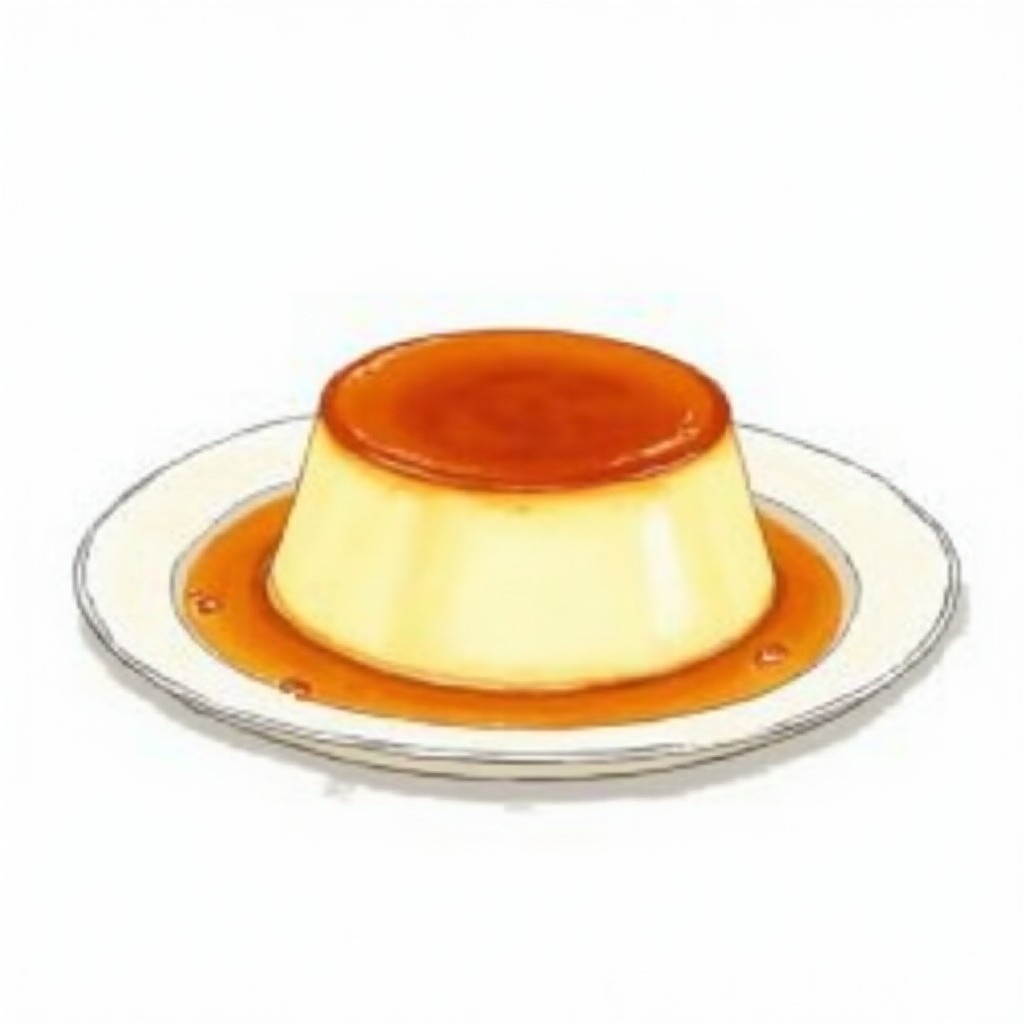
Classic Vanilla Flan
Elegant Vanilla Flan with Burnt Sugar Caramel
The science behind this dessert is almost magical — sugar transforms into molten amber while eggs and cream become impossibly smooth custard. The gentle water bath does all the work, creating a dessert that wobbles perfectly and releases its caramel in golden rivers when you flip it.
Every culture seems to have its version of caramelized sugar custard, but flan stands apart for its theatrical finale — that moment when you flip the ramekin and watch liquid amber cascade down pristine custard walls. The Spanish and Mexicans have been perfecting this technique for centuries, understanding that the secret isn't in exotic ingredients but in mastering temperature and timing.
The real magic happens in two stages. First, you're essentially conducting a controlled burn, coaxing plain sugar into complex caramel without crossing the line into bitterness. Then comes the custard, where gentle heat and patience transform humble eggs and milk into something that barely holds its shape yet melts on your tongue. The water bath isn't just technique — it's insurance against the kind of curdled disaster that makes grown cooks weep.
What makes this version particularly satisfying is how it rewards your restraint. The extra egg yolks create richness without heaviness, while the overnight chill allows flavors to deepen and textures to settle into that perfect wobble. When you finally unmold these beauties, that hardened caramel becomes liquid gold again, pooling around each serving like nature intended.
Nutrition
Ingredients
Caramel
- 1 cupgranulated sugar (for caramel)
- ¼ cupwater
Custard
- 2 cupwhole milk
- ½ cupheavy cream
- 4 large eggs
- 2 large egg yolks
- ½ cupgranulated sugar (for custard)
- 1 tsppure vanilla extract
- ¼ tspfine sea salt
Instructions
- Set your oven to 325°F and arrange 8 ramekins in a large roasting pan. They should fit comfortably with space between them — you'll be adding water later.
- Stir together 1 cup sugar and water in a heavy-bottomed saucepan, then stop stirring completely. Cook over medium heat, watching as the sugar dissolves and eventually turns deep amber — this takes patience and focus, as it can go from perfect to burnt quickly.⏱ 8 min
- Working fast while the caramel is still liquid, pour equal amounts into each ramekin and immediately tilt them to coat the bottoms evenly. The caramel will harden as it cools, creating your golden base.
- Warm the milk and cream together in a saucepan over medium heat until you see steam rising and tiny bubbles forming around the edges. Don't let it boil — just get it hot enough to feel the heat when you hold your hand above it.
- Beat the eggs, egg yolks, remaining sugar, vanilla, and salt together in a large bowl until the mixture is completely smooth and pale yellow. The extra yolks give this flan its signature richness.
- Pour the hot milk mixture into the egg mixture very slowly, whisking constantly to prevent the eggs from scrambling. Then strain everything through a fine-mesh sieve to catch any bits that might have formed despite your careful whisking.
- Ladle the custard mixture over the hardened caramel in each ramekin, filling them about three-quarters full. Place the roasting pan in the oven, then carefully pour hot water around the ramekins until it reaches halfway up their sides.
- Bake until a thin knife inserted just off-center comes out clean — the center should still have the slightest wobble when you gently shake a ramekin. This gentle cooking in the water bath is what creates the silky texture.⏱ 45 min
- Lift the ramekins from the water bath using tongs and let them cool to room temperature on a wire rack. Then refrigerate for at least 4 hours or overnight — the flan needs this time to fully set and develop its flavors.⏱ 4 hrs
- To unmold, run a thin knife around the edge of each ramekin to loosen the flan. Place a dessert plate upside down over the ramekin, then quickly flip both together. Give it a few seconds, then lift the ramekin — the flan should release with its caramel flowing down the sides.
Tips & Tricks
- Don't stir the caramel once it starts cooking — swirling the pan occasionally is enough to ensure even cooking without encouraging crystallization.
- Test your caramel color by dripping a small amount onto a white plate; it should be deep amber, not light gold, for the best bitter-sweet balance.
- Strain the custard mixture twice if you notice any lumps after tempering — perfectly smooth texture is worth the extra step.
- The knife test for doneness should be done just off-center, not in the middle; the very center will finish cooking from residual heat.
- If your flan doesn't release easily when unmolding, try running the ramekin under warm water for 10-15 seconds to soften the caramel.
Frequently Asked Questions
Can I make this ahead for a dinner party?
Absolutely — flan actually improves after sitting overnight in the fridge. You can make it up to 3 days ahead, but unmold just before serving for the best presentation.
What if I don't have ramekins?
You can use a single 9-inch round cake pan for one large flan, but increase the baking time to 60-70 minutes. Coffee cups or small glass bowls work too, just adjust timing based on their depth.
My caramel seized up and turned grainy — can I fix it?
Unfortunately, crystallized caramel can't be saved. Start over with a clean pan, making sure no sugar crystals cling to the sides, and avoid stirring once the mixture begins to bubble.
Why does my custard have bubbles on top?
Bubbles usually form from overmixing or too-high oven temperature. Skim them off before baking, and make sure your water bath maintains gentle, even heat throughout cooking.
Can I substitute the heavy cream with milk?
You can use all milk, but you'll lose some richness and silky texture. For better results, try half-and-half as a compromise between richness and lighter texture.