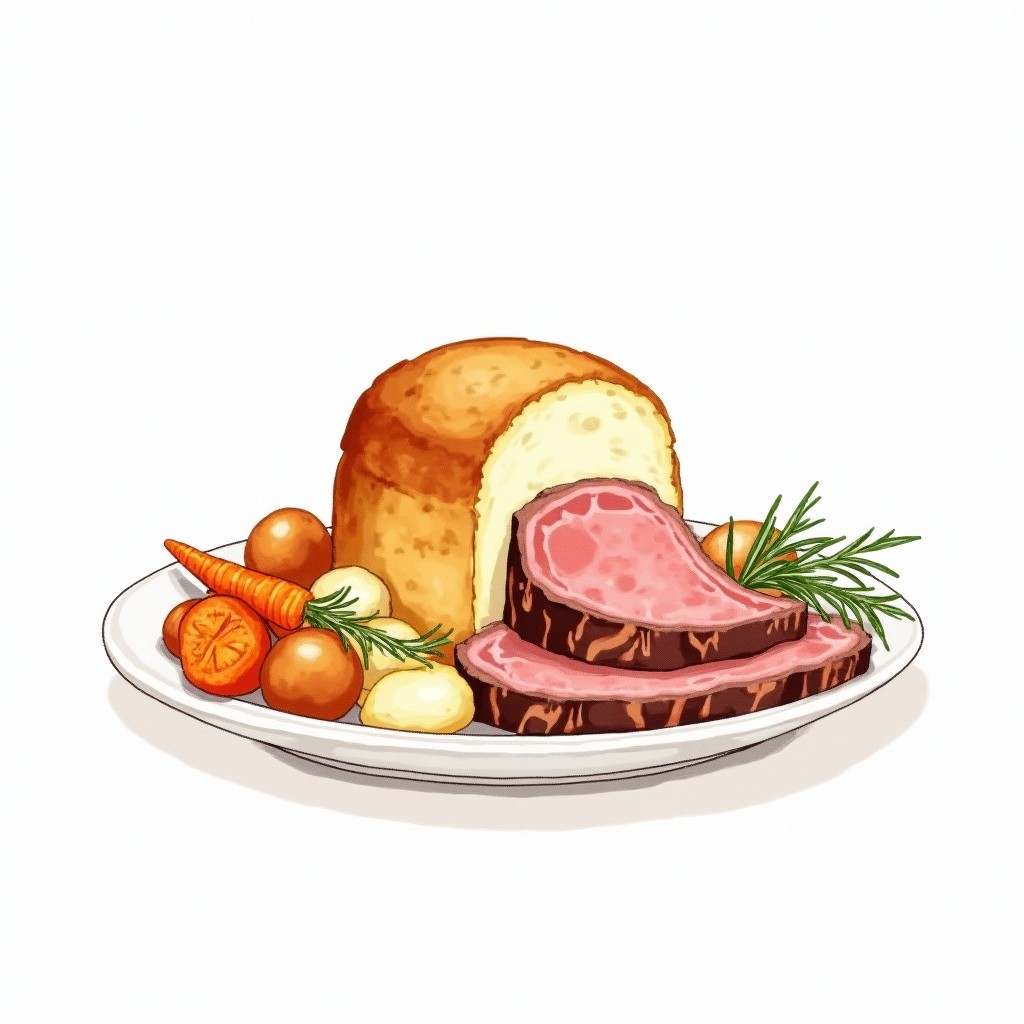
Classic Sunday Roast Beef with Yorkshire Pudding
Majestic Sunday Roast with Golden Yorkshire Puddings
This is the roast that anchors weekend gatherings — beef that develops a herb-scented crust while staying tender inside, paired with vegetables that caramelize in the pan drippings. The Yorkshire puddings rise into dramatic golden towers, ready to catch every drop of rich gravy.
Sunday roast isn't just dinner — it's ritual, theater, and comfort all rolled into one magnificent meal that transforms a house into a home. The scent of beef roasting with rosemary fills every corner while vegetables slowly caramelize in the drippings, and Yorkshire puddings puff into golden crowns that seem to defy gravity itself.
This isn't the kind of meal you rush. It demands patience and rewards it with beef that yields to your fork yet holds its shape, vegetables that taste like concentrated versions of themselves, and puddings so light they practically float off the plate. The magic happens in the timing — that orchestrated dance of resting the meat while the oven climbs back to scorching heat, of hot fat meeting cold batter in a dramatic sizzle that promises perfect rise.
What makes this roast truly special isn't complexity but care. Each element serves the others: the beef drippings become the foundation for both the gravy and the Yorkshire pudding fat, while the vegetables cook in those same precious juices. It's British cooking at its most logical and delicious — nothing wasted, everything connected, and the whole somehow greater than its parts.
This is the meal that gathers people around tables, that fills bellies and settles souls, that turns an ordinary Sunday into something worth remembering. And yes, there will be leftovers — consider them tomorrow's gift to yourself.
Nutrition
Ingredients
Roast
- 3 lbbeef topside or silverside roasting joint, brought to room temperature
- 2 tbspolive oil, for rubbing
- 2 tspcoarse salt
- 1 tspfreshly ground black pepper
- 3 sprigfresh rosemary sprigs
Vegetables
- 6 mediummedium roasting potatoes, peeled and quartered
- 4 largelarge carrots, cut into 2-inch chunks
- 2 largelarge onions, quartered through the root
Yorkshire Pudding
- 1 cupall-purpose flour, sifted
- 3 largelarge eggs, at room temperature
- 1 cupwhole milk, at room temperature
- 4 tbspbeef drippings or neutral vegetable oil
Gravy
- 2 tbspplain flour, for gravy
- 2 cuphot beef stock
Instructions
- Get your oven heated to 425°F and pull the beef from the fridge 30 minutes before you plan to cook it. Room temperature meat cooks more evenly, giving you a better crust and more uniform doneness throughout.⏱ 30 min
- Massage the beef all over with olive oil, then season generously with salt and pepper. Strip the rosemary leaves from their stems and press them into the meat — they'll create aromatic pockets as the beef roasts. Set the seasoned joint in your roasting pan.
- Slide the beef into the hot oven for an initial 20-minute blast. This high heat sears the outside and locks in the juices. After 20 minutes, dial the temperature down to 350°F for gentler cooking.⏱ 20 min
- Nestle the potatoes, carrots, and onions around the beef, turning them in the rendered fat. Continue roasting for 90 to 120 minutes, depending on your preferred doneness — aim for an internal temperature of 135°F for perfect medium-rare. The vegetables will bronze beautifully in the drippings.⏱ 1 hr 50 min
- While the roast cooks, whisk the flour, eggs, and milk into a smooth batter. Beat it well to incorporate air, then let it rest for 30 minutes. This resting time helps the flour hydrate and creates lighter Yorkshire puddings.⏱ 30 min
- When the beef reaches temperature, remove it from the oven and tent loosely with foil to rest for 15 minutes. This resting redistributes the juices. Meanwhile, crank the oven back up to 425°F — you need serious heat for the Yorkshire puddings.⏱ 15 min
- Add 1 teaspoon of drippings (or oil) to each cup of a 12-cup muffin tin. Slide the tin into the hot oven for 5 minutes until the fat is smoking hot. This step is crucial — cold fat means flat puddings.⏱ 5 min
- Working quickly, pour the batter into the smoking hot muffin cups, filling each about halfway. The batter should sizzle as it hits the fat. Bake for 20 to 25 minutes without opening the door — the puddings need uninterrupted heat to rise into their dramatic peaks.⏱ 22 min 30 sec
- Set the roasting pan directly over medium heat on your stovetop. Whisk the flour into the pan drippings and cook for 2 minutes to eliminate the raw flour taste. Slowly pour in the hot stock while whisking constantly — this prevents lumps and creates silky gravy.⏱ 5 min
- Carve the rested beef against the grain into thick slices. Arrange on a platter with the roasted vegetables, golden Yorkshire puddings standing tall alongside, and pass the gravy in a warm jug.
Tips & Tricks
- Use a meat thermometer instead of timing alone — topside can vary dramatically in thickness and density, making cook times unreliable.
- Save some of those precious beef drippings in a jar in the fridge — they'll keep for weeks and make any roasted vegetables taste incredible.
- If your Yorkshire puddings don't rise properly, the fat wasn't hot enough when you added the batter — that initial sizzle is everything.
- Let your roasting vegetables get properly golden before flipping them — they'll caramelize better and won't stick to the pan.
- Rest your beef on a warm plate rather than the cutting board to catch every drop of those resting juices for your gravy.
Frequently Asked Questions
Can I use a different cut of beef for this roast?
Absolutely — chuck roast, eye of round, or even a ribeye roast work well. Just adjust your cooking time since different cuts vary in density and fat content. Always rely on your thermometer rather than the clock.
What if I don't have enough drippings for both gravy and Yorkshire puddings?
Top up with vegetable oil or melted butter for the puddings — they need that smoking hot fat more than they need it to be pure beef drippings. Save what beef fat you have for the gravy where the flavor really counts.
Can I make the Yorkshire pudding batter ahead of time?
Yes, the batter actually improves with time. Make it up to 24 hours ahead and keep it covered in the fridge — just give it a good whisk before using since it will separate.
Why did my Yorkshire puddings come out flat?
Either the fat wasn't hot enough when you added the batter, or you opened the oven door during baking. The batter needs to hit smoking fat with a sizzle, and the puddings need uninterrupted heat to rise properly.
How do I know when the beef is properly rested?
Give it at least 15 minutes under loose foil — you'll know it's ready when the juices have redistributed and the meat feels slightly firmer to the touch. Properly rested beef won't bleed all over your cutting board when sliced.