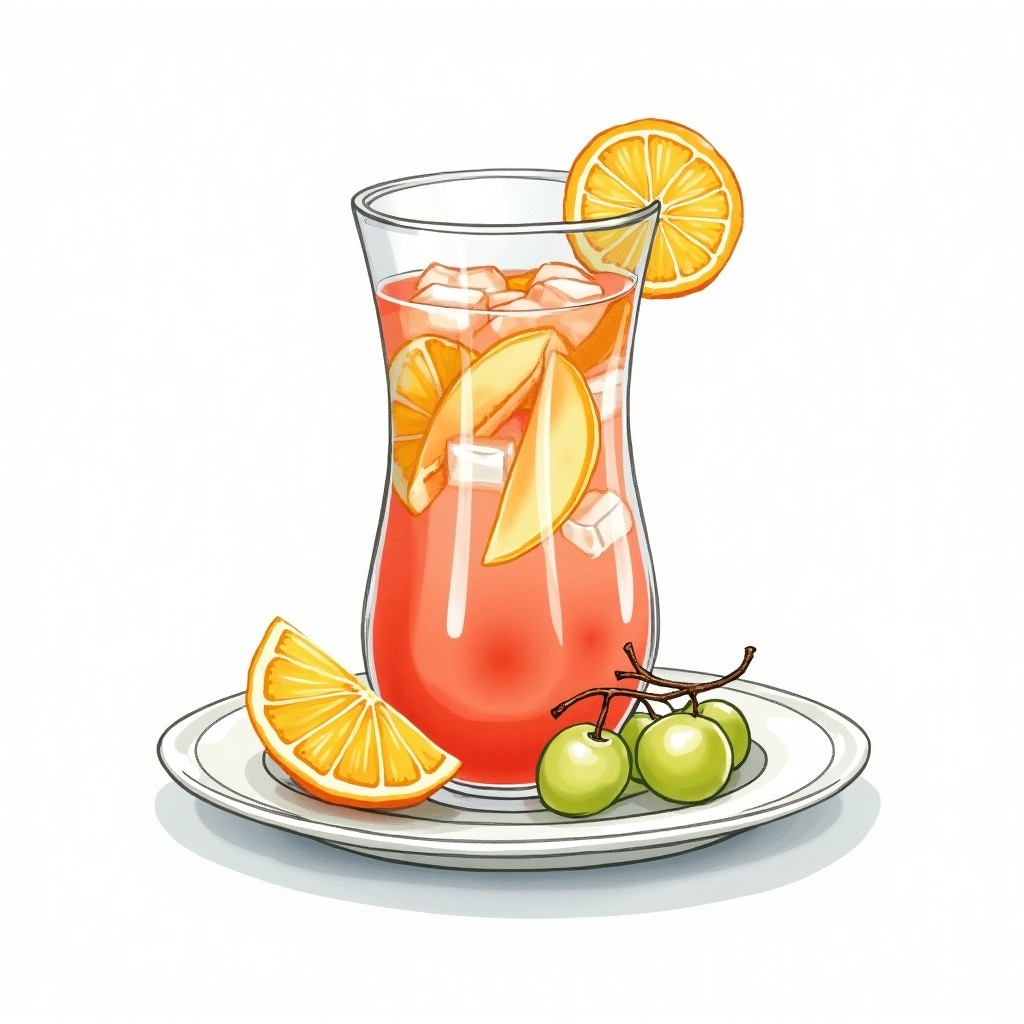
Classic Spanish Sangria
Real-Deal Spanish Sangria with Brandy and Fresh Fruit
Proper sangria starts with good red wine and patience — the fruit needs time to release its juices and marry with the brandy. What separates this from sugary imitations is the balance: enough sweetness to complement the wine without masking its character, and that final splash of bubbles to lift everything up.
Sangria's reputation has been hijacked by artificial mixes and shortcuts that would horrify any bartender in Andalusia. Real Spanish sangria respects the wine — it enhances rather than disguises, adding fruit and just enough sweetness to create something refreshing without losing the character of a good red.
The secret lies in patience and proportion. Those fruit pieces aren't just floating decorations; they're quietly working, releasing their juices into the wine while absorbing all those complex flavors in return. Spanish brandy provides the backbone that separates authentic sangria from fruit punch, while that final splash of club soda lifts everything with effervescence.
This recipe comes from the understanding that sangria is meant to be shared — it's a pitcher drink that brings people together around tables and terraces. The longer it sits, the better it becomes, making it perfect for entertaining since the hardest part (the waiting) happens before your guests arrive.
Nutrition
Ingredients
- 1 bottledry red wine, preferably Spanish Tempranillo or Garnacha
- 1 cupfresh orange juice, strained
- ¼ cupSpanish brandy or Cognac
- 2 tbspgranulated sugar
- 2 cupclub soda, well-chilled
- ice cubes
Fruit
- 1 largelarge navel orange, washed and sliced into rounds
- 1 largecrisp apple like Honeycrisp or Gala, cored and diced
- ½ cupgreen grapes, halved and seeds removed if needed
Instructions
- Pour the wine, orange juice, and brandy into a large glass pitcher, then add the sugar. Stir steadily for about a minute until the sugar completely dissolves — you shouldn't feel any grit when you drag the spoon along the bottom.
- Drop in all the prepared fruit: orange rounds, diced apple, and halved grapes. Give everything a gentle stir to distribute the fruit throughout the wine mixture, making sure pieces aren't clumped together.
- Cover the pitcher and refrigerate for at least 2 hours — this chilling time lets the fruit release its juices into the wine while the flavors blend together. The longer it sits, the better it gets, so don't rush this step.⏱ 2 hrs
- Right before your guests arrive, pour in the cold club soda and fold it in with a long spoon using gentle motions. You want to preserve the bubbles while ensuring everything mixes evenly.
- Fill wine glasses with ice, then ladle the sangria over the cubes, making sure each glass gets a generous scoop of the wine-soaked fruit. The fruit isn't just garnish — it's part of the experience.
Tips & Tricks
- Choose a dry red wine you'd actually drink on its own — Tempranillo, Garnet, or Merlot work beautifully, but avoid anything too tannic or oaky.
- Cut your apple pieces smaller than the orange slices since apples take longer to release their flavors into the wine.
- Add the club soda at the very last moment to preserve maximum fizz — flat sangria loses half its appeal.
- The sangria keeps improving for up to 24 hours in the fridge, but add fresh club soda each time you serve.
- Save a few fresh fruit slices to float on top just before serving — they'll look vibrant against the deep red wine.
Frequently Asked Questions
Can I make this without brandy?
You can skip the brandy, but it won't be traditional Spanish sangria — the brandy provides depth that orange juice alone can't match. If you're avoiding alcohol entirely, try a splash of orange liqueur or even maple syrup for complexity.
What's the best wine to use for sangria?
Choose a medium-bodied dry red that you enjoy drinking straight — Spanish Tempranillo is traditional, but Merlot, Cabernet Sauvignon, or even Côtes du Rhône work well. Avoid expensive bottles since you're mixing it, but don't use anything you wouldn't drink.
How far ahead can I make this?
The wine and fruit mixture improves over 24 hours in the refrigerator, so feel free to prep it the day before. Just add the club soda right before serving to keep it bubbly.
Can I use frozen fruit instead of fresh?
Fresh fruit works better since frozen fruit releases too much liquid too quickly and can make the sangria watery. If you must use frozen, thaw it completely and drain excess liquid before adding.
Why is my sangria too sweet or too tart?
Taste after the chilling period and adjust — add more sugar if it's too tart, or squeeze in extra lemon juice if it's too sweet. The fruit's ripeness affects the final balance, so tweaking is normal.