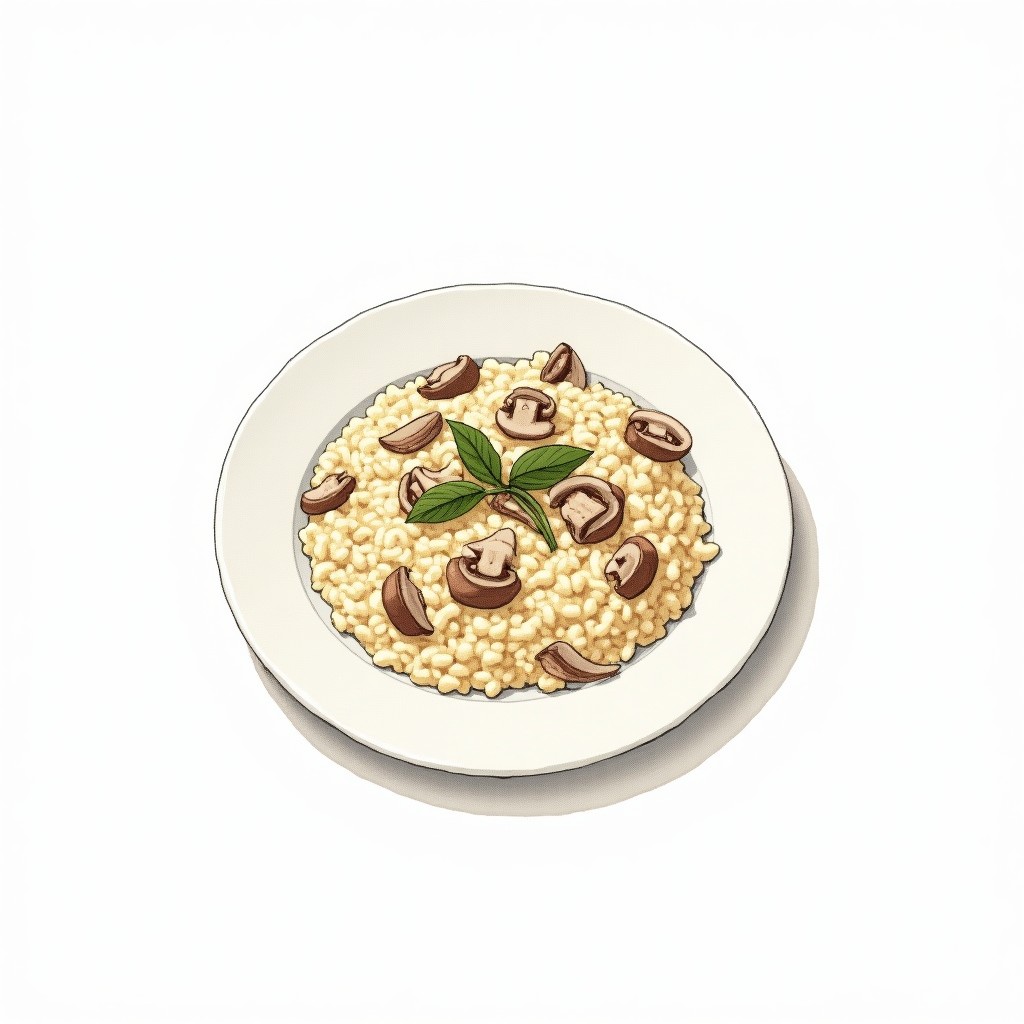
Classic Mushroom Risotto
Creamy Arborio Rice Risotto with Pan-Seared Wild Mushrooms
Mastering risotto means understanding patience and rhythm—the gentle coaxing of each grain until it releases its starch into silk. Here, earthy mushrooms provide the perfect foil to Arborio's natural creaminess, creating a dish that's both rustic and refined.
Good risotto teaches you something about cooking that no other dish can — the art of controlled patience. While most recipes demand quick decisions and fast hands, risotto asks you to slow down, to listen to the gentle bubbling, to feel when each grain has absorbed just enough liquid before asking for more. It's meditation disguised as dinner.
This particular version showcases wild mushrooms at their absolute best. The key lies in searing them properly — letting them caramelize undisturbed until they develop that deep, concentrated flavor that can only come from proper browning. Too many cooks rush this step, moving the mushrooms around and creating steam instead of that gorgeous golden crust. When done right, these mushrooms become little nuggets of umami that transform the entire dish.
The Arborio rice itself is doing most of the work here, slowly releasing its starch to create that signature creaminess without a drop of heavy cream. Each grain maintains just enough bite while contributing to the overall silky texture — a balance that separates real risotto from rice soup. The constant stirring isn't just busy work; it's how you coax that starch out grain by grain, building the creamy base that makes risotto so satisfying.
Nutrition
Ingredients
- 6 cupchicken or vegetable broth, preferably low-sodium
- 1 lbmixed mushrooms (cremini, shiitake, or oyster), sliced thick
- 3 tbspextra-virgin olive oil
- 2 tbspunsalted butter
- 1 mediumyellow onion, finely diced
- 3 clovefresh garlic cloves, minced fine
- 1½ cupArborio rice (short-grain Italian rice)
- ½ cupdry white wine, such as Pinot Grigio(optional)
- 1 cupfreshly grated Parmigiano-Reggiano cheese
- kosher salt and freshly cracked black pepper
garnish
- 2 tbspfresh Italian parsley, chopped fine(optional)
Instructions
- Pour your broth into a medium saucepan and bring to a gentle simmer, then reduce to low heat. This warm broth is essential—cold broth will shock the rice and interrupt the creamy texture you're building.
- Heat 2 tablespoons of olive oil in a large, heavy-bottomed pan over medium-high heat until shimmering. Add mushrooms in a single layer—don't overcrowd or they'll steam instead of caramelize. Let them sear undisturbed until deep golden brown.⏱ 8 min
- Season the beautifully caramelized mushrooms with salt and pepper, then transfer to a plate. Their concentrated flavor will be your reward for proper browning—resist the urge to move them too early.
- Reduce heat to medium and add the remaining oil plus 1 tablespoon of butter to the same pan. Add diced onion and cook, stirring occasionally, until it becomes translucent and fragrant—this is your aromatic foundation.⏱ 4 min
- Stir in the minced garlic and let it bloom in the hot fat until you catch that unmistakable aroma—just enough time to release its oils without browning.⏱ 30 sec
- Pour in the Arborio rice and stir to coat every grain with the fragrant oil mixture. Toast the rice until the edges become slightly translucent—this step helps each grain maintain its texture during the slow cooking ahead.⏱ 2 min
- If using wine, pour it in now and stir until the rice absorbs every drop. You'll hear the satisfying sizzle as the alcohol cooks off, leaving behind concentrated flavor.⏱ 1 min
- Now begins the meditative rhythm of risotto: add one ladle of warm broth and stir constantly until absorbed. Repeat this process patiently—each addition should be absorbed before the next. The rice will gradually release its starch, creating natural creaminess.⏱ 20 min
- Fold in your reserved mushrooms and the remaining butter during these final moments of cooking. The mushrooms will warm through while their concentrated flavors meld with the creamy rice.⏱ 2 min
- Remove from heat and immediately stir in the grated Parmesan, which will melt into silky ribbons throughout the risotto. Taste and adjust seasoning—the cheese adds saltiness, so season accordingly.
- Serve immediately while the risotto flows like lava from your spoon. Garnish with fresh parsley for a bright finish that cuts through the rich, earthy flavors.
Tips & Tricks
- Keep your broth at a gentle simmer in a separate pot throughout cooking — adding cold liquid will stop the starch release and break your creamy texture.
- Don't stir the mushrooms for the first 2-3 minutes after adding them to the pan; they need that undisturbed time to develop their caramelized crust.
- The rice is ready when it has a slight bite but no chalky center — taste a grain every few minutes during the final additions of broth.
- If you run out of broth before the rice is tender, switch to hot water; the dish has enough flavor built in by this point.
- Risotto waits for no one — have your bowls warmed and ready because the texture changes quickly once it's off the heat.
Frequently Asked Questions
Can I make risotto ahead of time?
Traditional risotto doesn't hold well, but you can par-cook it about halfway through the broth additions, spread it on a sheet pan to cool, then finish it later with more warm broth. The texture won't be quite as perfect, but it's serviceable for entertaining.
What can I substitute if I don't have Arborio rice?
Carnaroli or Vialone Nano are actually preferred by many Italian cooks, but if you can't find short-grain risotto rice, short-grain sushi rice works in a pinch. Avoid long-grain rice — it won't release enough starch to create the proper creaminess.
Do I really need to stir constantly?
Not every single second, but frequent stirring is essential for releasing starch and preventing sticking. You can take brief breaks to prep your next ladle of broth, but the rice should rarely sit unstirred for more than 30 seconds.
Why is my risotto gluey instead of creamy?
This usually happens from over-stirring or cooking too aggressively. Stir gently and keep the heat at medium — violent bubbling breaks down the rice structure and creates a gummy texture instead of individual grains bound by creamy starch.