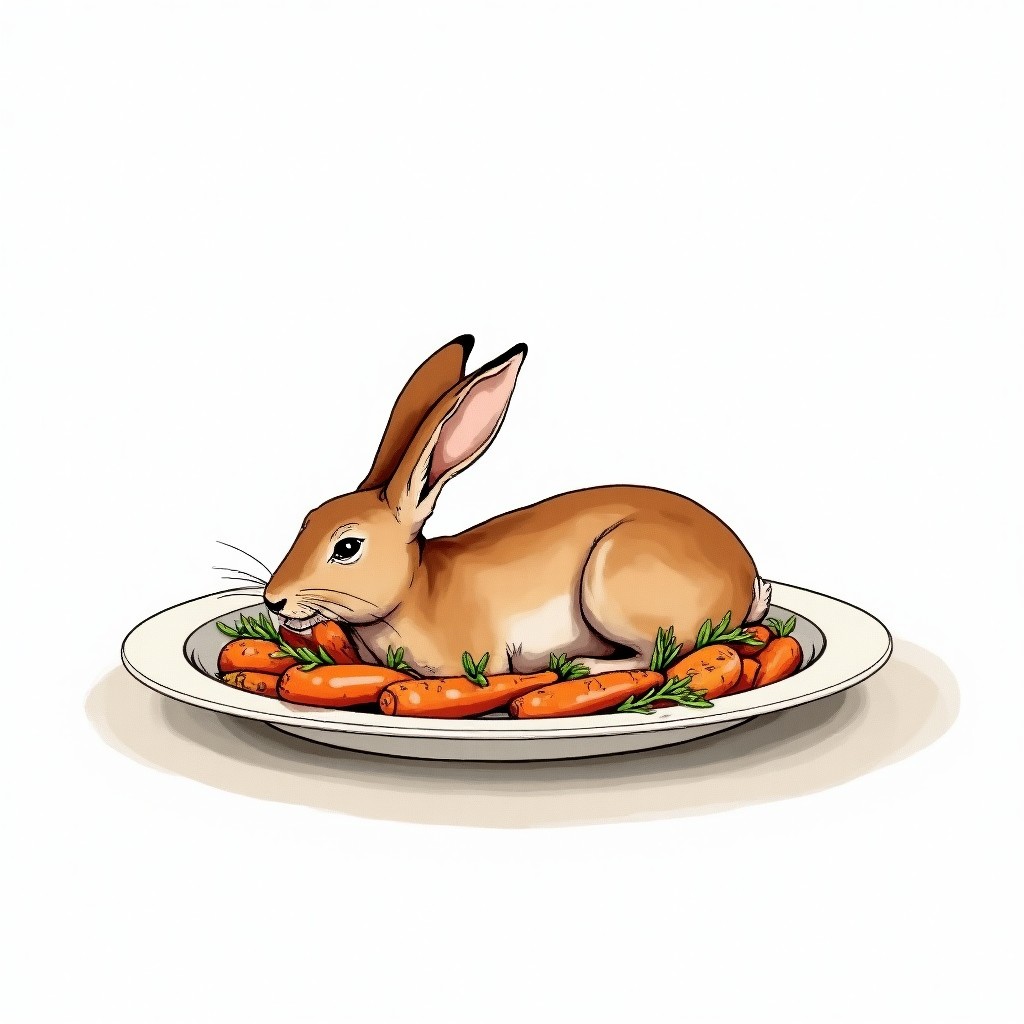
Classic Jugged Hare
Jugged Hare — Wine-Braised Rabbit That's Worth the Hunt
This centuries-old British technique turns rabbit into something extraordinary through patience and good red wine. The slow braise transforms tough wild meat into fork-tender richness, while bacon and mushrooms deepen the flavor until every bite tastes like countryside comfort.
Jugged hare sounds medieval because it is — this ancient preservation technique once kept rabbit meat edible for days in earthenware jugs sealed with clay. Modern cooks skip the jug but keep the genius of the method: slow-braising tough game meat in red wine until it becomes something entirely different from what you started with.
The technique works because rabbit is built for running, which means lots of connective tissue that needs time and gentle heat to break down. Rush the process and you'll end up chewing leather. Give it three hours in wine-scented steam, and those same tough fibers melt into silky richness that coats your fork. The wine doesn't just add flavor — its acidity helps break down proteins while the alcohol evaporates, leaving behind concentrated fruit notes that complement the meat's earthy character.
This isn't the kind of dish you throw together on a Wednesday night. Jugged hare demands patience and rewards it generously. The house fills with the kind of aroma that draws people to the kitchen, and the finished dish tastes like something pulled from a countryside inn where they still know how to treat game meat properly.
Nutrition
Ingredients
- 3 lbrabbit, cut into serving pieces (3 lbs total)
- ¼ cupall-purpose flour for dredging
- 3 tbspunsalted butter
- 4 ozthick-cut bacon, diced small
- 1 largelarge yellow onion, sliced into half-moons
- 2 mediummedium carrots, sliced on the bias
- 2 cupdry red wine (something you'd drink)
- 1 cuprich beef stock or broth
- 2 sprigfresh thyme sprigs
- 2 bay leavesbay leaves
- 3 clovegarlic cloves, minced fine
- 8 ozcremini or button mushrooms, quartered
- 1 tspkosher salt
- ½ tspfreshly cracked black pepper
- 2 tbspfresh flat-leaf parsley, chopped
Instructions
- Heat your oven to 325°F — this gentle temperature will break down the rabbit's tough fibers without drying out the meat.
- Pat the rabbit pieces completely dry, then season generously with salt and pepper. Dredge each piece in flour, shaking off the excess — you want a light coating that will help thicken the braising liquid later.
- Heat the butter in a heavy Dutch oven over medium-high heat until it stops foaming. Brown the rabbit pieces thoroughly on all sides — this takes patience but builds crucial flavor. You want deep golden color, not just surface browning.⏱ 8 min
- Transfer the browned rabbit to a plate and add the diced bacon to the same pot. Cook until the fat renders and the bacon turns crispy and golden. The rendered fat will add richness to your braising liquid.⏱ 5 min
- Toss in the sliced onions and carrots, stirring them into the bacon fat. Cook until the onions turn translucent and the carrots start to soften at the edges — this builds your flavor foundation.⏱ 5 min
- Add the minced garlic and stir constantly until fragrant — about a minute. Don't let it brown or it will turn bitter in the long braise.⏱ 1 min
- Nestle the browned rabbit pieces back into the pot, then pour in the wine and stock. Add the thyme sprigs and bay leaves, tucking them down into the liquid. The liquid should nearly cover the meat.
- Bring the liquid to a gentle simmer on the stovetop, then cover the pot tightly and slide it into the oven. This controlled environment will cook the rabbit evenly without scorching.
- Let the rabbit braise undisturbed for 2 hours. The low heat will slowly break down the connective tissue, transforming tough meat into something fork-tender.⏱ 2 hrs
- Add the quartered mushrooms to the pot and continue cooking for another 30 minutes. Test for doneness — the rabbit should practically fall off the bone when you poke it with a fork.⏱ 30 min
- Fish out and discard the bay leaves, then taste the braising liquid and adjust the seasoning with salt and pepper. Scatter the chopped parsley over the top just before serving — it adds a fresh contrast to the rich, wine-dark stew.
Tips & Tricks
- Dry the rabbit pieces thoroughly before flouring — any surface moisture will prevent proper browning and create steam instead of the deep caramelization you need.
- Don't skip browning the bacon until it's actually crispy; the rendered fat carries flavor through the entire dish, and undercooked bacon turns flabby during the long braise.
- Add the mushrooms only in the final 30 minutes or they'll break down into mush and muddy the braising liquid.
- Test doneness by gently pulling at the meat with a fork — it should separate easily from the bone without any resistance.
- Let the finished dish rest for 10 minutes before serving; this allows the braising liquid to thicken slightly and redistribute through the meat.
Frequently Asked Questions
Can I substitute chicken for the rabbit?
Chicken will work but reduce the cooking time to about 1 hour total since it's much more tender than rabbit. The flavor will be milder, so consider using thighs instead of breasts for better results in the long braise.
What kind of red wine should I use?
Choose something you'd drink — a medium-bodied red like Côtes du Rhône or Pinot Noir works well. Avoid anything too tannic or expensive since the long cooking will mellow complex flavors anyway.
Can I make this ahead of time?
This dish actually improves after a day in the refrigerator as the flavors meld together. Reheat gently on the stovetop, adding a splash of stock if the sauce seems too thick.
Why is my braising liquid thin and watery?
You probably skipped browning the rabbit properly or didn't let the flour coating develop. Next time, ensure deep browning and simmer the finished dish uncovered for a few minutes to concentrate the liquid.